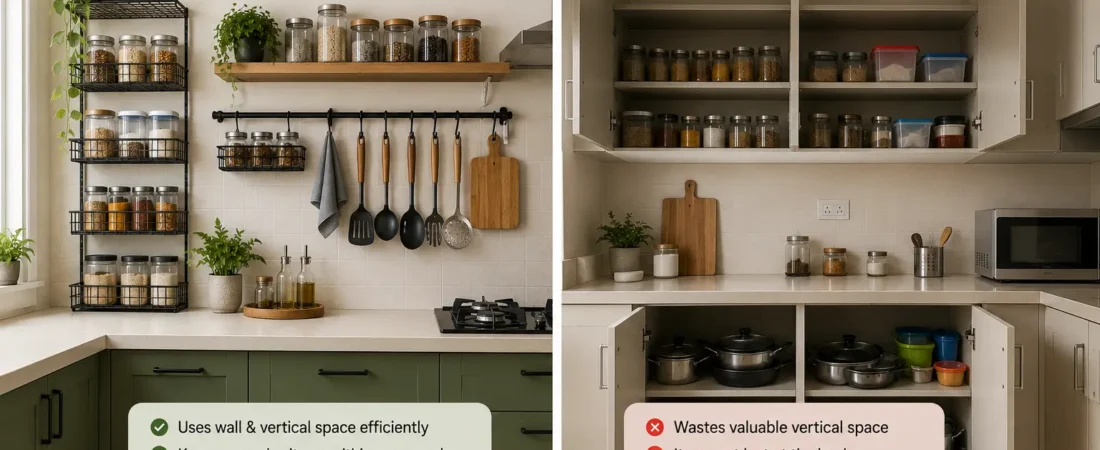
A small kitchen has to work surprisingly hard. Between pressure cookers, spice jars, plates, cookware, groceries, and everyday utensils, there is rarely enough room to store everything comfortably. That is why vertical kitchen storage ideas 2026 are becoming so useful: instead of adding more cabinets, you make better use of the walls, cabinet height, and forgotten spaces underneath shelves.
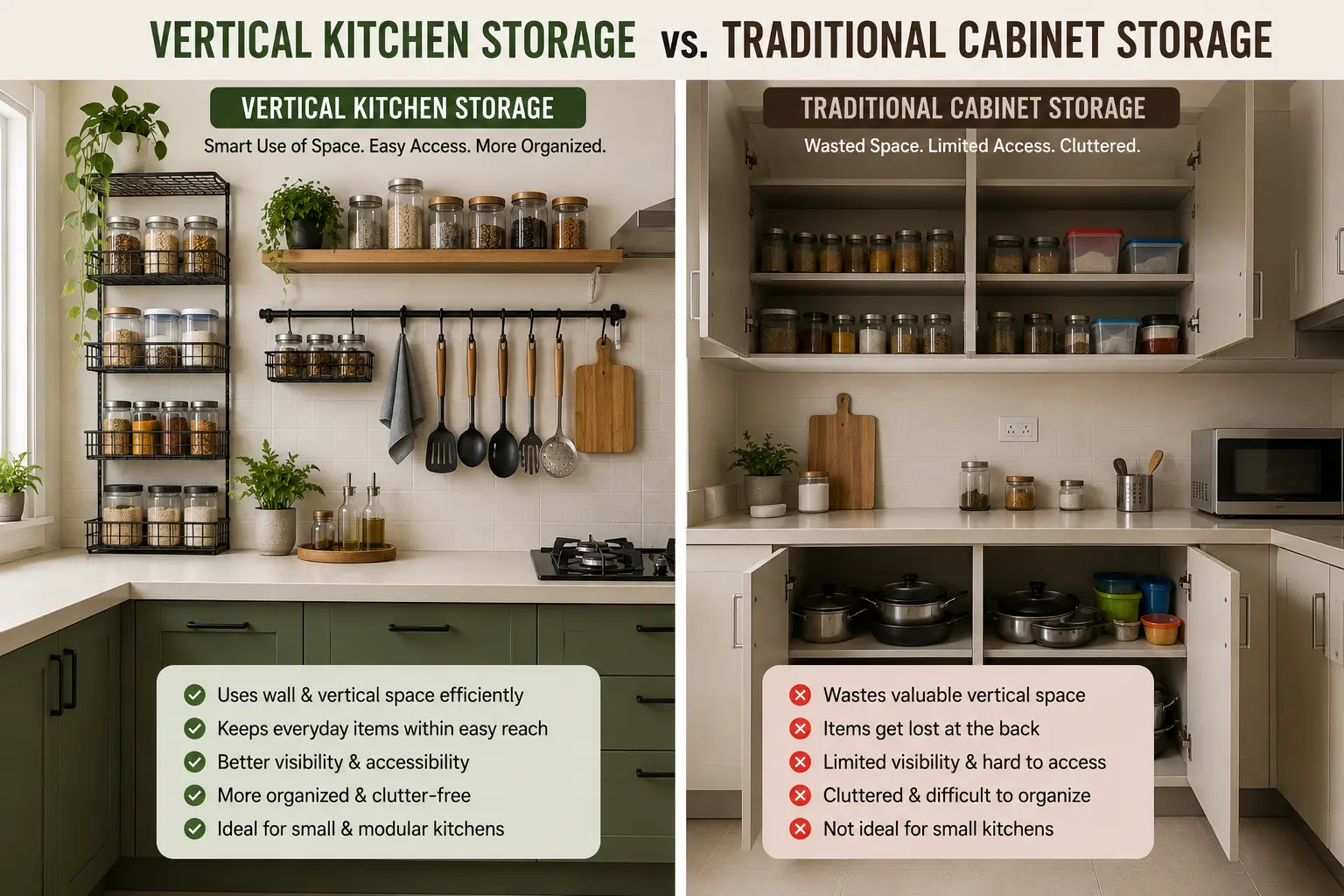
Why Vertical Storage Is Trending in 2026
The big idea behind kitchen storage in 2026 is simple: use the space you already have more intelligently. Designers are increasingly looking upward, using tall storage, open wall space, and clever cabinet organizers to make compact kitchens feel less crowded.
For Indian homes and modular kitchens especially, this approach makes sense. You can add useful storage without breaking tiles, changing cabinetry, or starting an expensive renovation.
Best Vertical Kitchen Storage Ideas 2026: Vertical & Under-Shelf Solutions
If you are searching for vertical kitchen storage ideas 2026, start by looking at the spaces you normally ignore. The underside of a shelf, the back of a cabinet door, an empty wall, or the unused height inside a cupboard can all become practical storage.
Here are some of the easiest solutions to try.
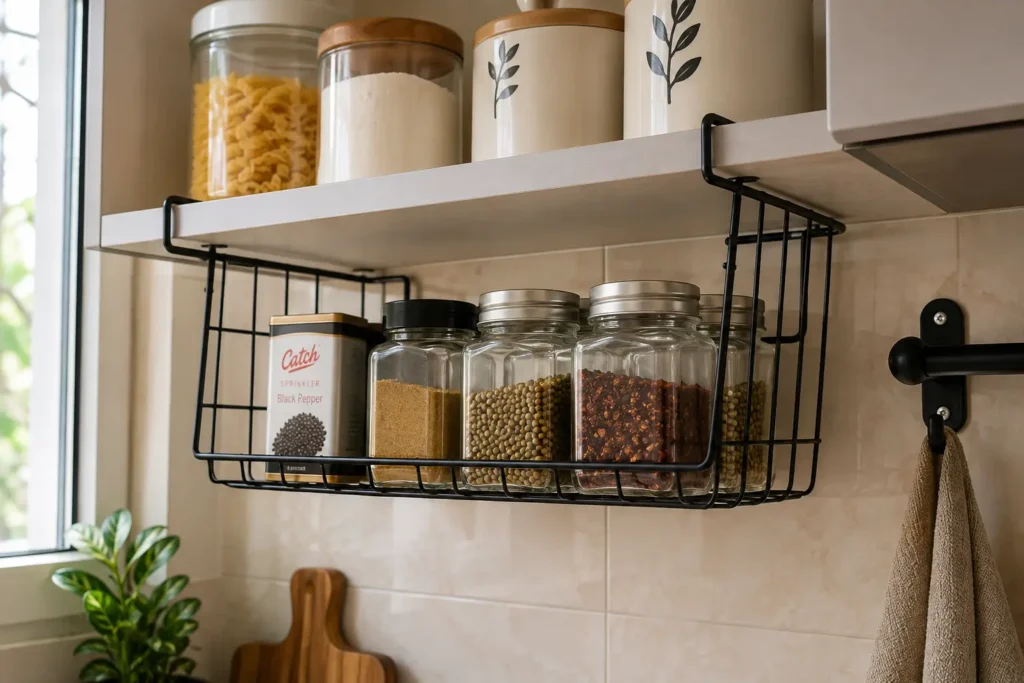
Under-Shelf Baskets
Under-shelf baskets are simple baskets that attach to the underside of an existing cabinet or pantry shelf. They create a second storage layer without requiring you to install another shelf.
Install them underneath shelves where there is a decent amount of unused vertical clearance. They work particularly well for tea packets, snack packs, napkins, small spice containers, dish towels, or lightweight kitchen supplies.
This is one of the easiest forms of under shelf kitchen storage because you are essentially turning empty air into usable space.
For deeper shelves or changing storage needs, expandable kitchen storage baskets can be particularly practical because their width can be adjusted to suit the available space.
Pull-Out Drawer Inserts
A pull-out drawer insert is a sliding tray fitted inside an existing cabinet. Instead of reaching deep into a dark cupboard, you simply pull the tray toward you.
Install these in lower cabinets, pantry units, or deep cupboards where items at the back tend to disappear. They are especially useful for cooking oils, containers, pots, packaged food, and cleaning supplies.
The biggest advantage is accessibility. You are not necessarily creating more cabinet space, but you are making much more of the existing space usable.
For small kitchens, that difference can be surprisingly valuable.
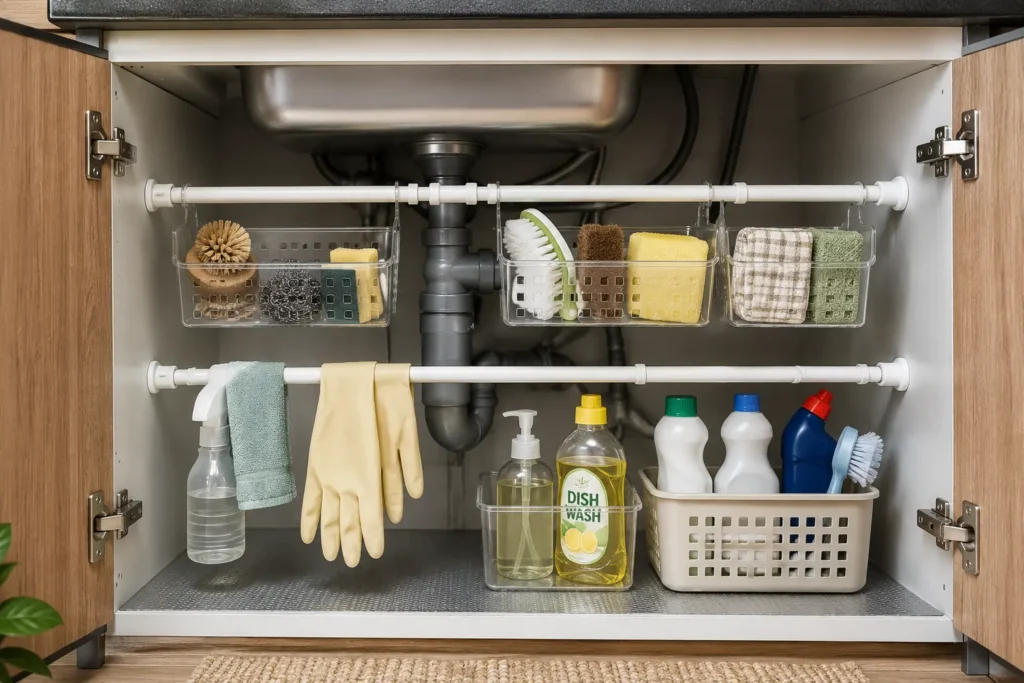
Tension Rod Organizers
Tension rods are spring-loaded rods that fit between two surfaces without permanent drilling. They are particularly useful under the kitchen sink.
Place one near the upper section of the cabinet and use it to hang lightweight bottles, cloths, or small storage containers. You can also use two rods at different heights to create simple storage levels.
This is a smart solution when the area under the sink has awkward plumbing and very little conventional shelf space.
It is also one of the most affordable small kitchen storage solutions because you can reorganize the area without modifying the cabinet.
Magnetic Knife Strips & Wall Rails
A magnetic knife strip moves knives away from crowded drawers and onto an otherwise unused wall. Wall rails can perform a similar job for cooking utensils, hooks, and small containers.
Install them on a suitable backsplash or wall near your main food-preparation area. Keep frequently used tools within easy reach and less frequently used items elsewhere.
This is where kitchen wall storage ideas become especially useful. A narrow wall can hold a surprising number of everyday tools without taking away valuable counter space.
Just make sure wall-mounted storage is installed securely and positioned safely away from areas where children can easily reach sharp tools.
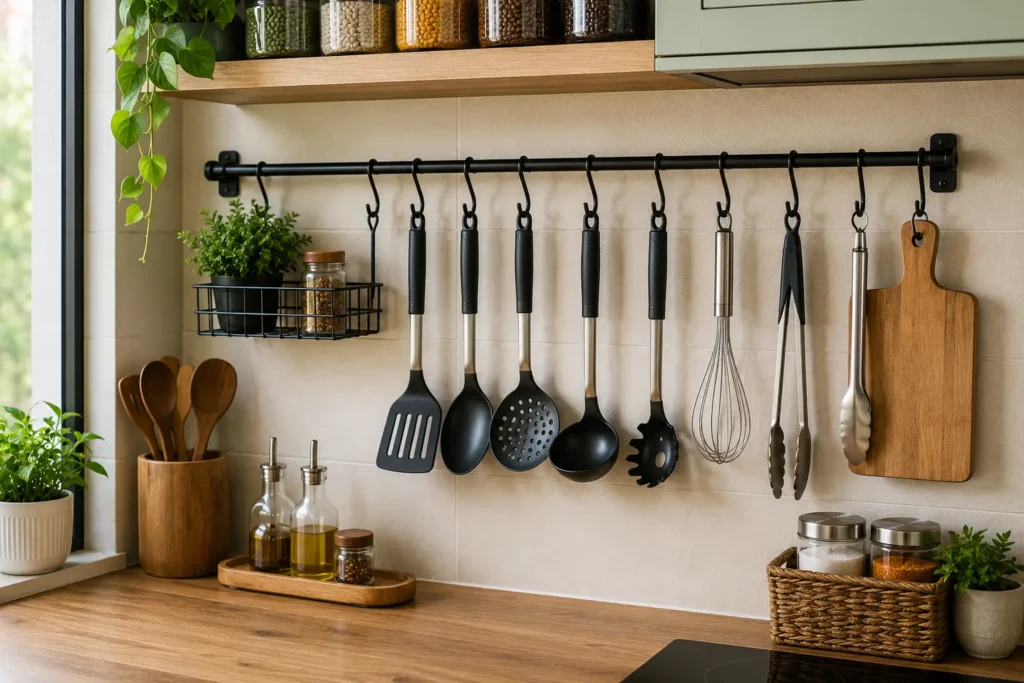
Hanging Utensil Rails
A hanging utensil rail is a simple horizontal rail fitted with hooks. Use it for ladles, spatulas, tongs, whisks, measuring cups, or other tools you reach for regularly.
The best location is usually above or beside the cooking counter, where the utensils are easy to grab but don’t interfere with food preparation.
You can also install a slim rail inside a cabinet door if you prefer a cleaner, less visible setup.
This approach is particularly useful when your kitchen has limited drawer space.
Stackable Plate & Lid Organizers
Instead of keeping plates in one heavy horizontal pile, vertical plate organizers allow them to stand separately. Lid organizers use a similar principle, giving each pot or pan lid its own slot.
Install these inside base cabinets or pantry cupboards. They make it easier to grab one plate or lid without disturbing everything else.
For Indian kitchens where steel plates, thalis, pressure-cooker lids, and multiple cookware sizes are common, vertical dividers can make a noticeable difference.
Stackable shelf risers can also create an additional level inside tall cabinets, allowing you to use cabinet height instead of leaving a large empty gap above your dishes.
Corner Wall Shelves
Corners are often wasted simply because standard shelves do not fit them well. A corner wall shelf turns that awkward space into useful storage.
Install one above the counter, near a dining corner, or beside a tall cabinet. Use it for spice jars, mugs, small containers, cookbooks, or decorative kitchen items.
Keep these shelves relatively light and organized. A corner shelf overloaded with random objects can make a small kitchen look even busier.
Used thoughtfully, however, it is one of the simplest kitchen wall storage ideas for gaining storage without taking up floor space.
Room-by-Room — Where to Apply Vertical Storage
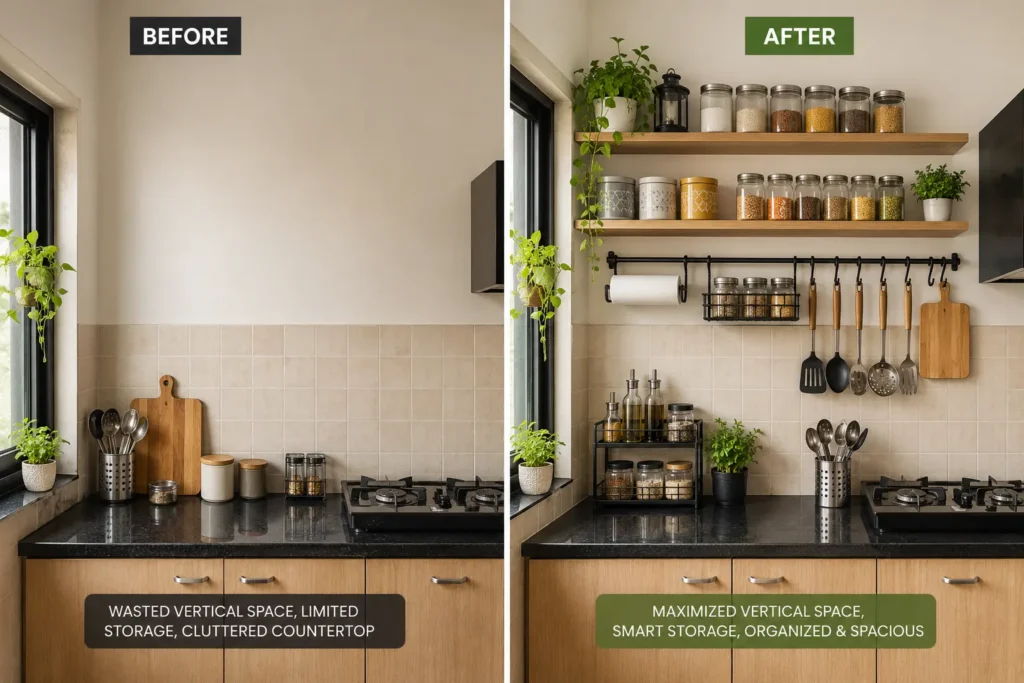
The best vertical kitchen storage ideas 2026 do not necessarily require buying lots of organizers. First, identify where your kitchen already has unused vertical space.
Under the Sink
Start with the awkward space around plumbing. Use tension rods for lightweight hanging items, slim baskets for cleaning supplies, and pull-out trays where the cabinet layout allows.
Avoid packing the area too tightly. You still need enough room to access plumbing connections and shut-off valves.
Inside Cabinets
Look at the empty height between each shelf. If there is enough clearance, add a shelf riser, under-shelf basket, or vertical divider.
This is often the quickest way to turn one crowded shelf into two functional levels.
Cabinet Doors
The inside of a cabinet door is effectively a blank wall. Slim racks, hooks, or small organizers can hold spice packets, measuring spoons, wraps, or lightweight kitchen accessories.
Before installing anything, check that the door can still close properly and that the added weight will not strain the hinges.
Empty Wall Space
Look around your backsplash, beside tall cabinets, and near the cooking area. A narrow wall rail, magnetic strip, or corner shelf can provide storage without consuming counter space.
For renters, removable or low-impact options may be preferable, depending on the wall finish and rental rules.
Above the Counter
If you have unused wall height above the counter, consider a narrow shelf or rail for frequently used items.
Just remember that the kitchen should remain visually calm. You do not need to fill every available inch.
Good space saving kitchen organization is about making unused space useful—not making every wall look like a storage display.
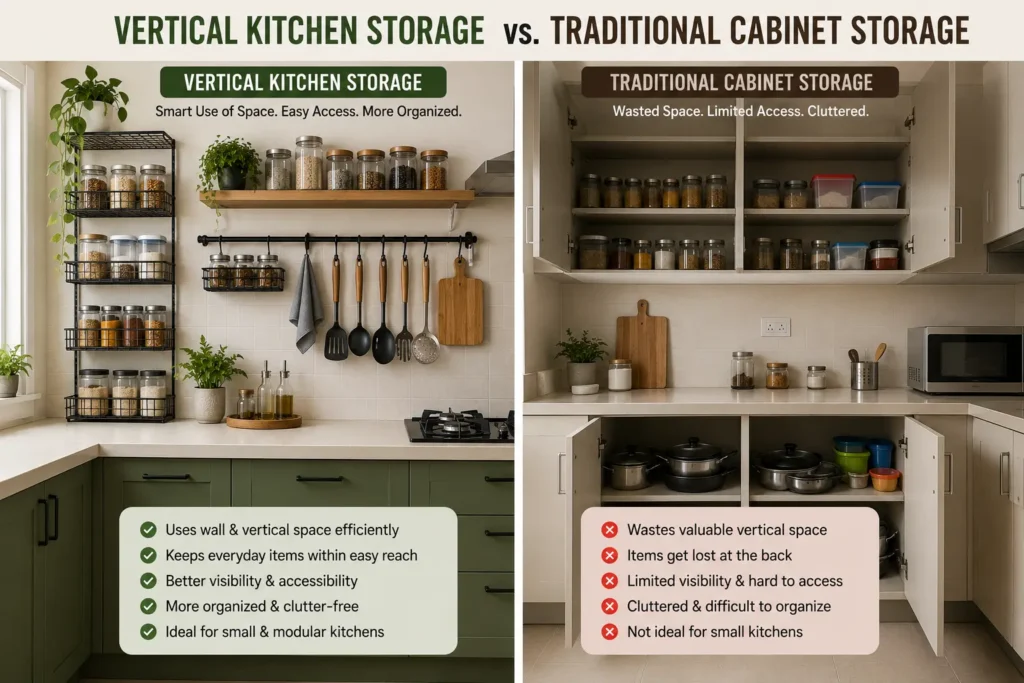
Vertical Storage vs Traditional Cabinet Storage
| Feature | Vertical Storage | Traditional Cabinet Storage |
|---|---|---|
| Space efficiency | High; uses walls, cabinet height, doors, and unused gaps | Moderate; fixed shelves can leave unused vertical space |
| Installation effort | Low to moderate depending on the organizer | Moderate to high, especially for new cabinetry |
| Cost | Usually low to medium | Usually higher when cabinetry or major modifications are involved |
| Best for | Small kitchens, modular kitchens, rentals, and quick upgrades | Renovations, large kitchens, and long-term built-in storage |
| Flexibility | Easy to rearrange or replace many organizers | Less flexible once cabinets are installed |
| Accessibility | Can keep frequently used items within reach | Deep cabinets may make rear items difficult to access |
The goal isn’t to replace traditional cabinets completely. Instead, combine them with smart organizers.
A cabinet gives you the main storage structure; vertical and under-shelf additions help you use that structure more efficiently.
Tips Before You Install
Before turning your kitchen into a vertical storage zone, take a few minutes to plan. The best small kitchen storage solutions are the ones that actually fit your space and daily routine.
Measure Before Buying
Measure the width, height, and depth of the area. For cabinet organizers, also check door openings and hinge clearance.
An organizer that technically fits inside a cabinet is not useful if the door cannot close afterward.
Check the Wall or Cabinet Material
Know what you are attaching the organizer to. Tile, concrete, plywood, laminate, and other surfaces require different installation methods.
For adhesive products, check whether the surface is clean, smooth, dry, and suitable for the adhesive.
Check Weight Limits
Do not assume that a wall rail, tension rod, adhesive hook, or under-shelf basket can hold heavy cookware.
Keep heavier objects on properly supported shelves and use lightweight organizers for lighter items unless the organizer is specifically designed for greater loads.
Avoid Visual Clutter
This is an easy mistake to make.
Once you discover vertical storage, it is tempting to add a hook, basket, rail, and shelf to every available surface. Instead, group similar items together and leave some wall space visually open.
A well-organized small kitchen should feel simpler, not more crowded.
Start With This Checklist
Before installing anything, save this quick checklist:
- ☐ Measure the space accurately
- ☐ Check cabinet and wall material
- ☐ Check the organizer’s weight capacity
- ☐ Confirm cabinet doors can still open and close
- ☐ Keep plumbing and electrical access clear
- ☐ Group similar items together
- ☐ Avoid overcrowding visible walls
- ☐ Start with one or two problem areas
For more ideas, this post could naturally link internally to Kitchen Organization Hacks, Kitchen Deep-Cleaning Checklist, and a future guide on How to Organize a Small Modular Kitchen.
Final Thoughts
The smartest storage upgrade is not always another cabinet. Sometimes, it is simply using the space your kitchen already has—above shelves, inside doors, along walls, and underneath existing surfaces.
If you have been looking for vertical kitchen storage ideas 2026, don’t try to reorganize the entire kitchen at once. Pick one or two problem areas this weekend—perhaps the under-sink cabinet and one crowded kitchen shelf—and add a simple storage layer.
Once those spaces work better, move on to the next one. Small changes can make a surprisingly big kitchen-storage difference.
Internal Linking Opportunities
As you continue upgrading your kitchen, you may also find these helpful:
- Induction vs Gas vs Microwave Cooking: Which Is Best for Your Kitchen?
- How to Make Your Kitchen More Energy Efficient
- 10 Easy Ways to Organize Your Kitchen Without Buying Anything New
Love simple home maintenance tips like these? Join the Dailyrecshub community on Pinterest, for daily home & kitchen inspiration, appliance care guides, cleaning hacks, and practical DIY tips. Save your favorite ideas, share them with family, and never miss a helpful update!