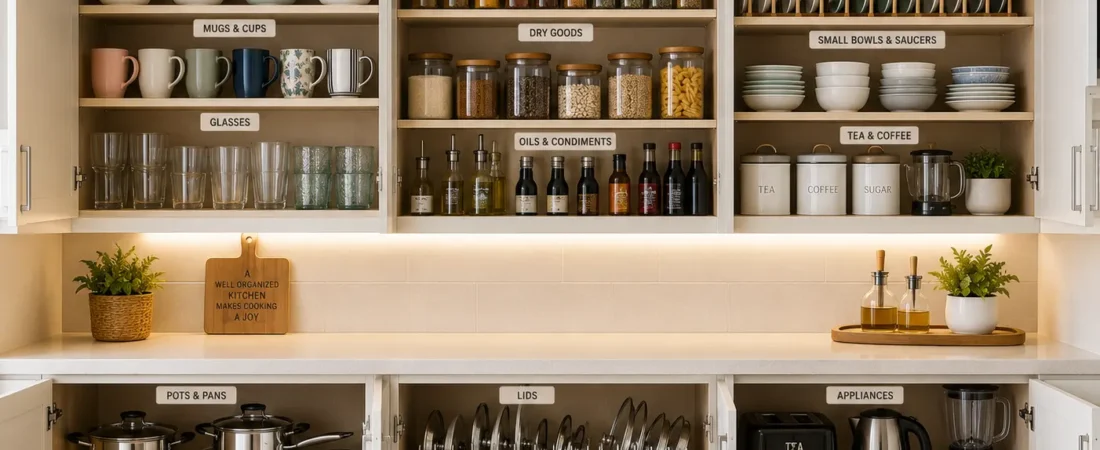
Kitchen cabinets have a funny way of becoming cluttered even when you started with the best intentions. One day everything has a place, and a few weeks later, containers are stacked randomly, spices are hiding behind other jars, and you can’t find the pan you use every day.
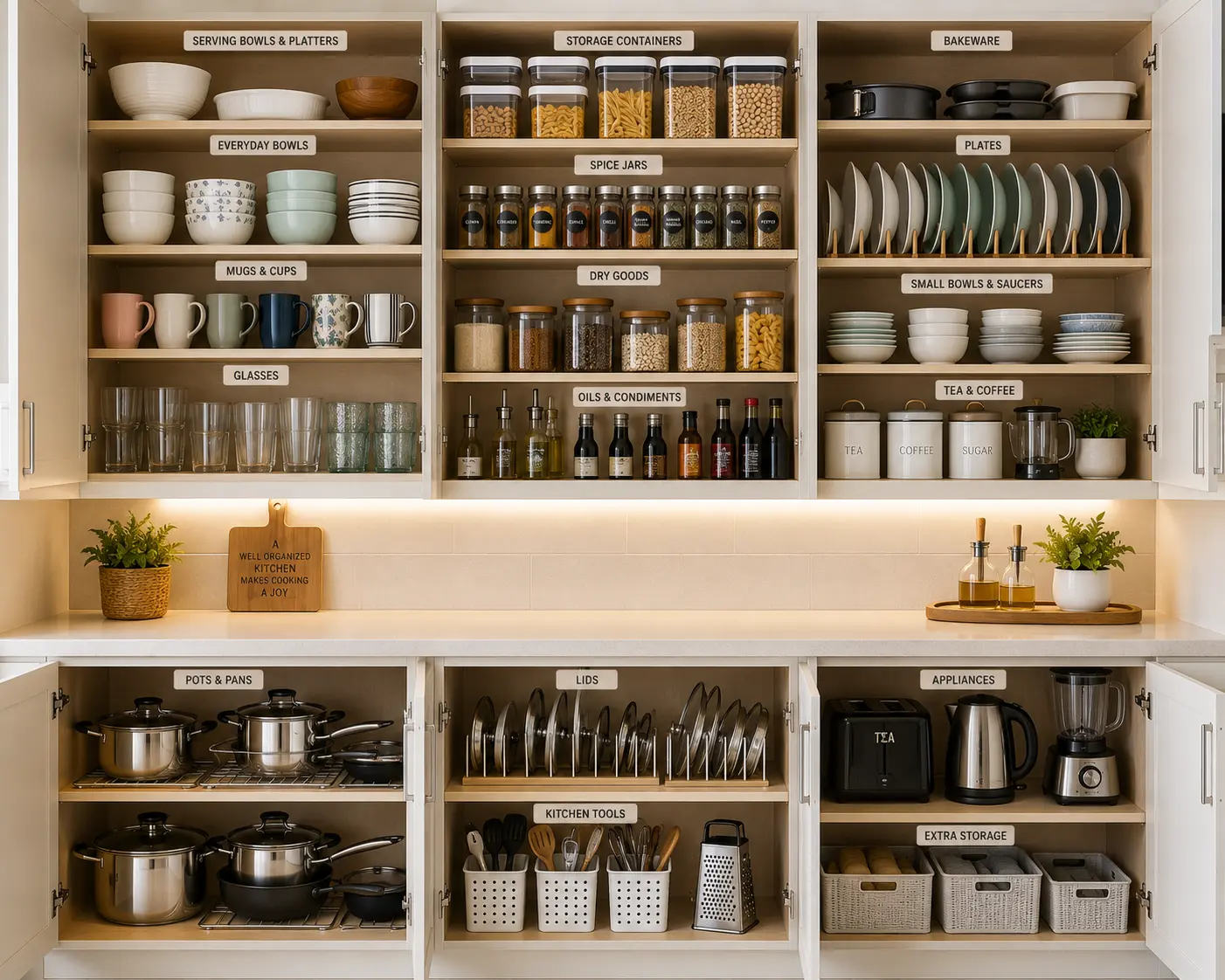
Learning how to organize kitchen cabinets doesn’t require a huge kitchen or expensive storage systems. The goal is simply to make your cabinets easier to use, easier to clean, and easier to maintain.
In this guide, you’ll learn a practical step-by-step system for decluttering your cabinets, creating useful storage zones, making better use of vertical space, and keeping everything organized long-term.
Why Organizing Your Kitchen Cabinets Matters
An organized kitchen isn’t just about making cabinets look neat. Good organization can make everyday cooking considerably easier because the things you use most often are easier to find and put away.
When cabinets are overcrowded, you tend to move several items just to reach one thing. That creates more mess, wastes time, and makes putting things away feel like a chore.
A simple organization system can help you:
- Find cooking essentials quickly
- Make better use of limited cabinet space
- Reduce duplicate or unused items
- Keep counters less cluttered
- Make cleaning easier
- Create a more efficient cooking routine
- Make it easier for everyone in the household to put things away
The best way to organize kitchen cabinets is to think about function first and appearance second. A cabinet doesn’t need to look perfect—it needs to work well for the people using the kitchen.
Step-by-Step Guide to Organize Kitchen Cabinets
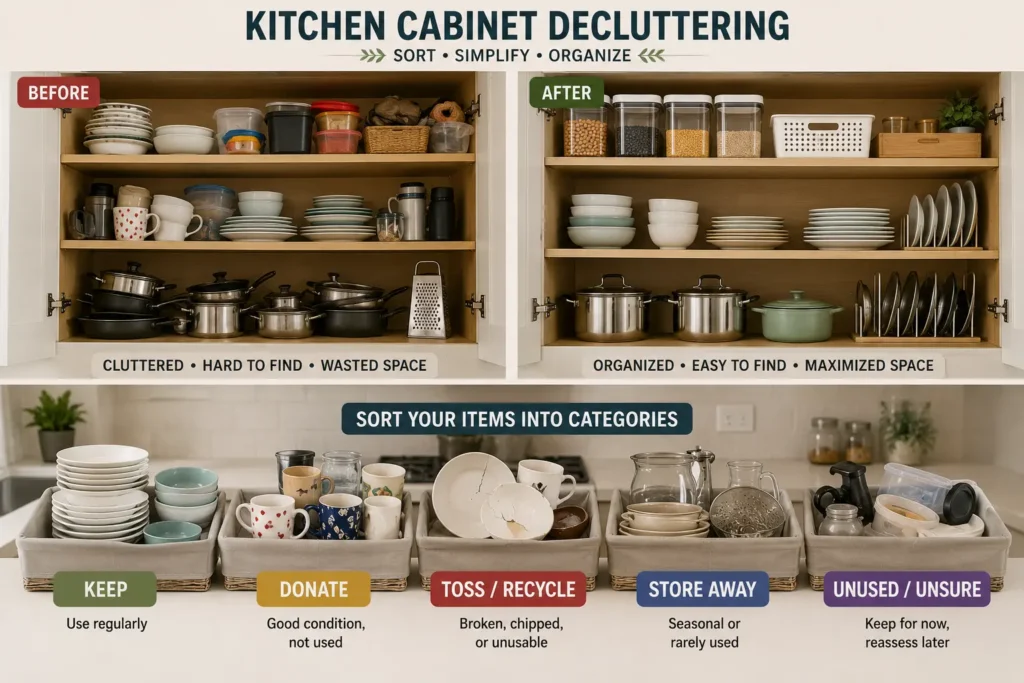
Step 1 – Empty and Declutter Everything First
Before rearranging anything, take everything out of the cabinets you’re working on. Trying to organize items while they’re still inside usually means you’re simply moving clutter around.
Start with one cabinet or drawer at a time rather than emptying the entire kitchen. This keeps the project manageable and prevents a huge pile of kitchen items from taking over your space.
As you remove everything, sort items into simple groups:
- Keep
- Donate or give away
- Recycle or discard
- Move somewhere else
Ask yourself whether you actually use each item. If you haven’t used something in a long time and it doesn’t serve a specific purpose, it may not deserve valuable cabinet space.
When figuring out how to declutter kitchen cabinets, also look for duplicates. Do you really need five similar serving bowls or several utensils that perform exactly the same job?
Don’t keep something just because there is technically room for it. Good organization starts by reducing unnecessary items.
Step 2 – Group Items by Category
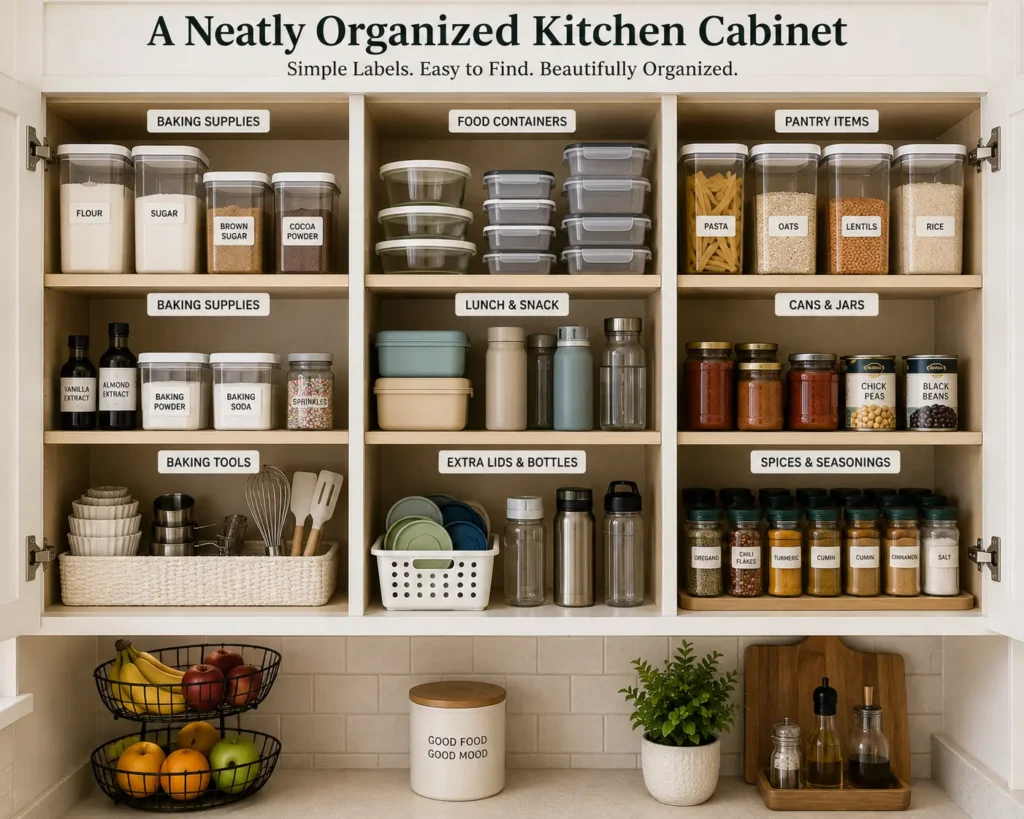
Once you’ve decluttered, group similar items together before putting anything back.
For example, you might create categories such as:
- Plates and bowls
- Glasses and cups
- Cooking utensils
- Pots and pans
- Baking supplies
- Food containers
- Spices and seasonings
- Dry pantry ingredients
- Cleaning supplies
- Serving dishes
This is one of the simplest kitchen cabinet organization tips, but it makes a big difference.
When similar items stay together, you don’t have to search multiple cabinets every time you cook. It also makes putting things away much easier because every item has an obvious home.
Try to avoid creating overly specific categories. You don’t need a separate cabinet for every type of spoon. Keep the system simple enough that you can remember it without thinking.
Step 3 – Use the Zone Method (Place Items Near Where You Use Them)
One of the most useful approaches to kitchen organization is the kitchen zone organization method.
Instead of organizing cabinets purely by item type, think about where and how you use things.
Create practical zones such as:
Cooking Zone
Keep frequently used pots, pans, cooking utensils, oils, and everyday spices close to the stove.
Food Preparation Zone
Store mixing bowls, chopping boards, knives, measuring tools, and preparation utensils near the main counter where you prepare food.
Dish Zone
Keep plates, bowls, glasses, and everyday cutlery near the dishwasher or sink if that makes unloading and putting them away easier.
Baking Zone
If you bake regularly, group flour, measuring cups, baking trays, mixing bowls, and other baking essentials together.
Cleaning Zone
Keep cleaning-related supplies together in an appropriate cabinet, preferably away from food and cooking equipment.
The idea is simple: store things where you naturally use them.
This makes your kitchen feel more intuitive. You don’t have to remember where something is because its location makes sense.
Step 4 – Maximize Vertical Space (Shelf Risers, Stacking)
Many kitchen cabinets have unused vertical space. You may have a stack of plates sitting on the bottom shelf while several inches of empty space remain above them.
Instead of letting that space go unused, think vertically.
Shelf risers can create an additional level for plates, bowls, or cups. You can also stack similar items when doing so doesn’t make them difficult to remove.
For cabinets storing food containers, arrange containers together and keep their lids grouped in a way that makes them easy to see.
Vertical organization works particularly well for:
- Plates
- Bowls
- Mugs
- Baking trays
- Cutting boards
- Food containers
- Small serving dishes
The key is accessibility. Don’t stack items so high that you have to remove half the cabinet to reach the item underneath.
A useful rule is to keep frequently used items at the easiest-to-reach height and reserve harder-to-reach areas for things you use occasionally.
Step 5 – Solve the Corner Cabinet Problem
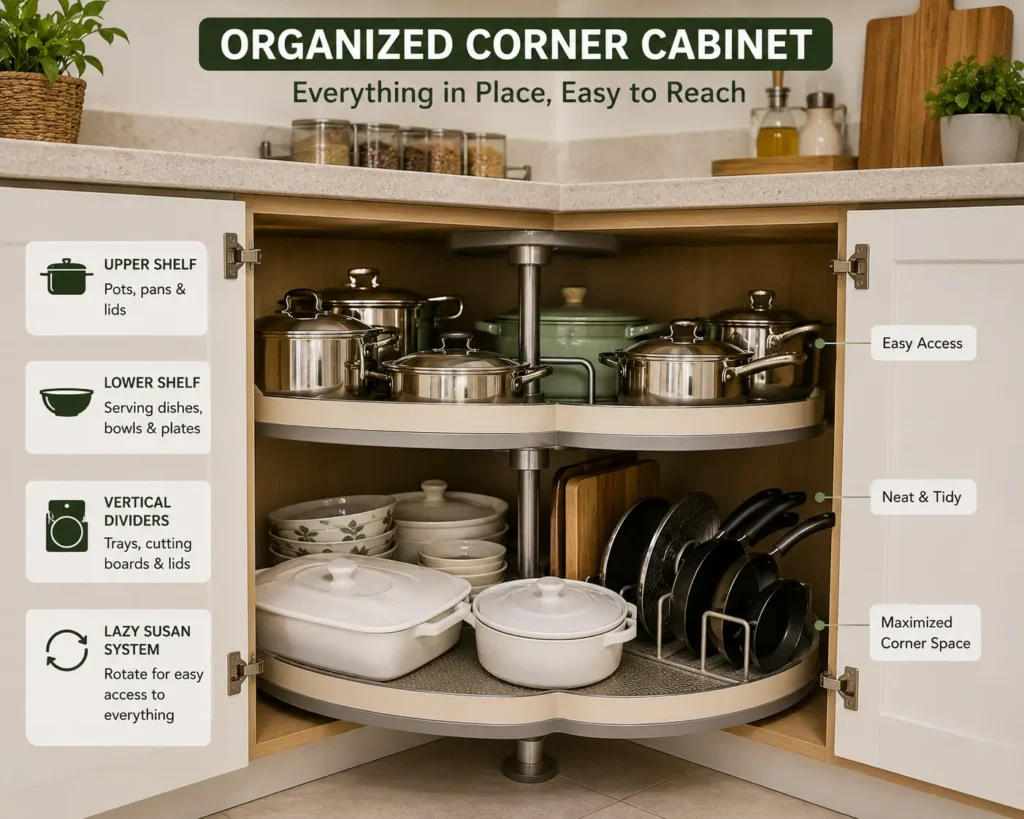
Corner cabinets are often some of the most frustrating spaces in a kitchen. Items can disappear into the back, creating a storage area that technically holds plenty but is difficult to use.
Good corner cabinet organization ideas start with accessibility.
First, remove anything you rarely use or have forgotten about. Then group similar items together instead of scattering them throughout the corner.
Use the front and easiest-to-reach areas for items you use regularly. Less frequently used serving dishes or larger cookware can go farther back.
For awkward lower corner cabinets, arrange items so that smaller pieces don’t get trapped behind larger ones. If you have a deep corner cabinet, avoid filling every inch simply because you can.
A little empty space can actually make the cabinet more functional.
Step 6 – Organize Deep Drawers Separately
Deep drawers need a different strategy from regular cabinets.
Instead of piling everything together, divide the drawer by function. For example, cooking utensils can stay together while measuring tools, serving utensils, or small kitchen gadgets have their own sections.
This is where kitchen drawer organization becomes especially useful.
Try these simple principles:
- Keep frequently used utensils toward the front
- Group similar tools together
- Avoid filling the drawer completely
- Store long utensils together
- Keep small loose items contained
- Leave enough space to see what’s inside
The goal isn’t to make every drawer perfectly symmetrical. The goal is to make each item easy to grab and return.
If you have several deep drawers, give each one a clear purpose. A dedicated utensil drawer, food-container drawer, and baking-tool drawer are often easier to maintain than drawers containing a random mixture of everything.
Step 7 – Label Where It Helps
Labels aren’t necessary for every cabinet, but they can be surprisingly helpful in certain areas.
If several family members share the kitchen, labels can make your organization system easier for everyone to understand.
Consider labeling areas containing:
- Baking ingredients
- Snacks
- Food containers
- Specialty cooking tools
- Bulk pantry items
- Cleaning supplies
You don’t need dozens of labels. Use them where they solve a real problem.
A simple label can also prevent the classic situation where everyone puts something back in a different place.
Kitchen Cabinet Organization Ideas for Small Kitchens
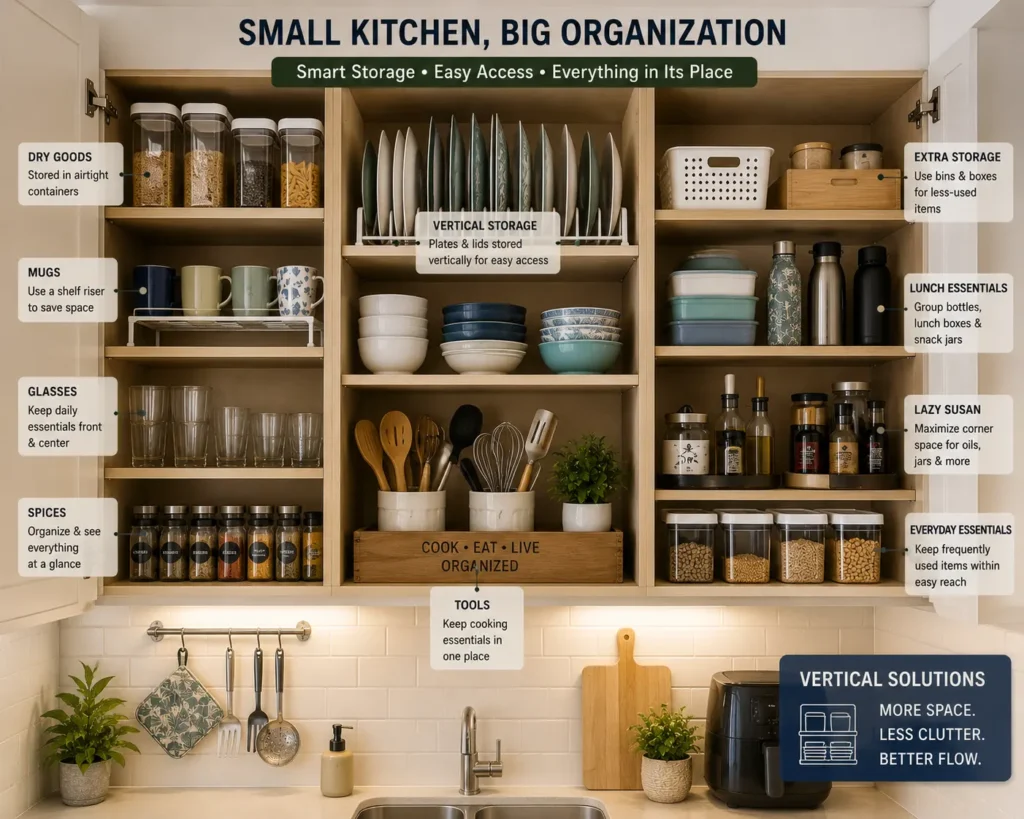
Small kitchens require a little more planning because every inch of storage matters. The trick is to make existing space work harder without making cabinets difficult to use.
Start by prioritizing your most frequently used items. Everyday plates, cooking utensils, cups, and basic ingredients should get the easiest-to-reach locations.
For small kitchen cabinet organization, try these ideas:
- Use vertical space instead of spreading items horizontally.
- Stack compatible dishes carefully.
- Keep rarely used items in less accessible areas.
- Group small items by category.
- Use cabinet doors for appropriate lightweight storage.
- Keep countertops reserved for things you use frequently.
- Avoid storing unnecessary duplicates.
- Leave small gaps between categories so items remain easy to retrieve.
Don’t underestimate the value of decluttering. Removing five rarely used items can sometimes create more usable space than adding another storage solution.
Also consider whether everything currently stored in your kitchen actually belongs there. Items that are used once or twice a year may be better stored elsewhere if your kitchen is extremely limited on space.
How to Keep Kitchen Cabinets Organized Long-Term
Organizing your kitchen once is helpful. Creating habits that keep it organized is even better.
The biggest mistake is treating organization as a one-time project. Cabinets naturally get messy as you cook, clean, shop, and move things around.
Try these simple maintenance habits:
Put Things Back Immediately
When you finish cooking, return items to their assigned zones rather than leaving them on the counter.
Do a Quick Weekly Reset
Spend a few minutes each week checking the cabinets that get the most use. Straighten misplaced items and return anything that has drifted into the wrong zone.
Declutter Regularly
Every few months, check for expired food, unused kitchen gadgets, damaged containers, and duplicates.
Don’t Overfill Cabinets
An overloaded cabinet is difficult to maintain. Leave enough room to remove and replace items without knocking everything over.
Reassess After Changes
If your cooking habits change, your organization should change too. A cabinet arrangement that worked perfectly last year may not be ideal now.
The goal is to keep kitchen cabinets organized without needing a major cleanup every few weeks.
Common Mistakes to Avoid When Organizing Kitchen Cabinets
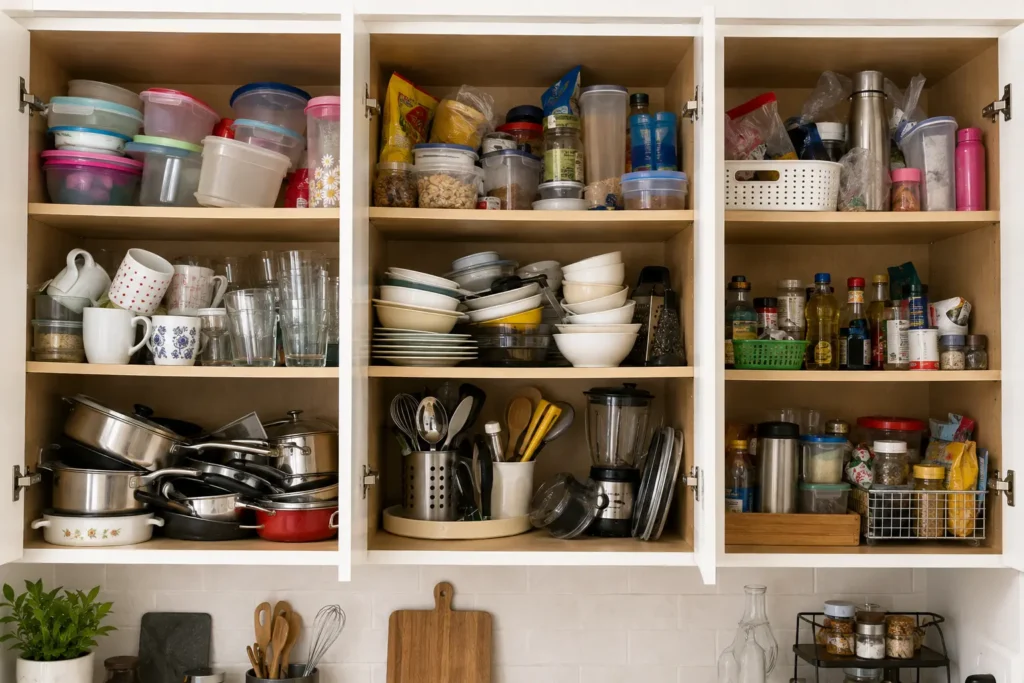
Even a well-planned organization system can fail if the setup is too complicated. Watch out for these common mistakes:
- Organizing by appearance instead of function: A beautiful cabinet isn’t useful if everyday items are difficult to reach.
- Keeping too much: More stuff requires more storage and makes every cabinet harder to manage.
- Overusing containers: Containers can help, but adding storage to every category can create more clutter.
- Ignoring vertical space: Empty space above stacks of dishes is often wasted storage.
- Putting frequently used items too high or too low: Everyday essentials should be easy to reach.
- Creating overly complicated categories: If you need to think about where something belongs, the system may be too complicated.
- Filling every available space: Empty space gives you room to move and makes cabinets easier to maintain.
- Forgetting about the whole kitchen: Cabinets, drawers, counters, and pantry areas should work together rather than being organized separately.
A good system should feel natural after you use it for a few days.
The Simple Rule for a More Organized Kitchen
When you’re figuring out how to organize kitchen cabinets, don’t try to create a picture-perfect kitchen overnight.
Start with less clutter, group similar items, create zones based on how you cook, use vertical space intelligently, and make frequently used items easy to reach.
Most importantly, create a system that fits your actual habits. The best organization isn’t the one that looks impressive for a day—it’s the one you can maintain without constantly rearranging everything.
Once your cabinets have a logical home for everything, cooking, cleaning, and putting things away become much easier.
Internal Linking Opportunities
As you continue upgrading your kitchen, you may also find these helpful:
- Induction vs Gas vs Microwave Cooking: Which Is Best for Your Kitchen?
- How to Make Your Kitchen More Energy Efficient
- 10 Easy Ways to Organize Your Kitchen Without Buying Anything New
Love simple home maintenance tips like these? Join the Dailyrecshub community on Pinterest, for daily home & kitchen inspiration, appliance care guides, cleaning hacks, and practical DIY tips. Save your favorite ideas, share them with family, and never miss a helpful update!