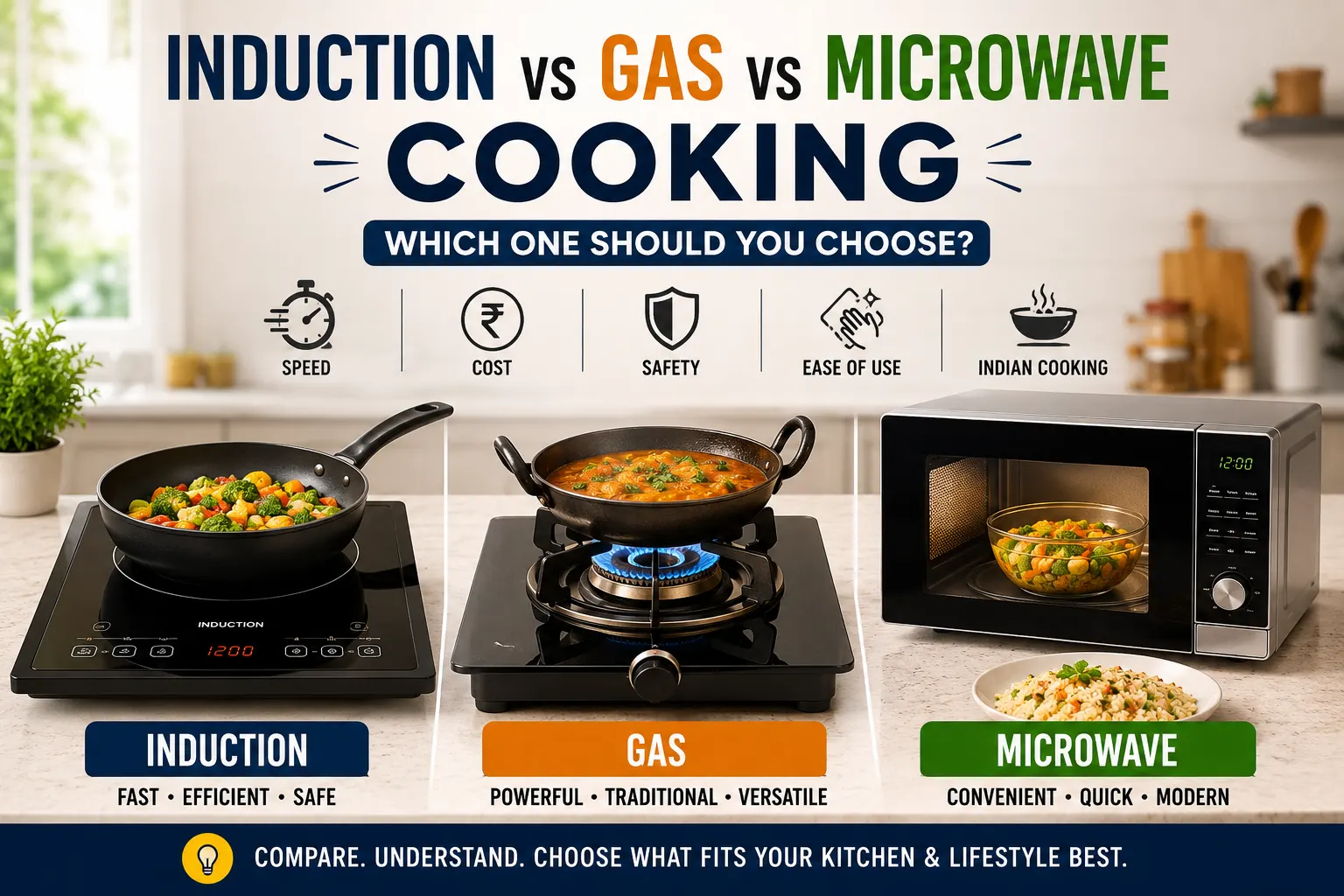
Choosing a new cooking appliance isn’t as simple as it used to be. Should you buy an induction cooktop, stick with a traditional gas stove, or rely on a microwave for everyday cooking? If you’ve been comparing induction vs gas vs microwave cooking, you’re not alone.
Each option has its own strengths, costs, and limitations. The best choice depends on your cooking style, budget, kitchen setup, and safety priorities. In this guide, we’ll compare all three methods in a practical, real-world way so you can make the right decision for your home.
Quick Overview – How Each One Works
Before comparing them side by side, it’s helpful to understand how each cooking method actually works. So, induction vs gas vs microwave cooking define:
Induction Cooktop
An induction cooktop uses electromagnetic energy to heat the cookware directly instead of heating the cooking surface. This makes it incredibly fast and energy-efficient. However, it only works with induction-compatible cookware made of magnetic materials like cast iron or certain stainless steel.
Gas Stove
A gas stove burns LPG or piped natural gas to produce a flame. The flame heats the cookware directly, making it ideal for Indian cooking techniques such as roasting, frying, and making rotis.
Microwave Oven
A microwave uses electromagnetic waves to heat water molecules inside food. Unlike induction or gas, it isn’t designed for traditional stovetop cooking. Instead, it’s best for reheating, defrosting, steaming, and cooking selected microwave-friendly recipes.
Induction vs Gas vs Microwave Cooking – Detailed Comparison
Comparison Table
| Feature | Induction Cooktop | Gas Stove | Microwave Oven |
|---|---|---|---|
| Cooking Speed | Very Fast | Fast | Fast for reheating |
| Energy Efficiency | Excellent (85–90%) | Moderate (40–60%) | Good for small meals |
| Running Cost | Depends on electricity rates | Depends on LPG prices | Low for occasional use |
| Safety | Very High | Moderate | High |
| Cleaning | Very Easy | Moderate | Easy |
| Best For | Daily cooking, boiling, sautéing | Traditional Indian cooking | Reheating, baking, steaming |
| Cookware Needed | Induction-compatible | Almost any cookware | Microwave-safe containers |
Cooking Speed and Efficiency
If speed matters, induction clearly takes the lead.
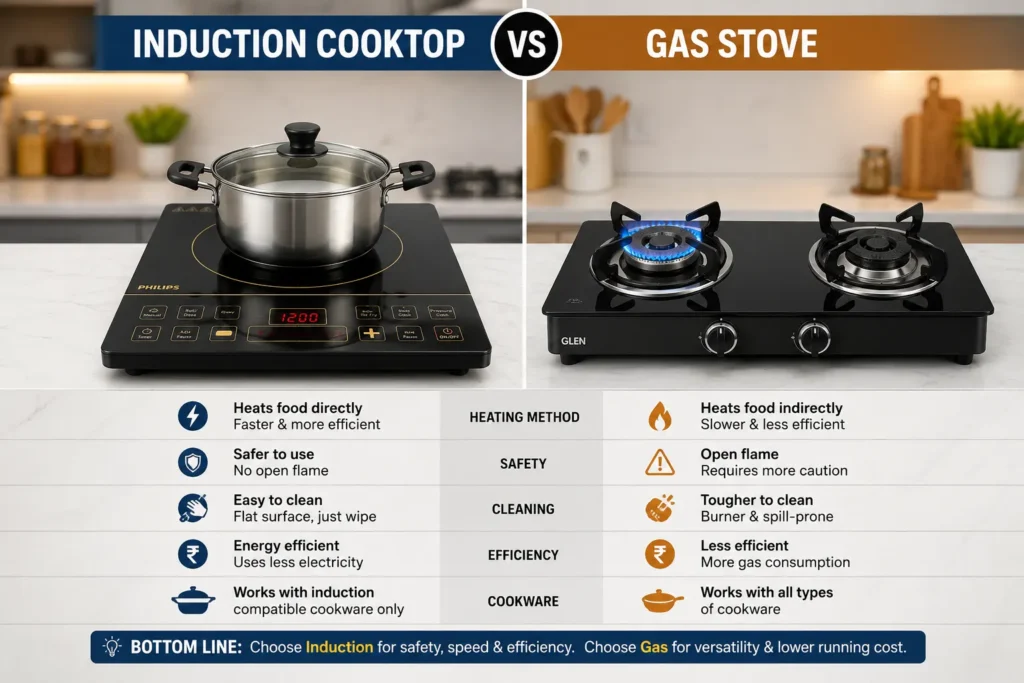
Because heat is generated directly inside the cookware, very little energy is wasted. Water boils significantly faster on an induction cooktop than on a gas stove.
Gas stoves are still quick and offer instant flame control, which experienced cooks appreciate. However, much of the heat escapes around the pan, reducing efficiency.
Microwaves heat food differently. They’re excellent for reheating leftovers, steaming vegetables, or defrosting frozen food, but they aren’t ideal for frying, making curries, or cooking rotis.
Winner: Induction for speed and efficiency.
Running Cost – Electricity vs Gas Cost
One of the biggest questions homeowners ask is whether electricity is cheaper than LPG.
The answer depends on your local electricity tariff and LPG prices.
Although induction cooktops consume electricity, they convert most of that energy into cooking heat. Gas stoves lose a considerable amount of heat into the surrounding air.
Microwaves consume relatively little electricity because they are usually used for short durations rather than complete meal preparation.
Typical monthly costs vary depending on cooking frequency:
- Heavy daily cooking: Gas and induction may be similar.
- Light cooking: Induction often becomes more economical.
- Mostly reheating food: Microwave is the cheapest to operate.
If your area experiences frequent power cuts, gas remains the more dependable option.
Safety (Fire Risk, Gas Leaks, Electrical Safety)
Safety is often the deciding factor, especially for families with children or elderly members.
Induction Cooktop Safety
One of the biggest advantages of induction is its safety.
The cooking surface itself doesn’t become extremely hot. It only heats from the hot cookware placed on it. There’s no open flame, significantly reducing burn and fire risks.
Modern induction cooktops also include features like:
- Auto shut-off
- Overheat protection
- Child lock
- Pan detection
These features make induction cooktop safety one of its strongest selling points.
Gas Stove Safety
Gas stoves involve an open flame and combustible fuel.
Potential risks include:
- Gas leaks
- Accidental fires
- Burns from open flames
- Carbon monoxide if ventilation is poor
Regular maintenance and leak checks greatly improve safety.
Microwave Safety
Microwaves are generally very safe when used correctly.
The biggest risks come from:
- Using metal containers
- Overheated liquids
- Damaged door seals
Following the manufacturer’s instructions eliminates most concerns.
Winner: Induction.
Maintenance and Cleaning Ease
Nobody enjoys scrubbing burnt food from a stove.
Induction cooktops have a smooth glass surface that can usually be cleaned with a damp microfiber cloth after cooking.
Gas stoves require more effort because of:
- Burner cleaning
- Pan supports
- Oil splatters
- Food particles trapped around burners
Microwaves are also simple to maintain. Wiping the interior regularly prevents grease and food buildup.
For busy households, induction and microwave are clear winners.
Suitability for Indian Cooking
This is where the comparison becomes more interesting.
Indian cooking often involves:
- Tadka
- Deep frying
- Rotis and phulkas
- High-heat stir frying
- Pressure cooking
- Slow simmering dals
Gas stoves handle all these tasks naturally.
Induction cooktops perform extremely well for:
- Pressure cooking
- Boiling milk
- Curries
- Rice
- Sautéing vegetables
However, making puffed rotis directly over a flame isn’t possible on induction.
Microwaves are not a replacement for traditional Indian cooking. Instead, they work best for:
- Reheating food
- Melting butter
- Steaming vegetables
- Baking (convection models)
- Simple mug recipes
Winner: Gas for traditional Indian cooking.
Which One Should You Choose?
There isn’t a single “best” choice. The right option depends on your lifestyle.
For Students and Bachelors
Choose an induction cooktop.
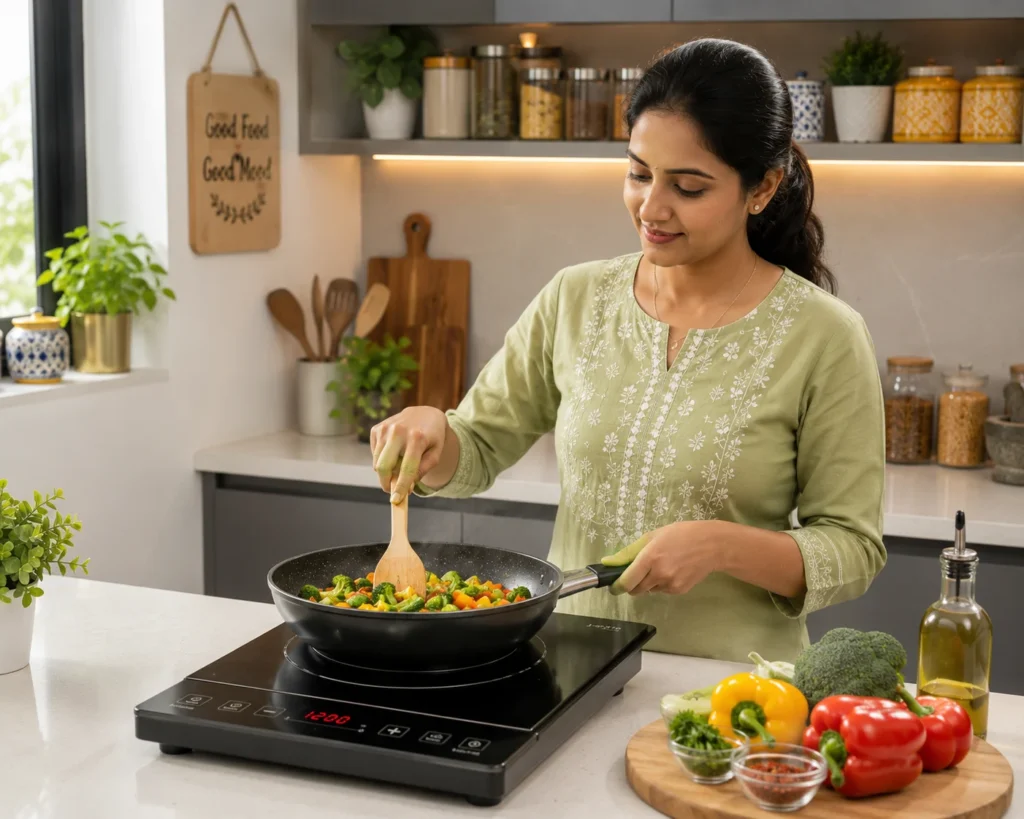
It heats quickly, is easy to clean, occupies little space, and doesn’t require LPG cylinders.
For Families
A gas stove remains the most versatile choice, especially if multiple dishes are cooked daily.
Adding a microwave makes reheating leftovers much more convenient.
For Elderly Users
Induction is an excellent option because there is no open flame and modern safety features reduce accident risks.
For Rental Homes
Portable induction cooktops are practical because they require minimal installation and are easy to move.
For Frequent Home Cooks
If you prepare traditional Indian meals every day, a gas stove still provides unmatched flexibility.
Can You Use All Three Together?
Absolutely—and many modern kitchens already do.
Instead of choosing only one appliance, consider a hybrid setup:
- Gas Stove: Daily Indian cooking, frying, rotis, and high-heat cooking.
- Induction Cooktop: Quick meals, boiling water, backup during busy cooking sessions, or energy-efficient everyday cooking.
- Microwave: Reheating leftovers, steaming vegetables, defrosting frozen foods, and baking (if using a convection microwave).
This combination gives you the flexibility to use the right appliance for every task while reducing overall cooking time.
Final Verdict
When comparing induction vs gas vs microwave cooking, there’s no universal winner.
If speed, energy efficiency, and safety are your priorities, an induction cooktop is an excellent investment.
If you enjoy traditional Indian cooking with maximum flexibility, a gas stove still deserves its place in your kitchen.
And if convenience matters most, a microwave is the perfect companion for reheating, steaming, and quick meals.
Before buying, think about how you actually cook every day rather than simply choosing the newest appliance. The best cooking method is the one that fits your lifestyle, budget, and kitchen habits.
Internal Linking Opportunities
Consider linking this article to:
- How to Build an Energy-Efficient Kitchen (Complete Guide)
- Best Induction Cooktops in India: Buying Guide
- Gas Stove Maintenance Tips Every Homeowner Should Know
- 5 Water Purifier Servicing Signs You Should Never Ignore
Love simple home maintenance tips like these? Join the Dailyrecshub community on Pinterest, for daily home & kitchen inspiration, appliance care guides, cleaning hacks, and practical DIY tips. Save your favorite ideas, share them with family, and never miss a helpful update!