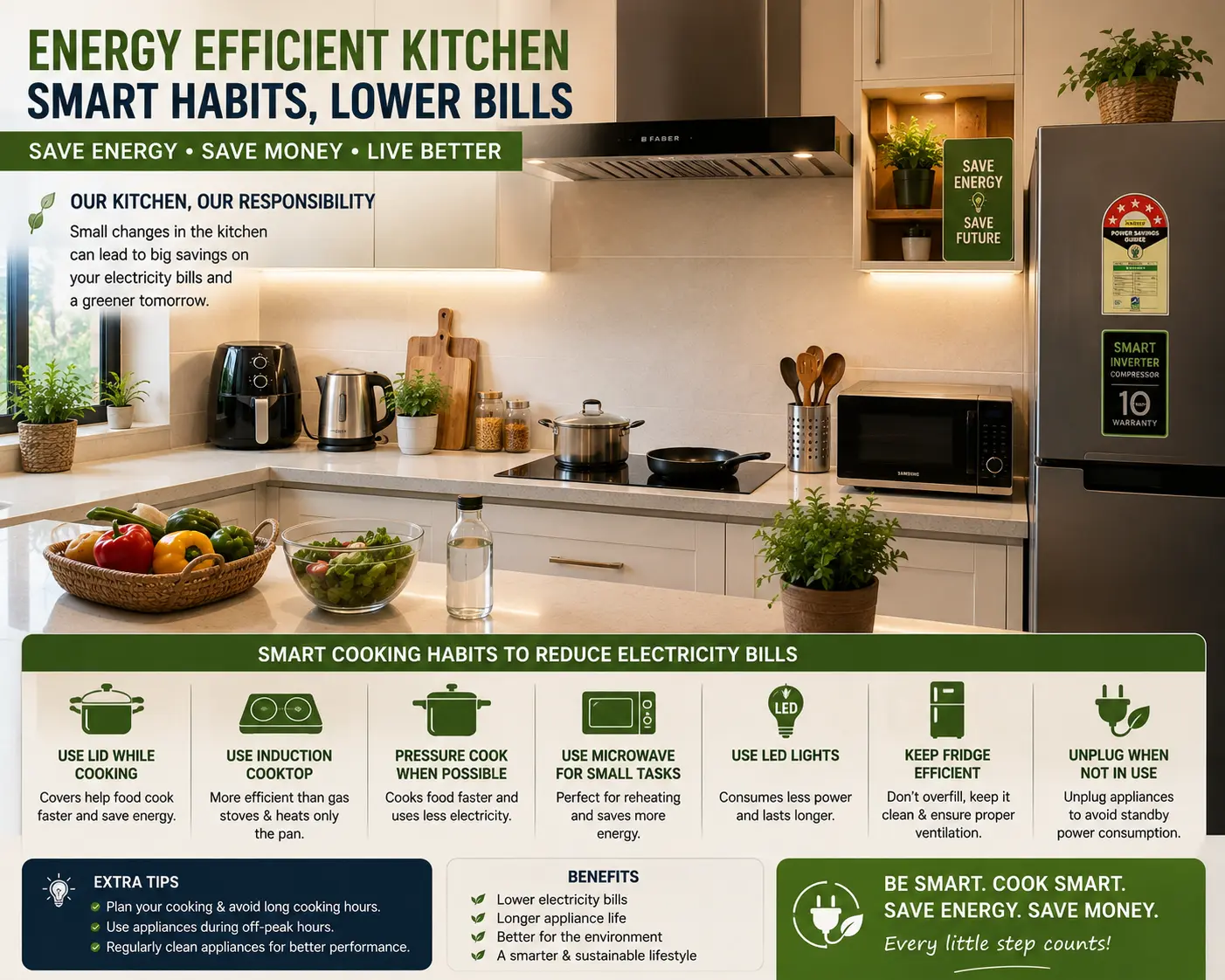
Have you noticed your electricity bill creeping up even though you haven’t bought any new appliances? The kitchen is often one of the biggest energy users in any home, but the good news is that you don’t need expensive upgrades to make a difference.
These energy efficient kitchen tips are simple, practical, and based on how kitchen appliances actually work. By making a few small changes to your daily routine and maintaining your appliances properly, you can reduce energy waste, extend appliance life, and lower your monthly electricity bill.
Why Kitchens Use More Energy Than You Think
Your kitchen contains several appliances that either run continuously (like your refrigerator) or consume a lot of power in short bursts (such as microwaves, mixers, chimneys, and electric kettles). Even small inefficiencies—like dirty coils, poor airflow, or unnecessary standby power—can add up over time.
Fortunately, improving efficiency doesn’t mean replacing your appliances. Most savings come from better habits and regular maintenance.
Simple Energy Efficient Kitchen Tips That Actually Work
Set Your Refrigerator to the Right Temperature
Your refrigerator works 24 hours a day, making it one of the largest electricity consumers in your kitchen.
Why it saves energy:
Setting the temperature colder than necessary forces the compressor to run longer, increasing electricity consumption without improving food preservation.
How to do it:
- Refrigerator compartment: 3–5°C
- Freezer: -18°C
- Avoid setting the coldest option unless absolutely necessary.
- Use a refrigerator thermometer if available.
Small adjustments can noticeably help reduce kitchen electricity bill over the year.
Don’t Keep Opening the Fridge Door
Every time the door opens, cold air escapes and warm air enters.
Why it saves energy:
The compressor must work harder to restore the internal temperature.
How to do it:
- Decide what you need before opening.
- Close the door completely.
- Check that the rubber door gasket seals properly.
Even saving a few seconds each time makes a difference over hundreds of daily uses.
Defrost Your Freezer Regularly
If your freezer isn’t frost-free, ice buildup reduces efficiency.
Why it saves energy:
A thick layer of frost acts like insulation, forcing the cooling system to work harder.
How to do it:
- Defrost when ice reaches around 5–6 mm.
- Empty the freezer first.
- Never use sharp tools to remove ice.
This is one of the easiest energy saving kitchen appliances tips homeowners often overlook.
Image Alt Text Idea: Person defrosting a home freezer to improve kitchen energy efficiency.
Keep Refrigerator Coils Clean
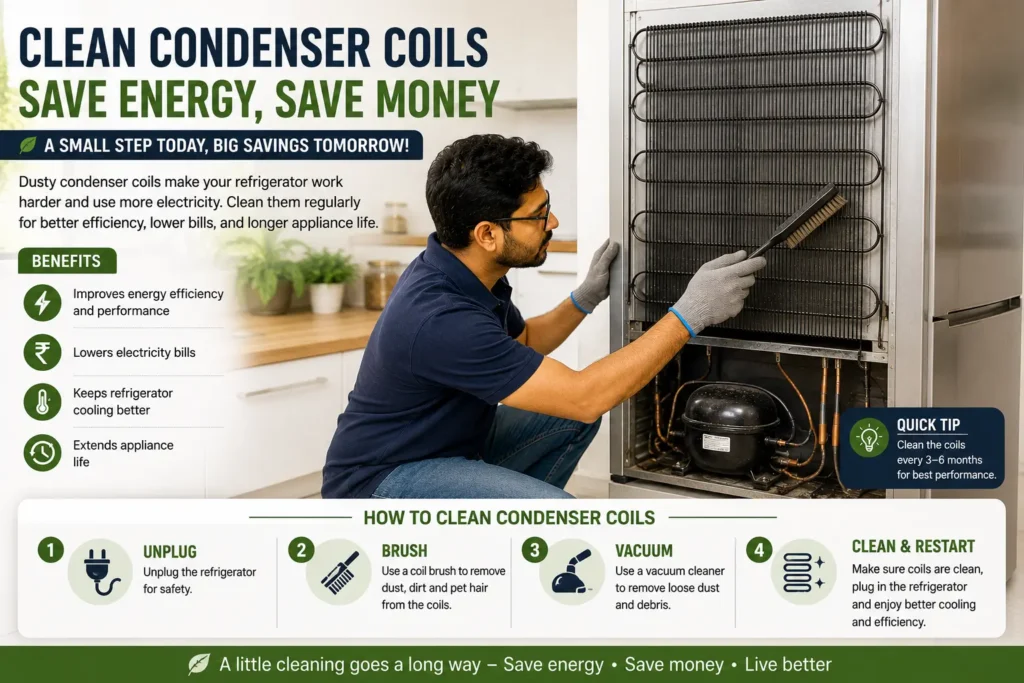
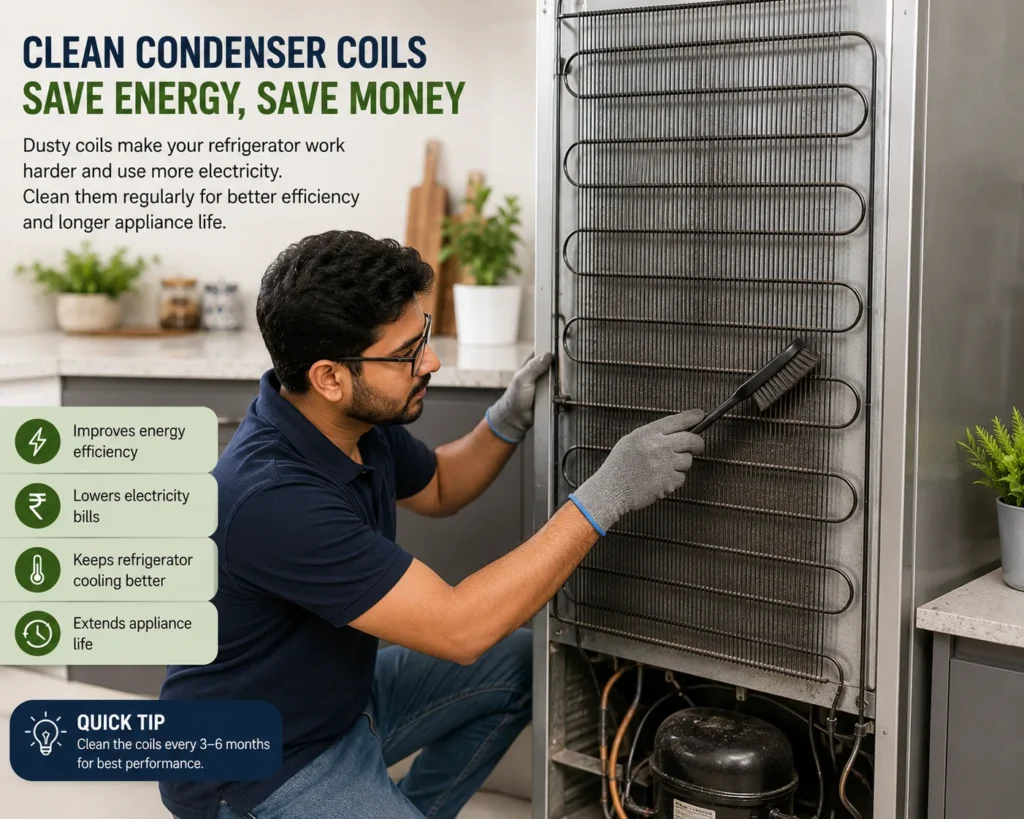
Most people never clean the condenser coils behind or underneath their refrigerator.
Why it saves energy:
Dust blocks heat from escaping, making the compressor run longer.
How to do it:
- Unplug the refrigerator.
- Use a vacuum cleaner or soft brush.
- Clean every 6 months.
Just ten minutes of maintenance can improve cooling efficiency significantly.
Cook with Lids Whenever Possible
Cooking without a lid wastes heat.
Why it saves energy:
Covering pots traps steam and heat, allowing food to cook faster.
How to do it:
- Always use a properly fitting lid.
- Match pot size to burner size.
- Reduce heat once water reaches a boil.
These are simple energy efficient cooking habits that save both electricity and cooking time.
Use a Pressure Cooker for Longer Cooking
Pressure cookers are among the most efficient cooking tools available.
Why it saves energy:
They cook food much faster by increasing internal pressure and temperature.
How to do it:
Choose a pressure cooker when preparing:
- Lentils
- Rice
- Potatoes
- Chickpeas
- Meat stews
Less cooking time means lower energy use.
Avoid Overloading the Microwave
Stuffing too much food into the microwave often leads to uneven heating.
Why it saves energy:
Food heats more evenly in moderate portions, reducing repeated heating cycles.
How to do it:
- Heat medium-sized portions.
- Stir halfway through longer cooking.
- Use microwave-safe covered containers.
Switch Off Standby Power
Many kitchen appliances consume electricity even when they’re not actively being used.
Examples include:
- Microwave clocks
- Water purifier displays
- Coffee machines
- Electric kettles with indicator lights
Why it saves energy:
Standby power may seem small, but it runs 24/7.
How to do it:
- Turn appliances off at the switch.
- Use a power strip for grouped appliances if convenient.
It’s a simple habit that helps save electricity in the kitchen without changing your routine.
Let Hot Food Cool Before Refrigerating
Placing steaming food directly inside the refrigerator increases its workload.
Why it saves energy:
The refrigerator has to remove the extra heat, making the compressor run longer.
How to do it:
Allow food to cool for around 20–30 minutes before storing it safely in the refrigerator.
Match Cookware to Burner Size
Using a small pan on a large burner wastes heat around the sides.
Why it saves energy:
More heat reaches the cookware instead of escaping into the air.
How to do it:
- Use the smallest suitable burner.
- Choose flat-bottom cookware.
- Keep cookware centered.
Appliance Maintenance Habits That Improve Efficiency
Routine maintenance is just as important as using appliances correctly. Well-maintained appliances consume less electricity and usually last longer.
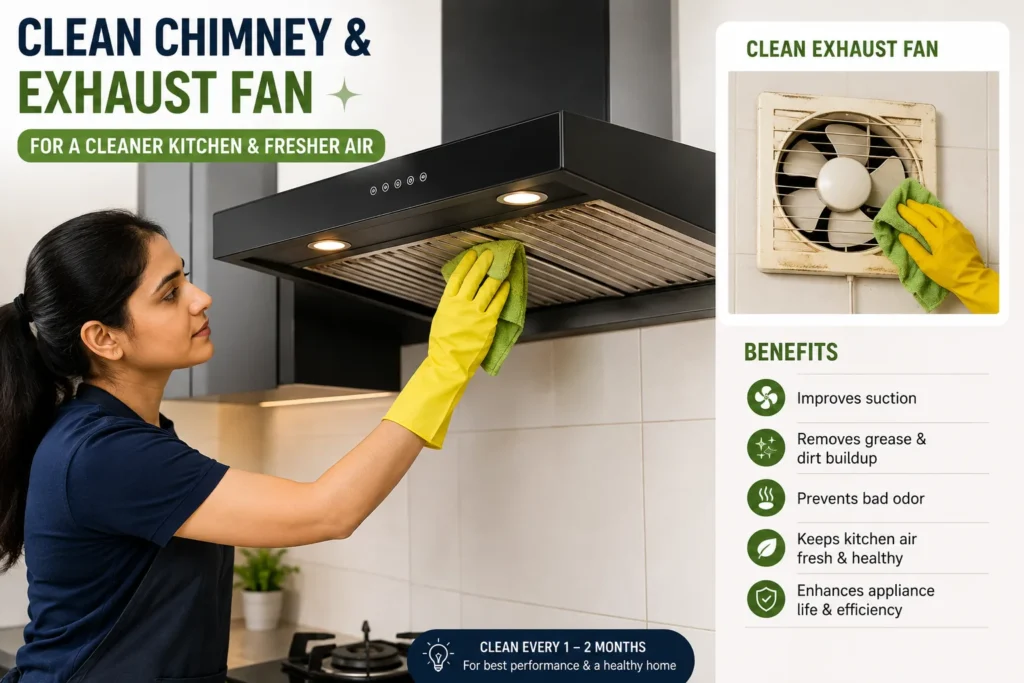
Clean Chimney Filters Regularly
Grease-covered filters restrict airflow, forcing the motor to work harder.
Recommended schedule:
- Monthly for heavy cooking
- Every 2–3 months for lighter use
Wash metal filters with warm water and dish soap, or follow your manufacturer’s instructions.
Dust Refrigerator Coils Twice a Year
As mentioned earlier, dusty coils reduce cooling efficiency.
Add this task to your seasonal home maintenance checklist.
Service Your Water Purifier on Time
A neglected RO water purifier may not directly consume significantly more electricity, but clogged filters can reduce water flow and place extra strain on pumps in some systems.
Regular servicing also ensures:
- Better water quality
- Longer filter life
- Reliable performance
Internal Link Opportunity: Read our Water Purifier Servicing Guide to learn how often your RO system should be cleaned and maintained.
Clean Microwave Interior Frequently
Food splatters absorb microwave energy and make cleaning harder later.
Wipe the interior weekly with a damp microfiber cloth to keep it operating efficiently.
Check Door Seals on Refrigerators
If cold air leaks through damaged seals, your refrigerator keeps running longer.
A quick paper test can help:
- Close the door on a sheet of paper.
- If it slides out easily, the seal may need replacement.
Good seals improve cooling while helping reduce kitchen electricity bill.
A Simple Energy-Saving Checklist for Your Kitchen
Use this checklist each week to build better habits:
- ✔ Set refrigerator between 3–5°C
- ✔ Defrost freezer before heavy ice buildup
- ✔ Clean refrigerator coils every six months
- ✔ Use lids while cooking
- ✔ Prefer pressure cookers for long cooking
- ✔ Match cookware to burner size
- ✔ Avoid opening the refrigerator unnecessarily
- ✔ Switch appliances off instead of leaving them on standby
- ✔ Let hot food cool before refrigerating
- ✔ Clean chimney filters regularly
- ✔ Wipe microwave interior weekly
- ✔ Schedule regular RO water purifier servicing
Following even a handful of these energy efficient kitchen tips consistently can lead to noticeable savings over time.
Final Thoughts
Making your kitchen more energy efficient doesn’t require expensive appliances or major renovations. Small daily habits, combined with regular maintenance, can reduce unnecessary electricity use while helping your appliances perform at their best.
This week, try adopting just two or three of these habits—perhaps cleaning your refrigerator coils, cooking with lids, or switching appliances completely off instead of leaving them on standby. Small improvements today can lead to lower bills and a more efficient kitchen in the months ahead.
Suggested Internal Links
- The Ultimate Kitchen Deep Cleaning Checklist
- How Often Should You Service Your RO Water Purifier?
- 10 Easy Ways to Organize Your Kitchen Without Buying Anything New
Love simple home maintenance tips like these? Join the Dailyrecshub community on Pinterest, for daily home & kitchen inspiration, appliance care guides, cleaning hacks, and practical DIY tips. Save your favorite ideas, share them with family, and never miss a helpful update!