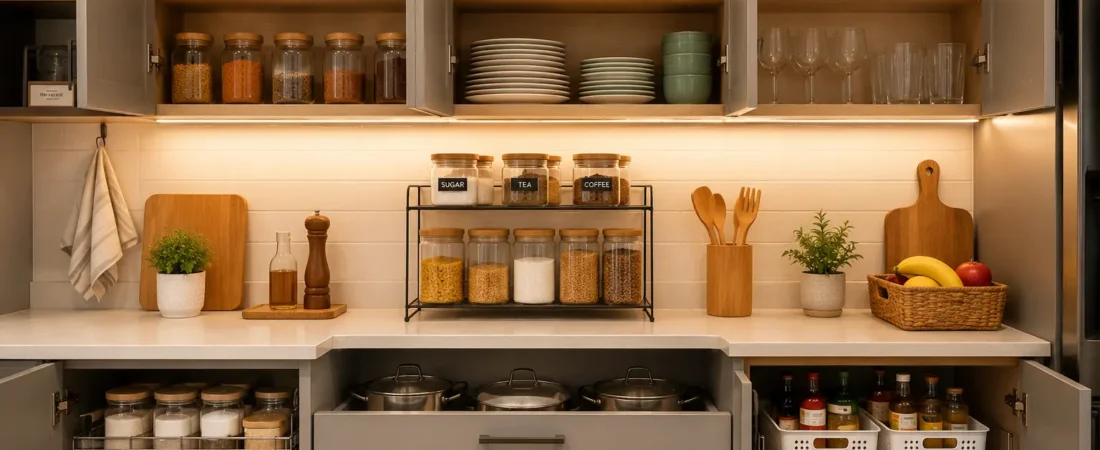
Decluttering your entire kitchen in one weekend sounds productive, but for many people, it creates more stress than progress. Pulling everything out at once can leave counters covered, cabinets emptied, and dozens of decisions waiting to be made. By the end of the day, you’re exhausted and tempted to put everything back exactly where it was.
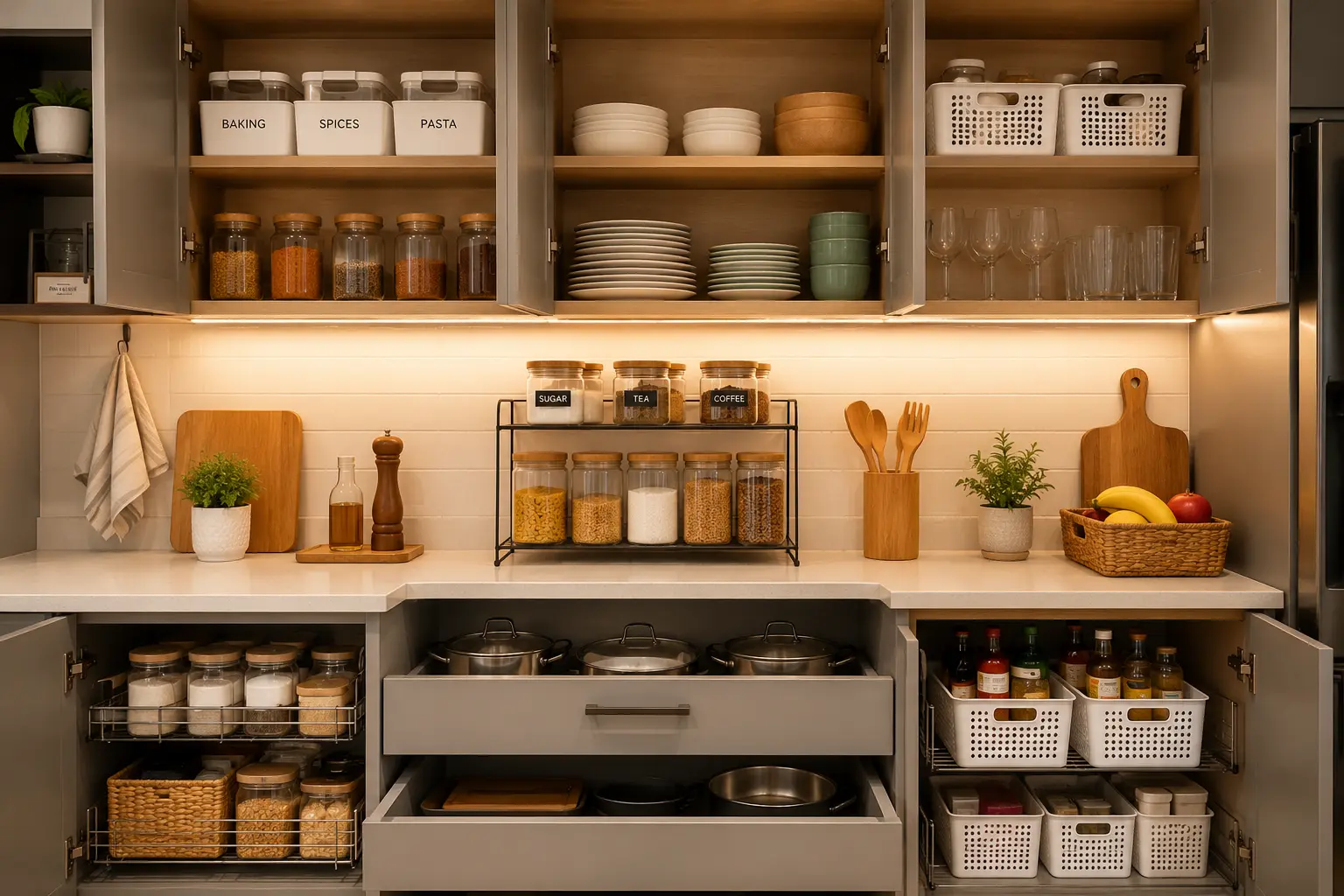
Learning how to declutter your kitchen without overwhelm starts with a different mindset: you don’t have to do everything at once. A slower, more thoughtful approach can make the process feel manageable while helping you create a kitchen that stays organized long after the decluttering is finished.
In this guide, you’ll learn a simple kitchen decluttering plan based on small zones, short sessions, and realistic decisions. Instead of forcing yourself through one giant cleanout, you’ll learn how to declutter kitchen spaces in stages without creating unnecessary stress.
Why Aggressive Decluttering Doesn’t Work Long-Term
The biggest problem with aggressive decluttering is that it treats your kitchen like a project with a finish line rather than a space you use every day.
When you try to empty every cabinet and drawer in a single session, decision fatigue can creep in quickly. Suddenly, you’re asking yourself whether you need an old container, three similar serving bowls, a rarely used appliance, and a drawer full of random kitchen tools—all at the same time.
That can make even simple decisions feel difficult.
Another issue is that aggressive decluttering often focuses only on removing things. It doesn’t always consider how your kitchen actually works. You might get rid of plenty of items but still end up with crowded cabinets because frequently used things aren’t stored where they make sense.
A more sustainable approach is to declutter gradually while paying attention to your habits. The goal isn’t to create an empty kitchen. It’s to create a kitchen where the things you keep are useful, accessible, and easy to maintain.
What Is Slow Decluttering (And Why It’s Trending)
The slow decluttering method is exactly what it sounds like: instead of trying to transform your entire home in a few intense sessions, you work through smaller areas over time.
In the kitchen, that might mean handling one drawer today, a single shelf tomorrow, and one cabinet later in the week.
Slow decluttering works because it reduces the mental pressure surrounding the process. You can focus on a small number of decisions rather than facing hundreds of them at once.
It also encourages a thoughtful decluttering approach. Rather than asking, “What can I throw away?” you’re asking better questions:
- Do I actually use this?
- Does this item make cooking or eating easier?
- Do I have something else that does the same job?
- Is it worth the space it takes up?
- Would I notice if this were gone?
This method is especially helpful when you’re learning how to start decluttering when overwhelmed. You don’t need a huge burst of motivation. You simply need one small area to begin.
How to Declutter Your Kitchen Without the Overwhelm — Step by Step
Step 1 – Pick One Small Zone, Not the Whole Kitchen
The first rule of successful decluttering is to make the starting point almost ridiculously small.
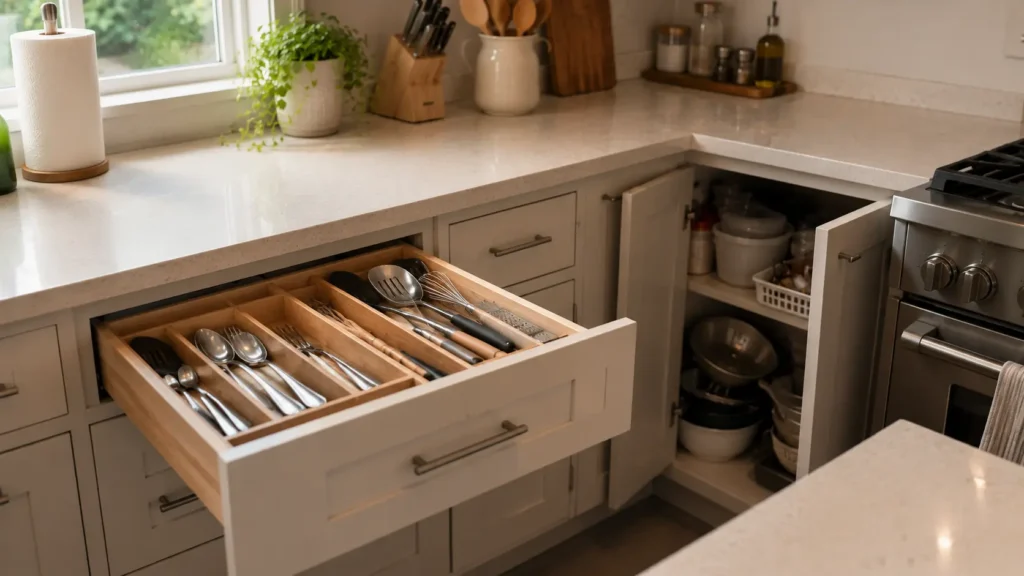
Don’t begin with “the kitchen.” Begin with something like the junk drawer, one cabinet shelf, the utensil drawer, or the area under the sink.
Choosing a clearly defined zone gives you a finish line. Once that small area is done, you get a visible result without creating a massive mess.
This is one of the most useful kitchen decluttering tips because it prevents the classic mistake of starting five areas and finishing none.
A good first zone should be easy enough that you can complete it in one session. Save complicated spaces, such as large pantry sections or overflowing storage cabinets, for later.
Step 2 – Set a Short Timer Instead of an All-Day Session
You don’t need an entire Saturday to make progress.
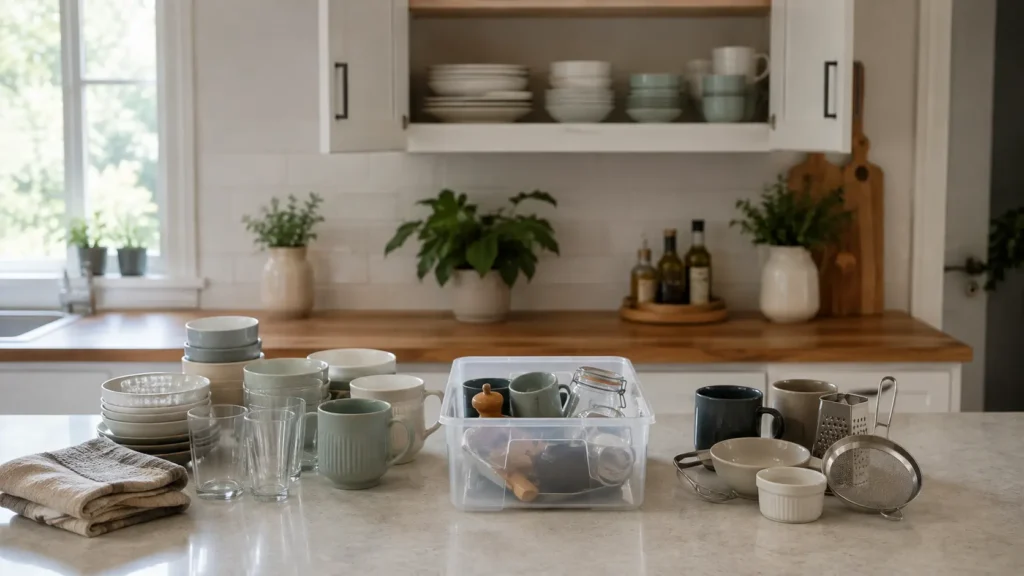
Set a timer for 15 to 30 minutes and work only until it ends. A short session makes decluttering feel like a manageable task rather than a major household project.
During that time, stay focused on the zone you chose. Don’t suddenly notice a messy countertop and switch tasks. That kind of distraction is exactly what makes decluttering feel overwhelming.
When the timer ends, you can stop—even if the space isn’t perfect.
This approach is one of the simplest ways to how to declutter without stress because you’re creating a clear limit. You always know the work has an endpoint.
Step 3 – Sort Into Simple Categories (Keep, Unsure, Let Go)
Avoid creating a complicated sorting system. Three categories are enough:
Keep: Items you use and genuinely need.
Unsure: Items you’re not ready to decide about.
Let Go: Items you no longer use, need, or want in your kitchen.
The “Unsure” category is important because not every decision has to happen instantly. Giving yourself permission to pause can prevent the process from becoming emotionally exhausting.
Try not to hold an item for several minutes while creating a long argument in your head. If you immediately know you use it regularly, keep it. If you know you never use it, let it go. If you’re genuinely uncertain, place it in the unsure group and move forward.
This simple system makes it much easier to declutter kitchen step by step.
Step 4 – Handle the “Unsure” Pile With a Waiting Box
The unsure pile can become its own source of clutter, so give it a clear boundary.
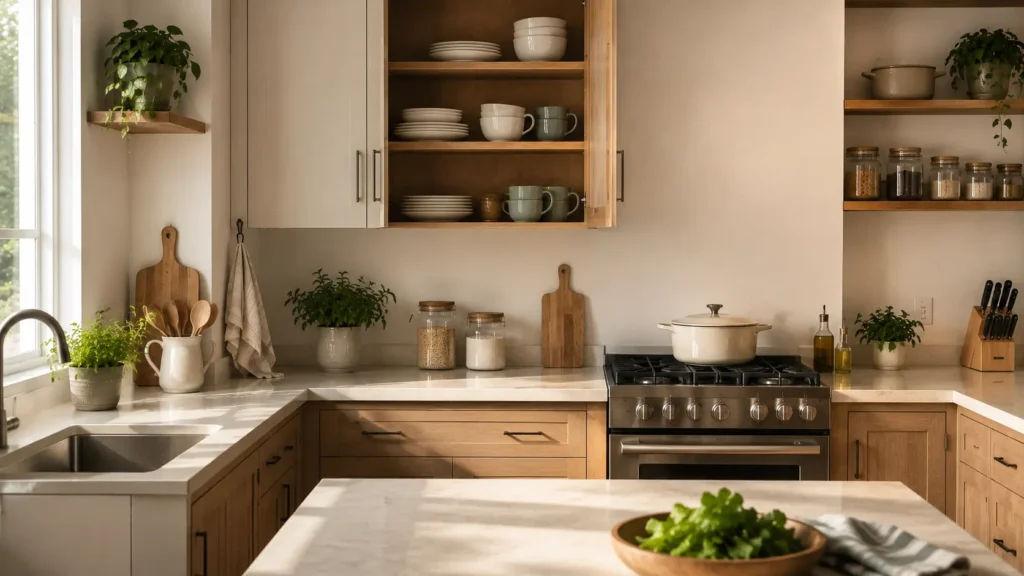
Place those items in a temporary waiting box or container. Write the date on it and put it somewhere that doesn’t interfere with your daily kitchen routine.
Over the following weeks or months, notice whether you actually miss or need anything inside.
When you naturally reach for something in the box, that’s useful information. When months pass and you completely forget about an item, that tells you something too.
The goal isn’t to force yourself to get rid of everything. It’s to give yourself enough time to make decisions based on real-life use rather than pressure.
This is one of the most practical examples of staged decluttering because you’re allowing decisions to happen gradually.
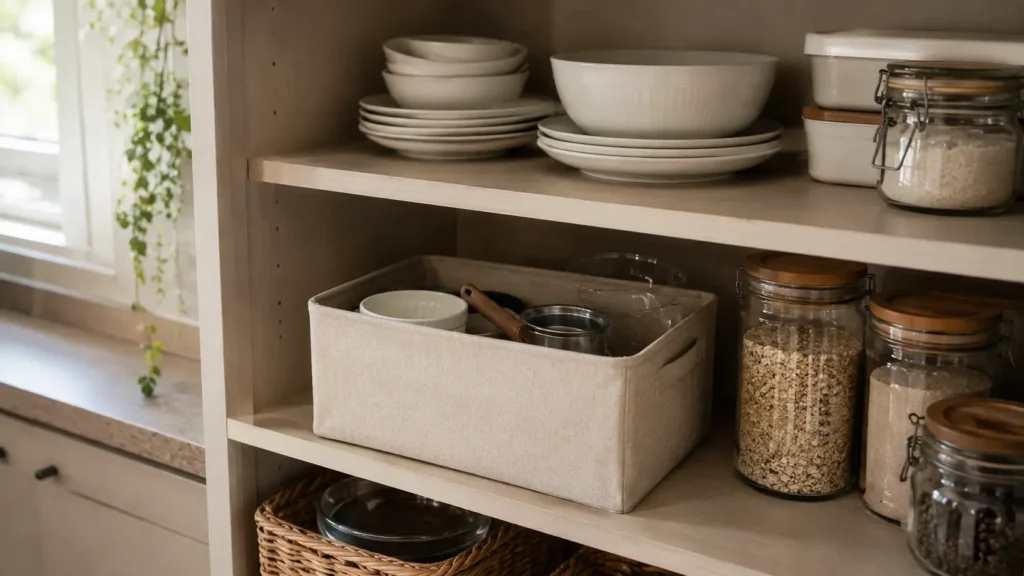
Step 5 – Be Thoughtful About What You Bring Back In
Decluttering isn’t only about what leaves your kitchen. It’s also about what stays.
Before returning everything to a drawer or cabinet, consider whether the current arrangement makes sense. Keep frequently used items easy to reach and place occasional-use items in less accessible areas.
Look for duplicates and unnecessary extras. You may discover that the problem wasn’t simply having too many things—it was storing things without a clear purpose or location.
A thoughtful decluttering approach asks you to consider function as well as quantity.
Your goal should be a kitchen that supports the way you actually live. There is no need to organize it according to someone else’s routine.
Step 6 – Repeat With the Next Zone Another Day
Once your first zone is finished, stop and enjoy the progress.
You don’t need to immediately move on to the next cabinet just because you’re feeling motivated. The whole purpose of this method is to create a sustainable rhythm.
Tomorrow, you might tackle one shelf. A few days later, you could work on another drawer. Over time, these small sessions can add up to a significant transformation.
This is what it means to declutter kitchen in stages. Instead of waiting for the perfect weekend, you make progress whenever you have a little time and energy.
Signs You’re Decluttering Too Aggressively
Decluttering should create relief, not make you feel like you’re fighting your own kitchen.
Watch for signs that you’re pushing yourself too hard:
- You’re making decisions quickly because you’re mentally exhausted.
- You’re emptying more spaces than you can realistically finish.
- You’re feeling anxious about throwing things away.
- You’re creating a huge pile that has nowhere to go.
- You’re skipping meals, rest, or regular responsibilities to keep decluttering.
- You’re becoming frustrated because the kitchen looks worse before it looks better.
- You’re putting items back simply because you don’t have the energy to decide.
When these signs appear, stop and reduce the size of the task.
A successful decluttering session doesn’t have to look dramatic. Finishing one drawer calmly is better than destroying the entire kitchen and ending the day overwhelmed.
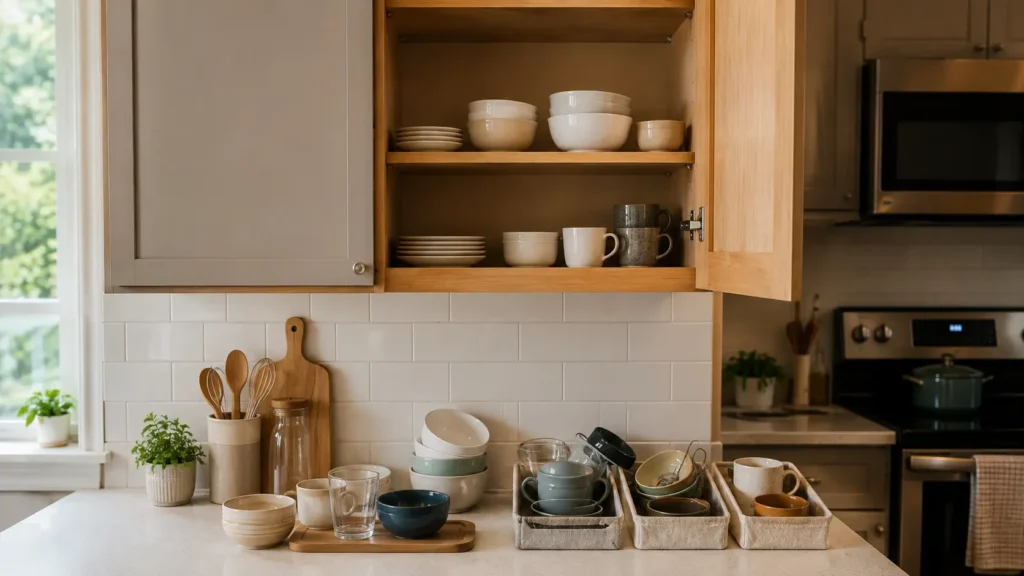
How to Stay Consistent Without Burning Out
Consistency becomes easier when decluttering feels small enough to fit into normal life.
Create a simple routine that works for your schedule. You might spend 15 minutes on one kitchen zone once or twice a week rather than dedicating an entire day to decluttering.
It can also help to connect decluttering with something you already do. For example, you could check one small area while waiting for dinner to cook or spend a few minutes sorting a drawer after cleaning up.
Keep your expectations realistic. Some weeks will be productive, while others won’t. You don’t need to maintain the same pace all the time.
The slow decluttering method is successful precisely because it allows flexibility.
Think of the process as reducing friction little by little. Every drawer that becomes easier to use makes the next part of your kitchen easier too.
Common Mistakes That Lead to Overwhelm
Even with a slower approach, a few common mistakes can derail your progress.
Trying to declutter everything at once: A huge project creates a huge mental load. Start with one clearly defined zone.
Expecting perfection: Your kitchen doesn’t need to look like a magazine. It needs to function well for your household.
Making every decision immediately: Some items genuinely require time and experience. That’s why an unsure category or waiting box can be useful.
Ignoring how you use the space: A beautifully arranged kitchen can still be inconvenient if everyday items aren’t easy to reach.
Starting without a stopping point: Always decide how long or how large your session will be before beginning.
Decluttering when you’re already exhausted: When your energy is low, even easy decisions can feel difficult. Choose a time when you can focus without rushing.
Quick Tips for a More Manageable Decluttering Session
- Start smaller than you think you need to.
- Set a 15–30 minute timer.
- Keep only three sorting categories.
- Use a waiting box for uncertain decisions.
- Finish one zone before starting another.
- Focus on function instead of perfection.
- Stop while you still have energy.
Final Thoughts
Learning how to declutter your kitchen without overwhelm doesn’t require a dramatic weekend makeover. A calmer approach—one small zone, one short session, and one decision at a time—can make the entire process feel much more achievable.
The best decluttering system is one you can actually maintain. Use staged decluttering, give yourself permission to pause, and focus on creating a kitchen that supports your everyday routines.
You don’t have to finish your entire kitchen today. One drawer, shelf, or cabinet is enough to get started.
For more practical ideas, explore more organization guides on DailyRecs Hub, including kitchen storage and organization methods that can help you make the most of the space you already have.
Suggested Internal Links
- The Ultimate Kitchen Deep Cleaning Checklist
- How Often Should You Service Your RO Water Purifier?
- 10 Easy Ways to Organize Your Kitchen Without Buying Anything New
Love simple home maintenance tips like these? Join the Dailyrecshub community on Pinterest, for daily home & kitchen inspiration, appliance care guides, cleaning hacks, and practical DIY tips. Save your favorite ideas, share them with family, and never miss a helpful update!
A Final Note
Learning declutter your kitchen without the overwhelm doesn’t mean getting everything perfect in one day. Start with one small zone, make a few thoughtful decisions, and give yourself permission to take your time. When you focus on steady progress instead of perfection, decluttering becomes much easier to maintain.
Remember, declutter your kitchen without the overwhelm is really about creating a space that feels easier to use and easier to live with. Take it one drawer, shelf, or cabinet at a time, and let those small wins add up. For more practical kitchen organization ideas, explore the other helpful guides here on DailyRecs Hub.