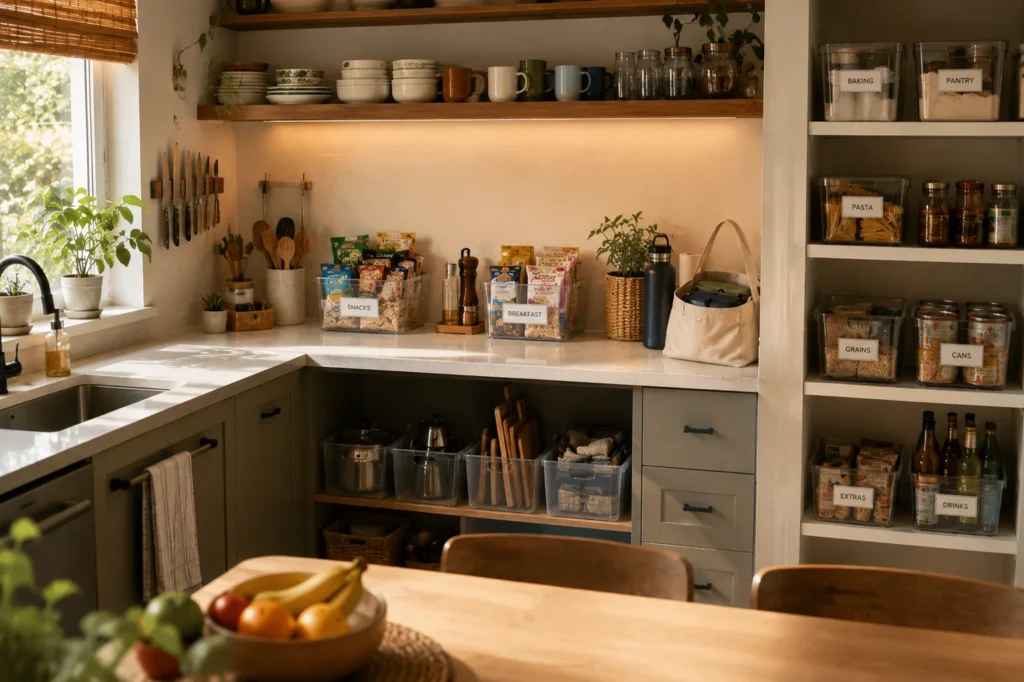
A kitchen can be technically organized and still feel impossible to use. Everything may have a designated spot, cabinets may look perfectly styled, and containers may be neatly labeled—but when putting something away takes too many steps, the system often falls apart.
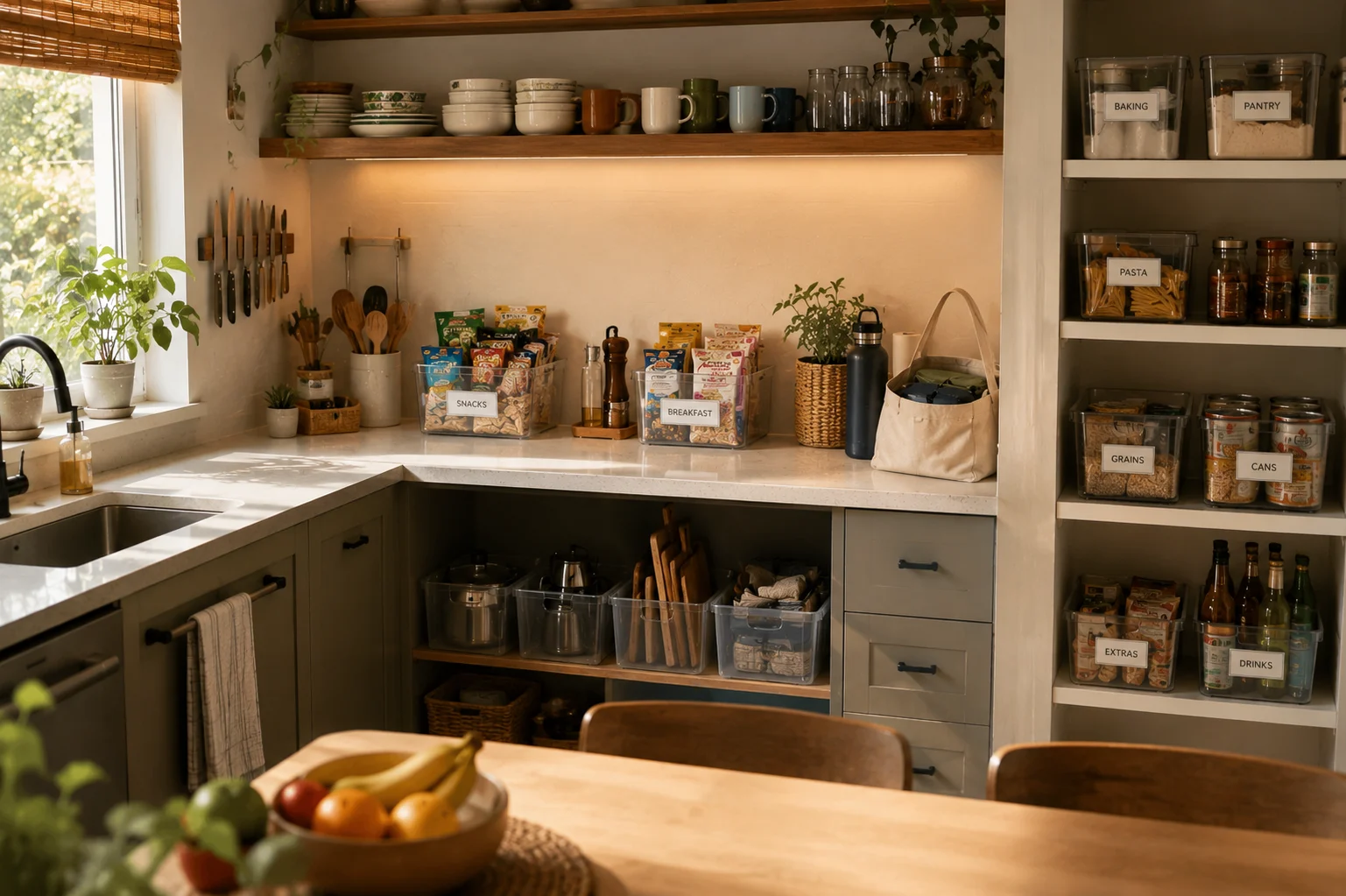
That is why ADHD-friendly kitchen organization focuses less on making a kitchen look perfect and more on making everyday tasks easier. The best setup should work with the way you naturally move through the kitchen, especially on busy or low-energy days.
In this guide, you’ll find practical ADHD kitchen organization ideas that prioritize visibility, convenience, simple routines, and fewer decisions. The goal is not a picture-perfect kitchen. It is a kitchen that is easier to use, easier to reset, and much less frustrating to maintain.
Why Traditional Organization Systems Don’t Work for ADHD
Traditional organizing advice often assumes that everyone benefits from the same kind of system. It commonly suggests putting everything behind closed doors, transferring items into matching containers, keeping counters completely clear, and returning every item to one carefully chosen location.
Those methods can look great, but they may create more work than they remove.
For example, a beautifully arranged cabinet can become difficult to use when one small item has to be moved before you can reach another. Similarly, storing something out of sight can make it much easier to forget that it exists.
Another issue is the gap between organizing and maintaining. A system might work perfectly during a two-hour organizing session but become frustrating after a busy week. That is where neurodivergent friendly organization can take a different approach.
Instead of asking, “What would look the most organized?” ask, “What makes this task easiest to repeat?”
That small change can completely transform your kitchen.
What Makes a Kitchen Organization System ADHD-Friendly?
A successful system should reduce friction instead of adding extra rules. The best organizing systems for ADHD are usually simple enough to follow without requiring a lot of thought every time you use them.
A few principles make a big difference:
- Visibility: You can quickly see what you have.
- Accessibility: Everyday items are easy to reach.
- Fewer steps: Putting something away does not become a mini project.
- Flexible storage: The system still works when things are not perfectly arranged.
- Visual cues: Labels, colors, and open storage provide helpful reminders.
- Real-life placement: Items live where you actually use them.
This is also why ADHD friendly home organization tends to work better when it supports existing habits instead of trying to create completely new ones.
A practical system should make the easiest choice the right choice.
ADHD-Friendly Kitchen Organization Ideas
Idea 1 – Keep Items Visible Instead of Hidden Away
When something disappears behind a cabinet door, deep shelf, or opaque container, it can become much easier to forget.
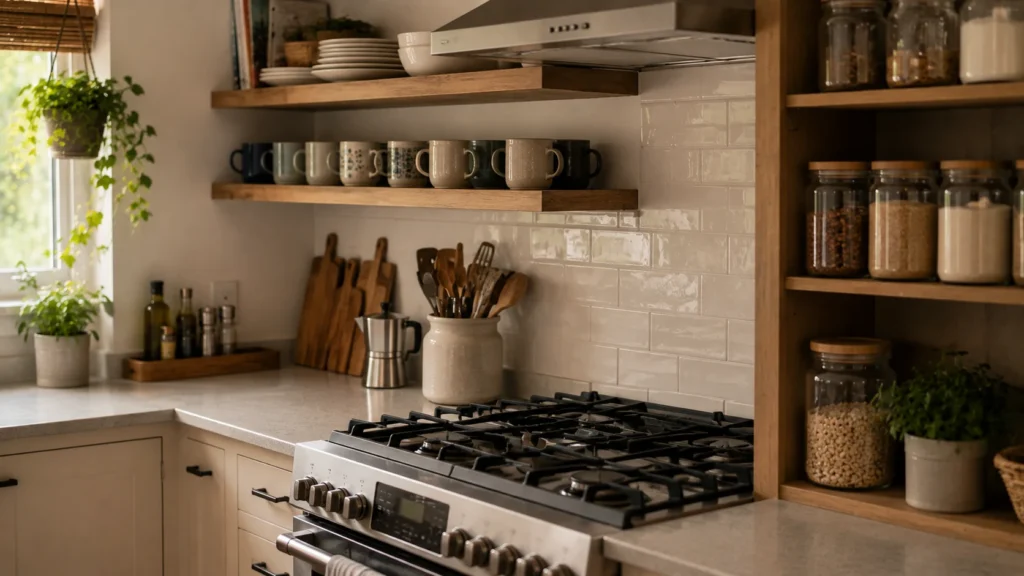
Start by keeping frequently used items visible. This could mean placing everyday mugs on an open shelf, keeping frequently used cooking tools in an accessible holder, or using clear storage where appropriate.
The goal is not to leave everything sitting out. Instead, think about which items benefit from being immediately noticeable.
Create visibility where it matters most.
For example, keep the ingredients you use regularly together in one easy-to-see area rather than scattering them across several cabinets. Everyday dishes can live in the easiest-to-reach section instead of being pushed toward the back.
This kind of visual organization for ADHD helps reduce the amount of searching, remembering, and decision-making required.
Idea 2 – Use Open Bins Instead of Lidded Containers
Lidded containers can be useful, but they also add another step: open the lid, place the item inside, close the lid, and put everything away.
Open bins can simplify that process.
Use them to group similar items such as snack foods, baking supplies, tea and coffee accessories, small kitchen tools, or frequently used pantry items. Rather than carefully arranging every item, you can simply drop it into its category.
This is one of the easiest forms of low effort kitchen organization because the storage method does not depend on perfect placement.
Open bins can also make it easier to spot what you already have. When the contents are visible, you’re less likely to create unnecessary clutter by forgetting about items stored in the back.
Think “contained enough to be manageable,” not “perfectly arranged.”
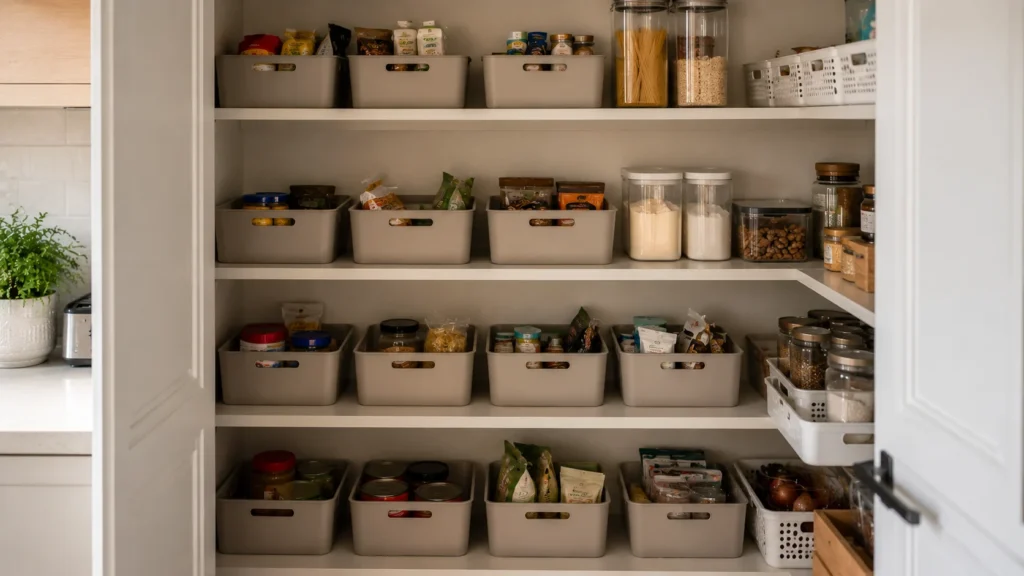
Idea 3 – Store Items Where You Actually Use Them, Not Where They “Should” Go
One of the most useful ADHD kitchen organization ideas is also one of the simplest: stop organizing based on imaginary rules.
If you regularly use a particular item near the dining table, store it closer to that area. If you make coffee in one corner of the kitchen, keep the things needed for that routine together.
Your kitchen should match your habits.
There is no requirement that every type of item live in a traditional location. Measuring tools do not have to be hidden in a drawer if you use them beside the pantry. Plates do not have to live in the “proper” cabinet if another location makes daily routines easier.
This is especially helpful for executive dysfunction friendly systems, because the environment does some of the remembering for you.
Your storage should follow your behavior—not force your behavior to follow your storage.
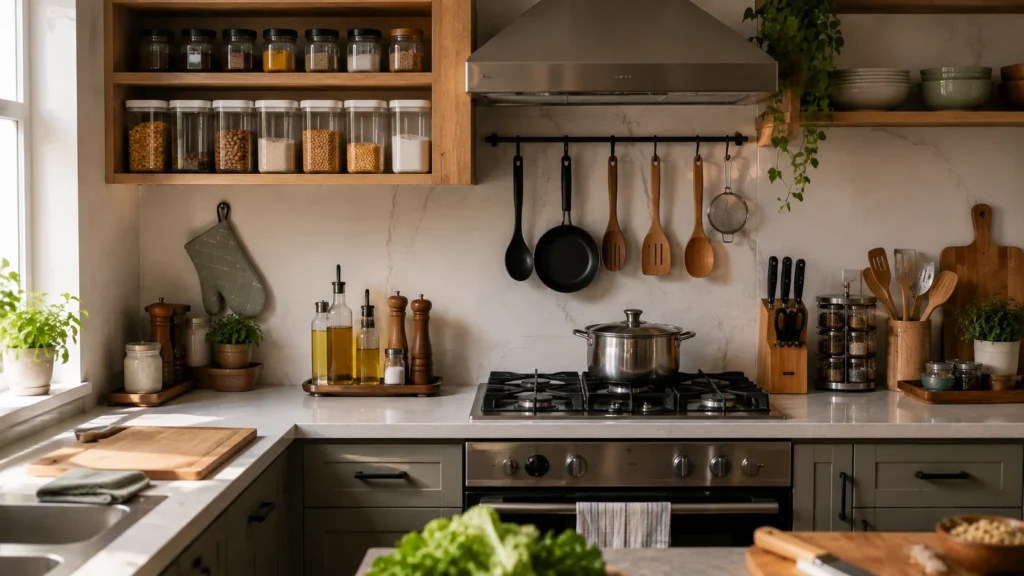
Idea 4 – Reduce Steps Between “Out” and “Away”
Every additional step creates another opportunity for a task to get interrupted.
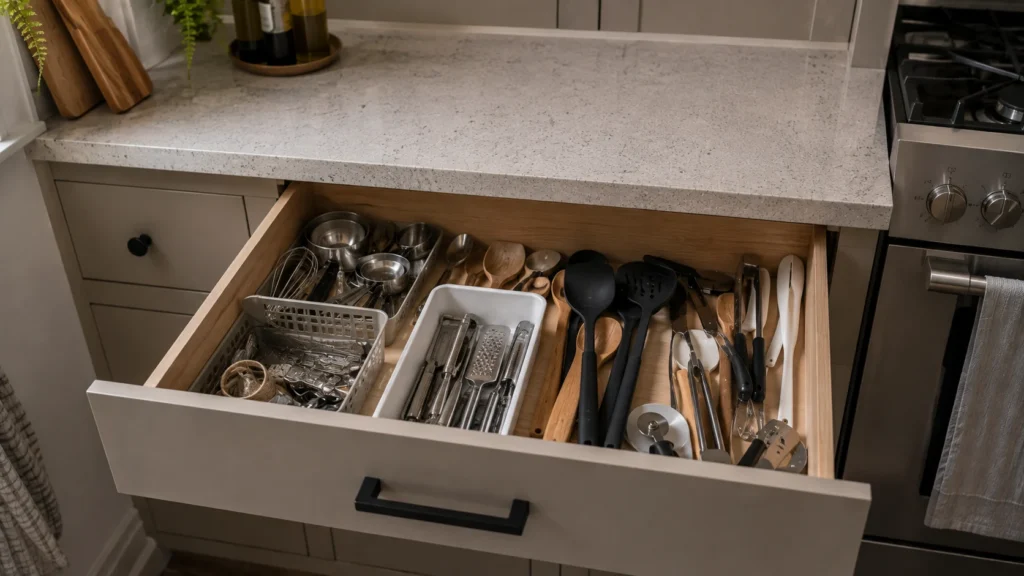
Consider what happens when putting away a utensil requires opening a drawer, moving a divider, fitting the utensil into a specific slot, and closing everything again. That system may be technically tidy, but it is not necessarily easy to maintain.
Look for ways to shorten the process.
Keep frequently used items together. Use larger categories instead of overly specific ones. Give yourself permission to use broad storage zones rather than trying to create a perfect home for every single object.
A good rule is:
Make putting something away almost as easy as leaving it out.
That approach supports easy maintenance kitchen organization because the reset process feels manageable rather than demanding.
Idea 5 – Use Color-Coding and Labels for Quick Visual Cues
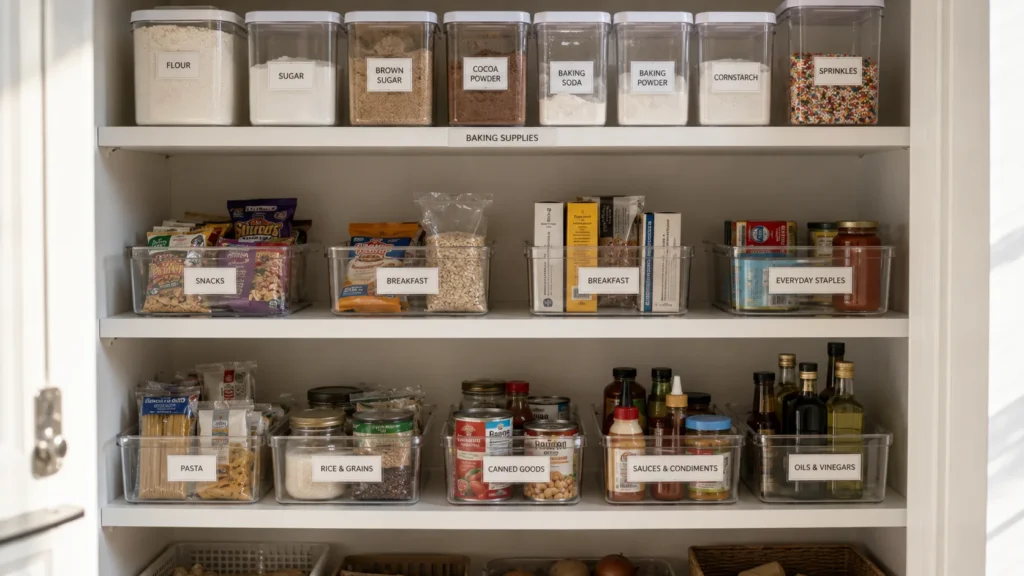
Labels can be helpful even when you already know where things belong. They provide a quick visual cue that reduces the need to stop and think.
Color can work the same way.
For example, you could use one label style for baking supplies, another for snacks, and another for food storage items. You can also use simple written labels such as “Breakfast,” “Snacks,” “Baking,” or “Daily Use.”
Avoid making the labeling system too complicated. The point is fast recognition.
A label should tell you what belongs there in a second or two.
This is a particularly useful visual organization for ADHD strategy because it makes categories easier to recognize at a glance.
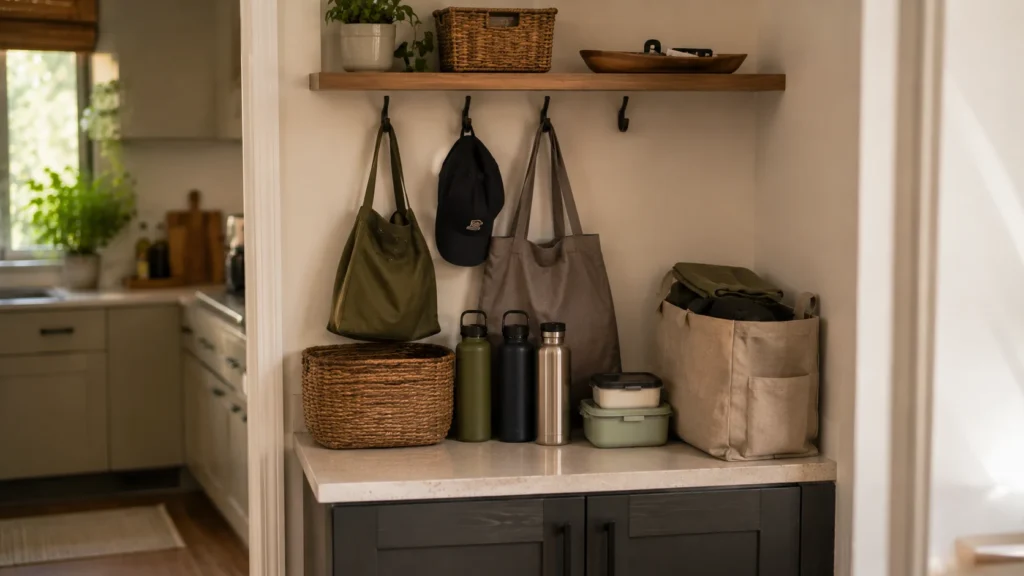
Idea 6 – Create Landing Zones for Everyday Items
Not everything needs to be immediately put away in a traditional sense.
Create designated landing zones for items that tend to migrate around the kitchen. This might include reusable bags, water bottles, lunch containers, mail, keys, or frequently used household items.
A landing zone gives clutter a destination.
Instead of expecting yourself to complete a perfect reset every time something comes into the kitchen, create one practical place where it can temporarily land.
You can even create a small “to deal with later” area. The important part is keeping it limited and intentional so it does not become an unlimited dumping ground.
These simple organization for busy minds strategies work because they accept that temporary clutter happens.
Idea 7 – Keep Duplicate Items in Multiple Zones
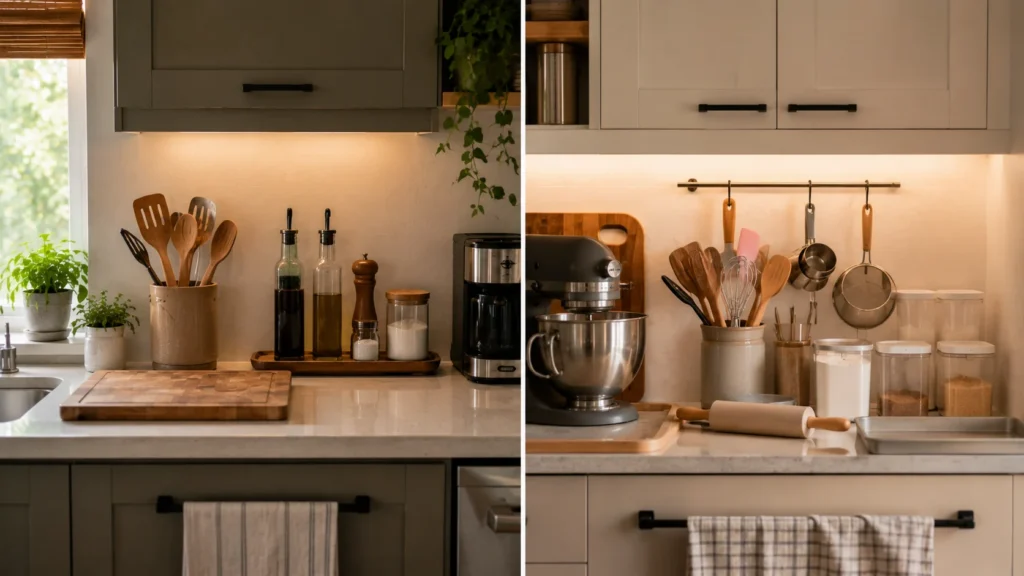
Traditional organizing often encourages removing duplicates. Sometimes that is useful, but duplicates can also make a kitchen easier to use.
Suppose you frequently use measuring spoons near both the cooking area and the baking area. Moving the same item back and forth every time may create unnecessary friction.
Keeping duplicates in different zones can make sense for everyday tools.
This does not mean filling your kitchen with extras. It means noticing when repeatedly carrying one item between two areas creates a problem.
The goal of ADHD-friendly kitchen organization is not to minimize everything. It is to minimize unnecessary effort.
How to Maintain an ADHD-Friendly Kitchen Without Burnout
The best organization system is one you can still use after the motivation from organizing day disappears.
That means maintenance should be simple.
Instead of trying to clean the whole kitchen every day, use small reset moments. While waiting for food to cook, return a few items to their zones. Before going to bed, clear one surface or put away one category.
Try using a “good enough” reset rather than aiming for perfection.
Your kitchen does not have to return to showroom condition every night. A five-minute improvement can still make tomorrow easier.
These ADHD cleaning and organizing tips can also help:
- Reset one zone instead of the entire kitchen.
- Put the easiest items away first to build momentum.
- Keep frequently used storage accessible.
- Leave some empty space so categories can grow naturally.
- Rework a system when it repeatedly causes frustration.
- Treat maintenance problems as useful feedback, not personal failure.
A system that repeatedly breaks down may simply need to be redesigned.
Mistakes to Avoid When Organizing for ADHD
Even a well-intentioned organization project can become harder than necessary. Watch out for systems that look impressive but create extra work.
Common mistakes include:
- Hiding everything: Closed storage can make forgotten items easier to forget.
- Over-categorizing: Too many tiny categories make putting things away harder.
- Creating complicated rules: Storage should not require a long explanation.
- Organizing only for appearance: A beautiful system is not useful if it does not fit your routines.
- Removing every duplicate: Some duplicates can reduce unnecessary movement between zones.
- Expecting perfect maintenance: Real kitchens get messy. The system should allow for that.
- Starting with the whole kitchen: One drawer, shelf, or zone is often easier to manage than an entire-room makeover.
The biggest mistake is assuming that a system is “wrong” because you have trouble maintaining it.
Sometimes the system is simply asking too much.
That is an important part of ADHD-friendly kitchen organization: the environment should make everyday actions easier, not make you feel like you are constantly failing at organization.
Final Thoughts
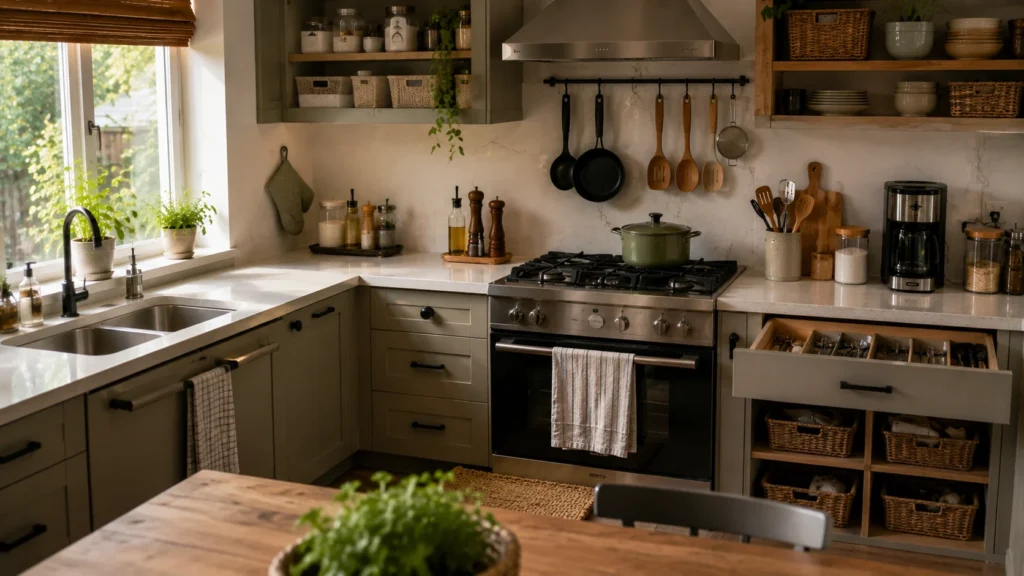
Good ADHD-friendly kitchen organization is not about creating the most beautiful kitchen or following traditional organizing rules perfectly. It is about building a space that supports your real routines, reduces unnecessary steps, and makes everyday tasks easier to complete.
Start small. Make important items visible. Use open storage where it helps. Create practical landing zones. Store things where you naturally use them, and design your kitchen around how you actually live.
The best system is the one you can return to without a huge effort.
For more practical ideas, explore our guides on how to organize kitchen cabinets, the zone-based kitchen organization method, and how to declutter your kitchen without the overwhelm for more simple ways to create a kitchen that works with your everyday life.
Suggested Internal Links
- The Ultimate Kitchen Deep Cleaning Checklist
- How Often Should You Service Your RO Water Purifier?
- 10 Easy Ways to Organize Your Kitchen Without Buying Anything New
Love simple home maintenance tips like these? Join the Dailyrecshub community on Pinterest, for daily home & kitchen inspiration, appliance care guides, cleaning hacks, and practical DIY tips. Save your favorite ideas, share them with family, and never miss a helpful update!
A Final Note
Remember, ADHD-friendly kitchen organization is not about keeping your kitchen perfectly tidy every day. It is about creating simple systems that make everyday tasks easier, reduce unnecessary steps, and work with your real routines.
Start with one small area, make it easier to use, and adjust the system whenever it stops working for you. The best ADHD-friendly kitchen organization setup is the one that feels practical enough to maintain—even on busy or low-energy days.