Cast iron cookware has made a serious comeback, and it is easy to see why. A well-maintained cast iron skillet can handle everything from searing and roasting to baking and everyday stovetop cooking. It is also often chosen by home cooks looking for cookware without PFAS-based nonstick coatings.
The secret to getting the best from cast iron is not complicated, but it does require a little consistency. Learning how to season and care for cast iron cookware helps create a durable cooking surface, reduces rust, and makes everyday cleaning much easier. The good news is that you do not need a complicated routine or special cleaning system.
Whether you have just brought home your first skillet or found an old rusty pan hiding in a cabinet, this cast iron cookware care guide will walk you through seasoning, daily cleaning, long-term maintenance, and restoration. By the end, you will know exactly how to season cast iron, how to avoid common mistakes, and how to keep your cookware in great shape for years.
Why Cast Iron Cookware Is Worth the Extra Care
Cast iron is popular because it is incredibly durable and versatile. When cared for properly, a cast iron pan can become a dependable kitchen staple that stays useful for decades.
One of its biggest advantages is heat retention. Cast iron heats up steadily and holds onto heat well, which makes it especially useful for browning, searing, roasting, and cooking foods that benefit from consistent temperatures.
The cooking surface is another reason people love it. Instead of relying on a synthetic nonstick coating, traditional cast iron develops a seasoned surface made from baked-on layers of cooking oil. This process is called polymerization, and it becomes stronger with regular use and maintenance.
There is also something practical about cast iron maintenance: small problems are usually fixable. A dull-looking surface, sticky residue, or even moderate rust does not necessarily mean the pan is ruined.
That is why understanding how to season and care for cast iron cookware is more useful than trying to keep it looking perfect all the time. Think of seasoning as an ongoing process rather than a one-time project.
How to Season Cast Iron Cookware for the First Time
For anyone learning seasoning cast iron for beginners, the process is much simpler than it first appears. The goal is to apply a very thin coat of oil and heat it until it bonds to the iron surface.
Here is a straightforward method for how to season cast iron.
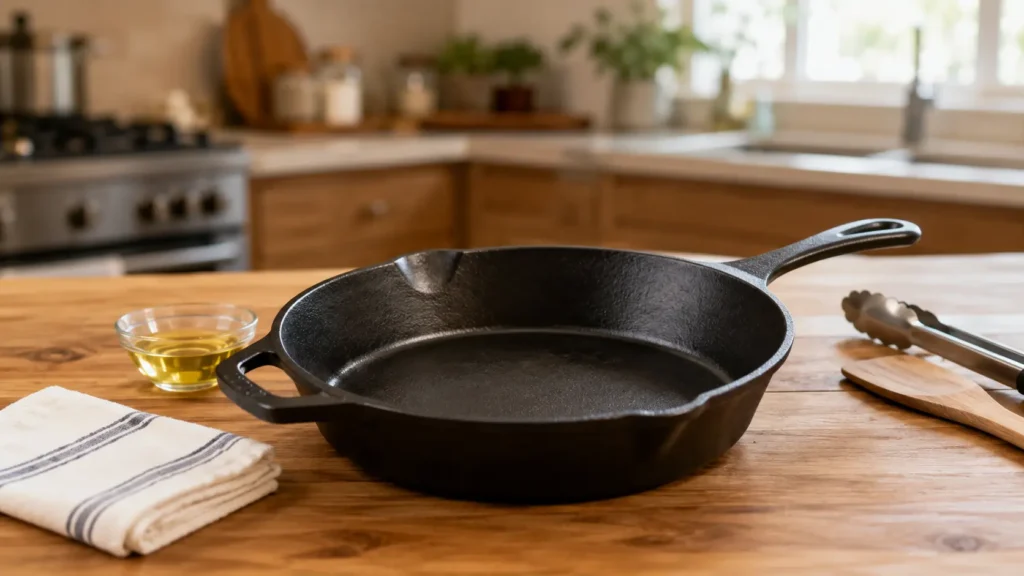
Step 1 – Wash and Dry the Pan Thoroughly
Start by washing the cookware with warm water and a small amount of mild dish soap. This removes dust, manufacturing residue, or anything left behind from previous handling.
Rinse it thoroughly and dry it immediately. Water is one of cast iron’s biggest enemies because lingering moisture can quickly encourage rust.
For extra protection, place the pan over low heat for a few minutes to evaporate any remaining moisture. The surface should be completely dry before you add oil.
Step 2 – Apply a Thin Layer of Oil
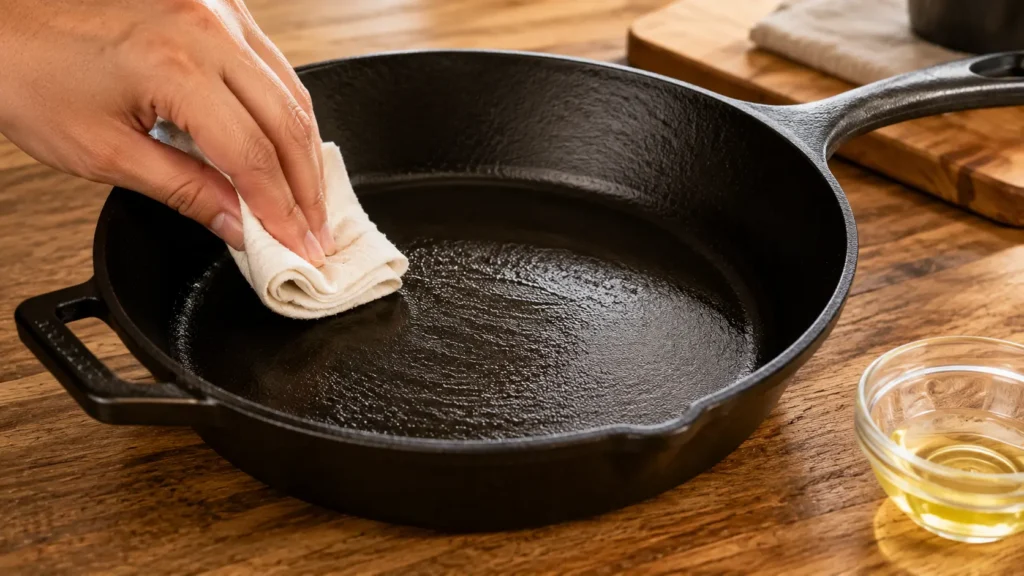
Use a small amount of cooking oil and spread it over the entire cooking surface. Do not forget the sides and the outside if you are seasoning the whole pan.
The important word here is thin. Too much oil can leave a sticky, uneven surface instead of a smooth seasoning layer.
After rubbing the oil over the pan, take a clean cloth or paper towel and wipe off the excess. The pan should look lightly coated rather than greasy or wet.
This small step makes a huge difference when learning how to season and care for cast iron cookware because excess oil is one of the easiest ways to end up with a tacky finish.
Step 3 – Bake It Upside Down in the Oven
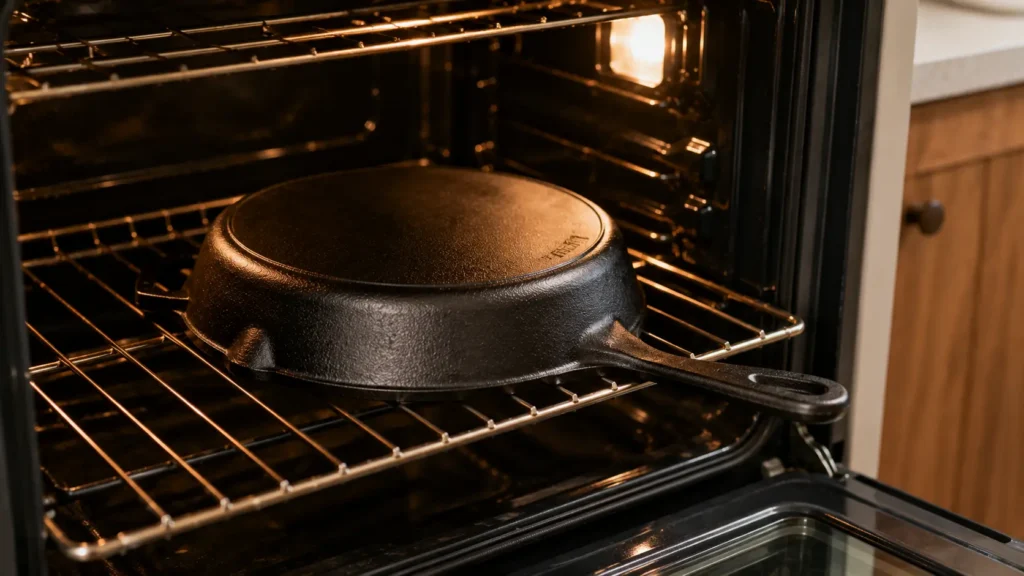
Place the oiled cast iron upside down in a preheated oven. A common approach is to bake it at around 450°F (230°C) for about one hour.
Putting the pan upside down helps prevent oil from pooling on the cooking surface. You can place a sheet of foil or a baking tray on a lower rack to catch any drips.
After the heating cycle is finished, turn off the oven and allow the cookware to cool gradually. Depending on your oven and pan, you may repeat the process several times to build a stronger initial layer.
Always follow your cookware manufacturer’s care instructions when they differ from this general method.
Step 4 – Let It Cool Completely Before Storing
Once the pan has cooled, inspect the surface. It should look dry, smooth, and slightly darker than before.
Do not rush to stack or store it while it is still warm. Letting the pan cool completely helps avoid trapped moisture and makes handling safer.
At this stage, your pan is ready to use. Remember that good seasoning develops gradually, so regular cooking and proper cleaning will continue to improve the surface.
How to Care for Cast Iron Cookware Daily
The easiest way to protect your pan is to keep your everyday routine simple. You do not need to baby cast iron after every meal, but you should avoid letting food residue and moisture sit on it for long periods.
These everyday habits are some of the most useful cast iron care tips to remember.
Cleaning After Every Use
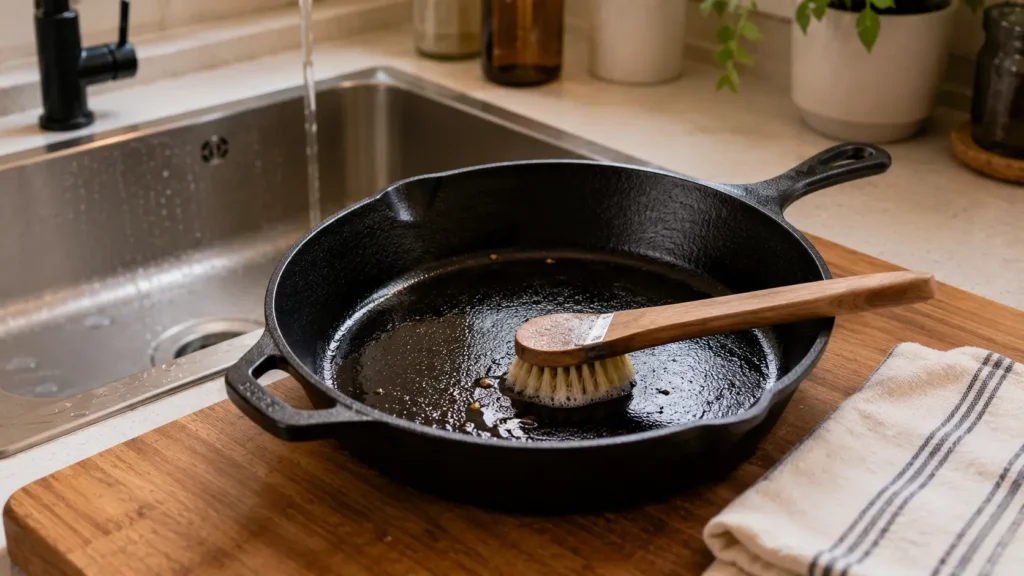
For most meals, clean the skillet while it is still reasonably warm. Let it cool enough to handle safely, then rinse it with warm water.
Use a soft scrubber or brush to remove food residue. A small amount of mild dish soap can also be used when needed; the old idea that soap must never touch seasoned cast iron is unnecessarily restrictive.
For stubborn food, add a little water to the pan and gently loosen the residue. Avoid leaving the cookware soaking in water for long periods.
Learning how to clean cast iron skillet cookware properly is mostly about avoiding prolonged moisture and aggressive treatment. You want to remove food without unnecessarily stripping away the seasoning.
Drying and Storing Properly
Dry your cast iron immediately after washing it. Leaving it wet on the counter is an easy way to invite rust.
You can towel-dry the pan first and then place it over low heat briefly to remove any remaining moisture. Once dry, allow it to cool before putting it away.
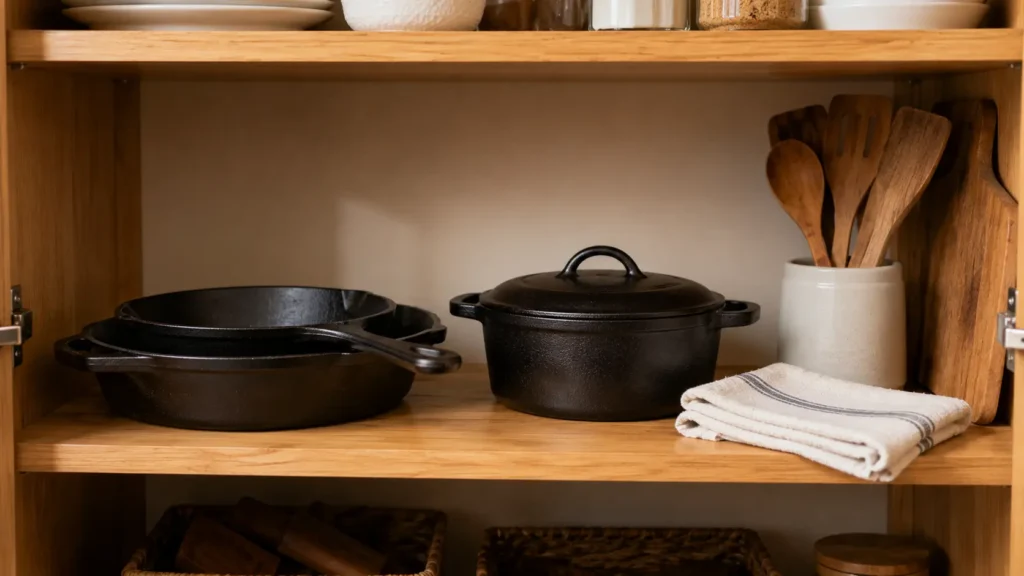
When storing multiple pans, avoid trapping moisture between them. If you stack cookware, keeping the surfaces dry and allowing some airflow can help prevent problems.
Re-Oiling Between Uses
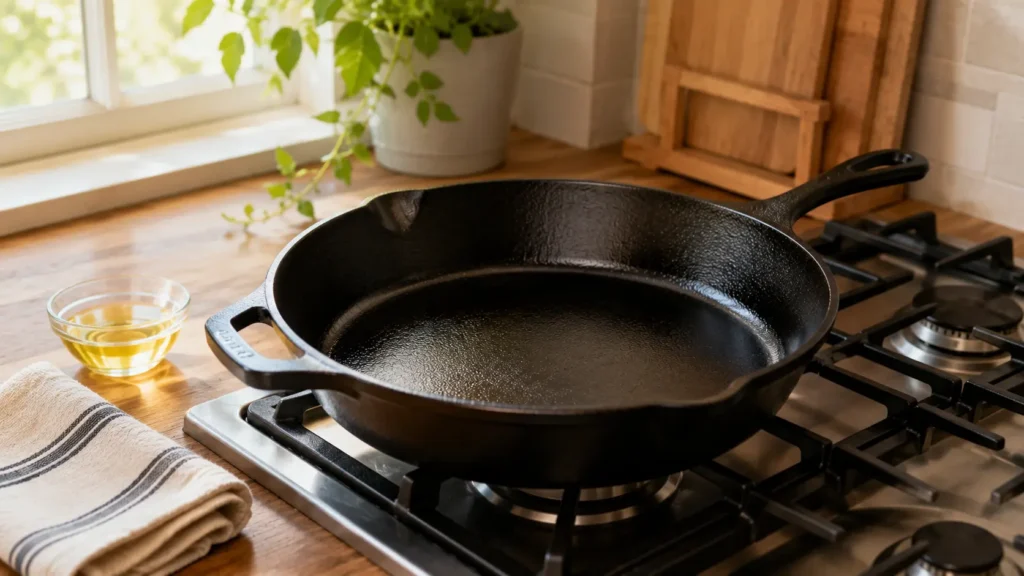
After drying, apply a very light coat of cooking oil if the surface looks dry or dull. Wipe away any excess so the pan does not feel sticky.
You may not need to do this after every single meal, especially if your pan already has strong seasoning. However, a light oiling routine can be helpful when the cookware is used less frequently or has recently been cleaned thoroughly.
How to Season and Care for Cast Iron Cookware Long-Term
Knowing how to season and care for cast iron cookware over the long term means paying attention to how the pan looks and behaves rather than following a rigid calendar.
Seasoning usually becomes more durable as you cook with the pan regularly. Foods containing some natural fat can contribute to the development of the seasoned surface, while repeated exposure to moisture or aggressive scrubbing can wear it down.
One of the most common questions is how often to season cast iron. There is no universal schedule. You may only need a full oven seasoning when the surface becomes noticeably dull, patchy, rough, or less effective. Small maintenance coats of oil can be enough in between.
A few habits can keep long-term maintenance simple:
- Dry the cookware immediately after washing.
- Avoid prolonged soaking.
- Use moderate scrubbing instead of aggressively stripping the surface.
- Re-oil the pan lightly when it looks dry.
- Season again when the surface becomes uneven or loses its protective layer.
- Store the pan somewhere dry with good airflow.
Your cooking habits matter too. If you frequently cook highly acidic foods for long periods, you may notice the seasoning wearing faster. That does not mean you must avoid those foods completely; it simply means you may need to pay more attention to your pan afterward.
The best cast iron maintenance routine is one you can repeat consistently without making kitchen cleanup feel like a major project.
How to Restore Rusty or Neglected Cast Iron
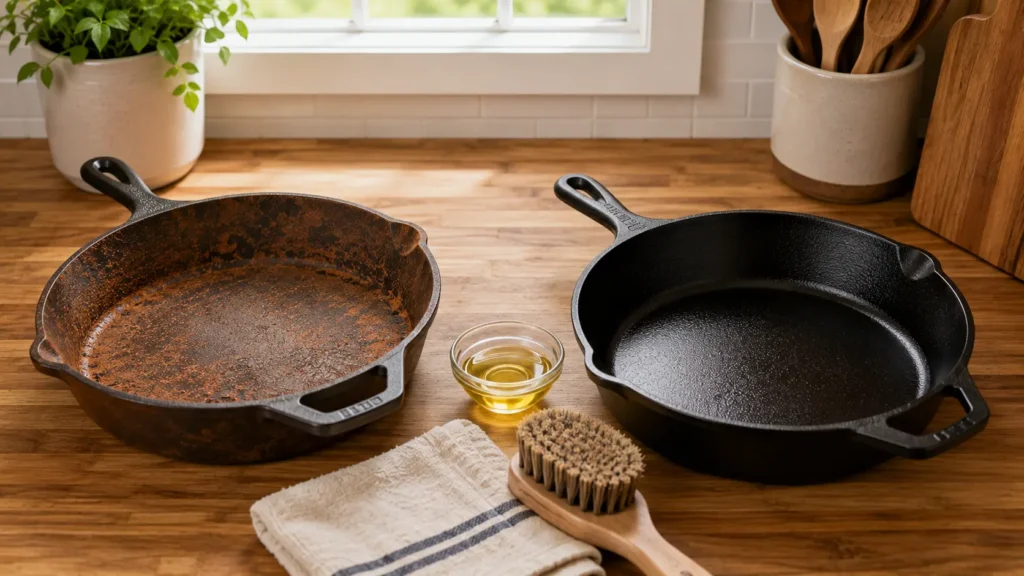
Finding rust on an old skillet can be frustrating, but in many cases, the cookware can be restored. The key is to remove the rust, dry the pan thoroughly, and rebuild the seasoning.
If the rust is light, start by scrubbing the affected areas with a suitable abrasive scrubber until the loose rust is removed. For heavier rust, more intensive cleaning may be necessary.
Once the rust is gone, wash the pan, rinse it thoroughly, and dry it immediately. Follow with a full seasoning process to rebuild the protective layer.
When learning how to restore rusty cast iron, remember that the goal is not simply to make the pan look darker. You are rebuilding a functional protective surface.
If the cookware has deep structural damage, severe pitting, cracks, or other signs of major deterioration, it may be worth having it professionally assessed rather than assuming every old pan can be safely restored.
Common Mistakes That Ruin Cast Iron Seasoning
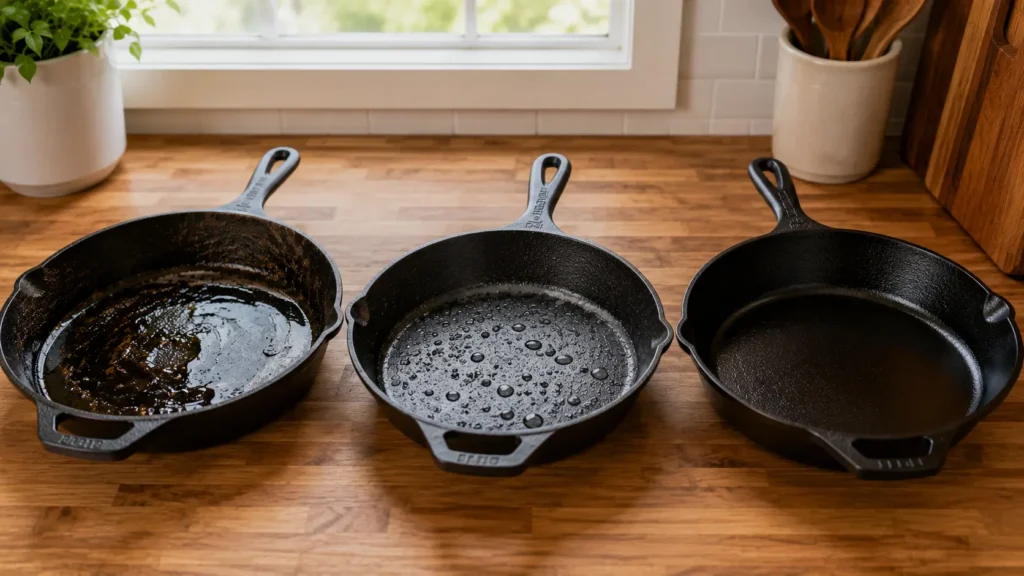
Many cast iron problems come from a few simple habits rather than anything complicated. Avoiding these common cast iron skillet cleaning mistakes will make your routine much easier.
- Leaving the skillet wet: Even a little standing water can encourage rust.
- Using far too much oil: Thick layers often become sticky instead of smooth.
- Soaking the pan for long periods: Extended exposure to water can weaken the protective surface and promote rust.
- Scrubbing aggressively every time: Heavy scrubbing can remove more seasoning than necessary.
- Storing food in the skillet: Long contact with moisture or acidic ingredients is not ideal for the seasoned surface.
- Skipping drying after washing: Cleaning is only half the job; complete drying matters just as much.
- Assuming seasoning is permanent: Cast iron seasoning can wear down and sometimes needs to be rebuilt.
- Trying to keep the pan perfectly shiny: A healthy cast iron surface does not need to look polished or new.
One of the biggest lessons in how to season and care for cast iron cookware is that consistency matters more than perfection. A little wear is normal, and most everyday problems can be corrected with proper cleaning, drying, oiling, and occasional reseasoning.
Final Thoughts
Learning how to season and care for cast iron cookware does not have to be intimidating. Start with a thin layer of oil, heat the pan properly, clean it gently after cooking, and always keep it dry.
With regular use and a little cast iron maintenance, your cookware can develop a durable, dependable cooking surface that gets better with care. And when rust or worn seasoning appears, do not assume the pan is finished—restoration is often possible.
The biggest takeaway is simple: treat your cast iron consistently, not delicately. Once you understand how to season and care for cast iron cookware, the routine becomes a natural part of cooking and cleanup.
For more practical kitchen ideas, explore our related posts on how to organize kitchen cabinets, the zone-based kitchen organization method, and other simple kitchen organization tips here on DailyRecsHub.
Suggested Internal Links
- The Ultimate Kitchen Deep Cleaning Checklist
- How Often Should You Service Your RO Water Purifier?
- 10 Easy Ways to Organize Your Kitchen Without Buying Anything New
Love simple home maintenance tips like these? Join the Dailyrecshub community on Pinterest, for daily home & kitchen inspiration, appliance care guides, cleaning hacks, and practical DIY tips. Save your favorite ideas, share them with family, and never miss a helpful update!