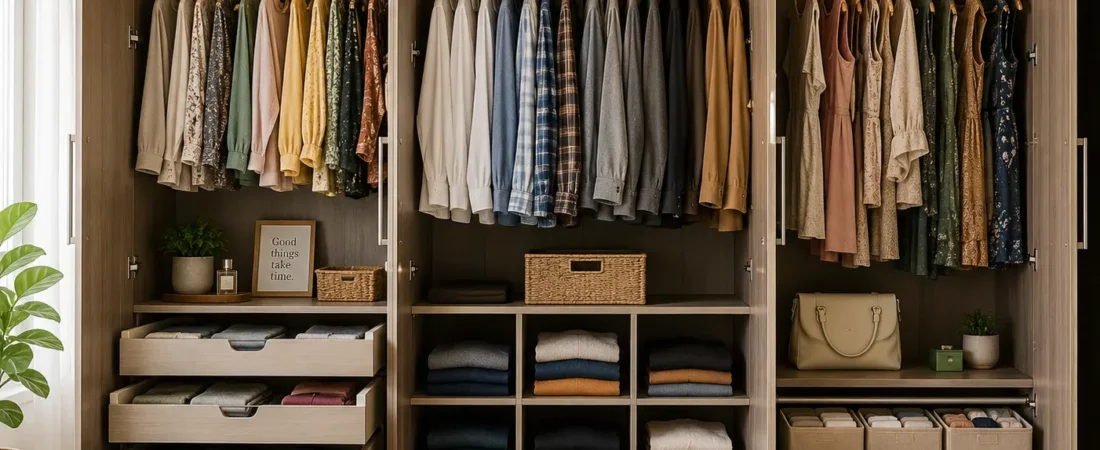
If opening your wardrobe feels like a daily battle with piles of clothes, missing hangers, and shelves that never seem to stay tidy, you’re not alone. Learning how to organize wardrobe with too many clothes is less about having a huge closet and more about making smarter decisions with the space you already have.
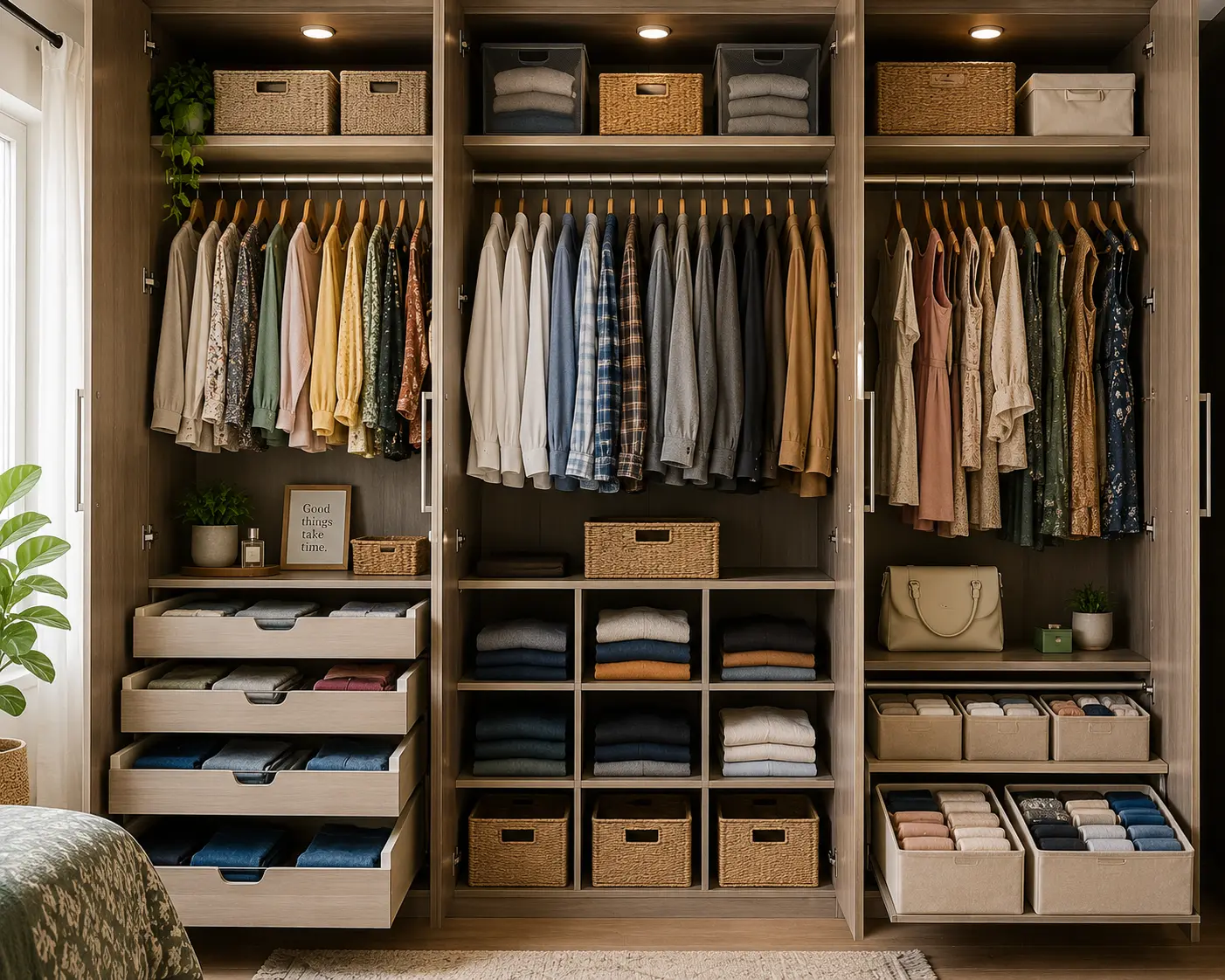
The good news? You don’t need an expensive wardrobe makeover. With a simple decluttering system, space-saving folding methods, and a few clever storage solutions, even a crowded closet can become easier to use.
Table of Contents
- Why Wardrobes Get Overcrowded
- Step-by-Step Decluttering Method
- Space-Maximizing Organization Techniques
- How to Fold Clothes to Save Space
- Wardrobe Organization on a Budget
- Recommended Organizational Products and Tools
- Maintenance Tips to Keep It Organized Long-Term
- Frequently Asked Questions
- Conclusion
Why Wardrobes Get Overcrowded
A wardrobe usually doesn’t become cluttered overnight. It happens gradually as clothes accumulate without a clear system for deciding what stays and where everything belongs.
Some common reasons include:
- Buying new clothes without removing rarely worn items
- Keeping clothes that no longer fit your lifestyle
- Holding onto “just in case” pieces
- Mixing seasonal and everyday clothes together
- Folding clothes into large, unstable piles
- Not using vertical or hidden storage space
- Keeping sentimental clothes that are rarely used
- Having no designated place for accessories, bags, or shoes
Another problem is that wardrobes often contain clothes for several different purposes. Workwear, casual outfits, occasion wear, sportswear, winter clothing, and sleepwear can quickly compete for the same limited space.
The goal isn’t to throw away everything. Instead, create a wardrobe where the clothes you actually use are easy to see, reach, and put away.
Step-by-Step Decluttering Method
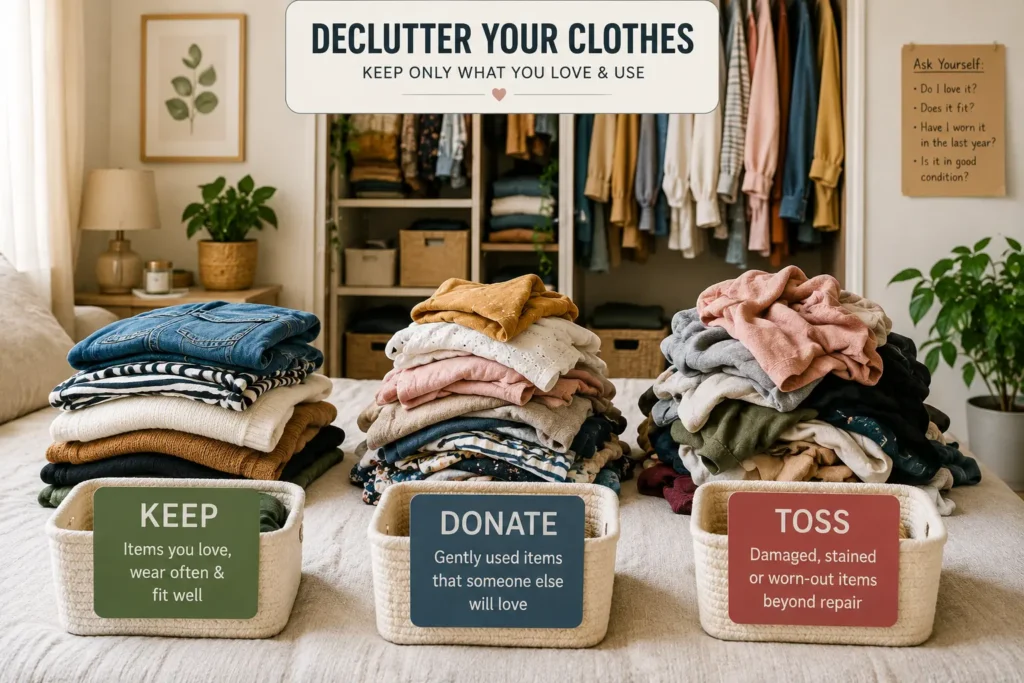
Before buying organizers, start by making more room. One of the most effective ways to declutter clothes is to remove everything from the wardrobe and sort it by category.
Trying to organize while everything is still inside usually means moving clutter from one shelf to another.
1. Take Everything Out
Empty one section at a time if your wardrobe is very large. Place shirts together, trousers together, dresses together, and so on.
This gives you a realistic picture of how much clothing you actually own.
2. Use the Keep, Donate, Toss Rule
Create three basic groups:
Keep: Clothes you wear regularly, genuinely like, and that are in usable condition.
Donate: Good-quality clothes that you no longer wear but could be useful to someone else.
Toss: Items that are badly damaged, stained, stretched, or otherwise unsuitable for continued use.
If an item is still wearable but you haven’t used it in a long time, ask yourself whether you would choose it again today.
3. Create a Maybe Box
Some decisions are difficult, especially with sentimental clothing or pieces you aren’t sure about.
Put these items into a labeled box and store them separately for a few months. If you don’t find yourself looking for them, that’s a useful signal that they don’t need prime wardrobe space.
4. Separate Seasonal Clothes
Don’t allow heavy winter jackets and sweaters to take up valuable everyday space during hot weather.
Use a seasonal clothes rotation system. Keep current-season clothing within easy reach and move off-season pieces to higher shelves, under-bed storage, or another suitable storage area.
5. Group Clothes by Category
Once you’ve decided what stays, group similar items together:
- T-shirts
- Shirts and blouses
- Jeans and trousers
- Dresses
- Jackets
- Sweaters
- Workout clothes
- Sleepwear
- Accessories
This simple step makes the wardrobe much easier to maintain.
Space-Maximizing Organization Techniques
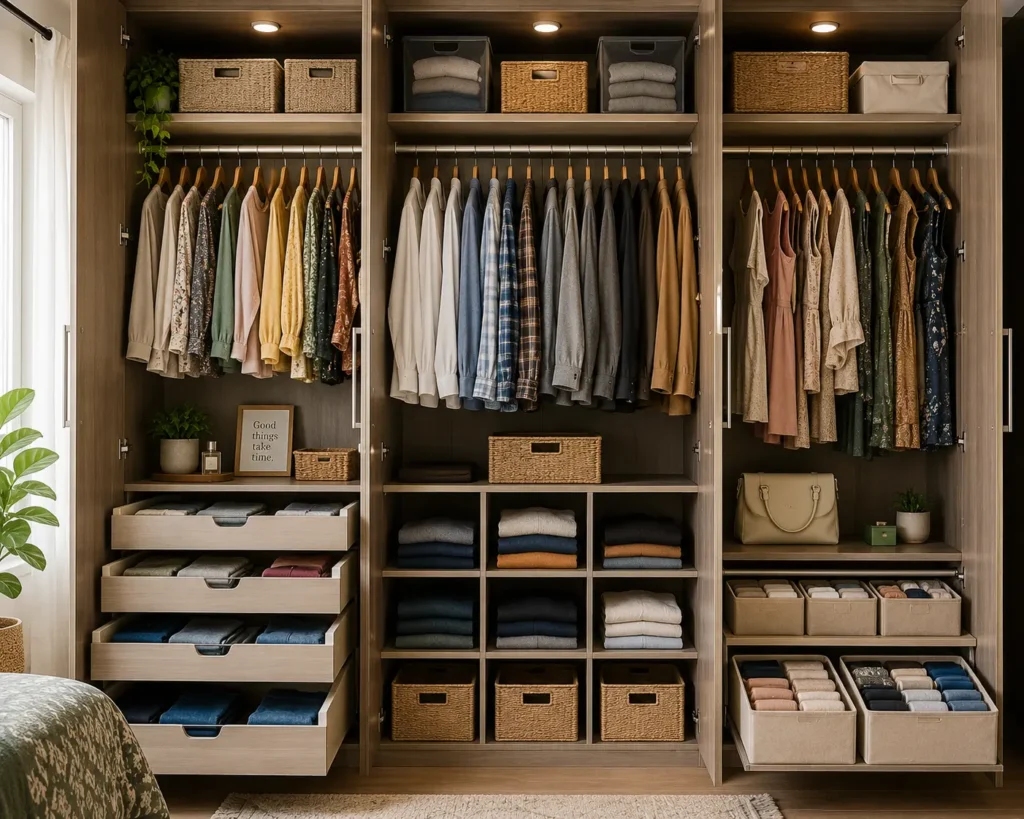
After decluttering, it’s time to make every part of the wardrobe work harder. These closet storage solutions are particularly useful when you’re dealing with limited space.
Use Vertical Space
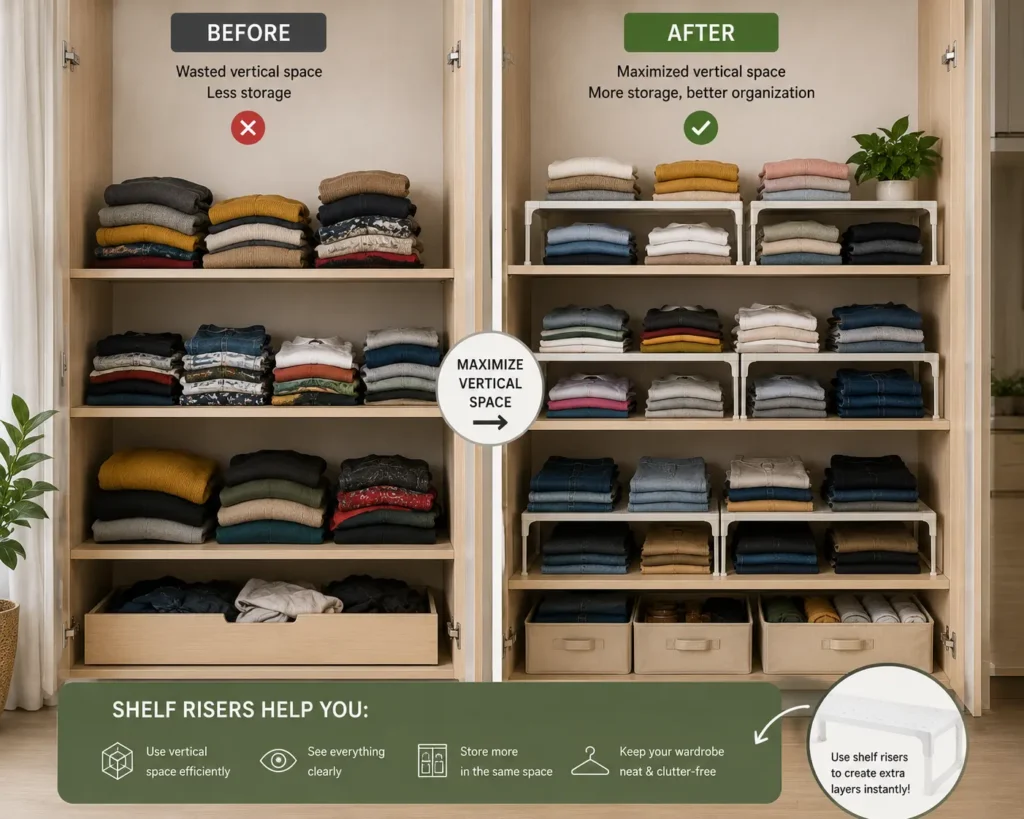
Look above your current clothing shelves. Many wardrobes have several inches of unused vertical space.
Add stackable shelves or shelf risers to create additional levels. You can use them for folded T-shirts, handbags, shoes, or smaller storage boxes.
If your wardrobe has a tall hanging section, consider adding a second hanging rod for shorter garments.
Add Drawer Dividers
Small clothing items can quickly become messy inside drawers.
Drawer dividers separate socks, undergarments, scarves, accessories, and other small items into dedicated sections. Instead of searching through one large pile, you’ll know exactly where each category belongs.
Try Hanging Organizers
Hanging organizers can turn unused vertical hanging space into extra compartments.
They’re useful for:
- Handbags
- Folded T-shirts
- Accessories
- Scarves
- Small clothing items
- Lightweight shoes
Choose organizers that match the size of your wardrobe rather than buying the largest option available.
Use Vacuum Storage Bags Carefully
Vacuum storage bags can dramatically reduce the volume of bulky seasonal items such as blankets, coats, and thick sweaters.
They’re best used for clothing that won’t be needed frequently. Avoid treating vacuum bags as a permanent solution for everyday clothes because repeatedly compressing some delicate fabrics isn’t ideal.
Don’t Forget Under-Bed Storage
Your wardrobe isn’t the only place where clothing needs to live.
Flat storage boxes or fabric containers under the bed can hold:
- Off-season clothing
- Extra blankets
- Occasion wear
- Shoes
- Travel bags
This is especially helpful for people looking for clothes storage ideas for small spaces.
Organize by Frequency of Use
Keep frequently worn clothing between waist and eye level.
Less frequently used items can go on higher shelves or toward the back of storage areas.
This simple arrangement makes everyday dressing faster and prevents your wardrobe from becoming messy while searching for one item.
How to Fold Clothes to Save Space
Learning how to fold clothes to save space can make a surprisingly big difference, particularly when you have more folded clothing than hanging space.
Instead of creating tall piles, use a vertical folding method where possible. Fold T-shirts and lightweight tops into compact rectangles and place them upright next to each other.
This approach has two major advantages: you can see more items at once, and removing one shirt doesn’t cause an entire pile to collapse.
Try These Folding Techniques
T-shirts: Fold sleeves inward, fold the shirt into a rectangle, and store it vertically.
Jeans: Fold them in half lengthwise and then into a compact rectangle.
Sweaters: Fold carefully to prevent unnecessary stretching and store heavier sweaters toward the bottom of a stack.
Small clothes: Use drawer dividers or small compartments to prevent socks and accessories from spreading across the drawer.
Bulky items: Keep thick sweaters and jackets on shelves rather than trying to squeeze too many onto a hanging rail.
For clothes you wear constantly, prioritize visibility over maximum compression. A slightly less compact system that lets you find things quickly is often easier to maintain.
Wardrobe Organization on a Budget
You don’t need expensive furniture or designer organizers to create a functional closet. Wardrobe organization on a budget is mostly about using available space efficiently.
Before purchasing anything, look around your home for items that can safely be repurposed.
Budget-Friendly Ideas
- Use sturdy boxes as shelf organizers.
- Repurpose small containers for accessories.
- Add affordable shelf risers to create levels.
- Use labeled fabric bags for seasonal items.
- Store rarely used clothes under the bed.
- Reuse clean boxes to separate categories.
- Install inexpensive hooks for bags and accessories where appropriate.
- Use matching hangers gradually instead of replacing everything at once.
The most important rule is to organize first and shop second. Buying organizers before decluttering can actually create more clutter because you’re simply giving excess belongings new containers.
A simple capsule wardrobe approach can also help. You don’t necessarily need to own only a tiny number of clothes. Instead, focus on keeping versatile pieces that work with multiple outfits and suit your actual lifestyle.
Recommended Organizational Products and Tools
If you want to make your wardrobe easier to maintain, a few well-chosen products can help. Prioritize tools that solve a specific problem rather than buying organizers simply because they look attractive.
Here are some useful options to consider:
HomeEssentials Multi-Purpose Space-Saving Dual Access — Storage labels for keeping categories easy to identify
12 Adjustable Strips Interlocking Self Assembly Plastic Drawer Divider — Adjustable drawer dividers for small clothing and accessories
4 Shelf Non Wooven Fabric Closet Hanging Organizer— Hanging organizer for bags, folded clothes, or accessories
Amazon basics Vacuum Compression Storage Bags — Vacuum storage bags for bulky seasonal clothing
Bed Storage Solution — Under-bed storage container for off-season items
Heavy Duty Plastic Hangers — Slim non-slip hangers for increasing hanging capacity
Collapsible Fabric Storage Cubes Organizer — Fabric storage boxes for shelves and seasonal items
When choosing products, measure your wardrobe first. A storage product is only useful if it fits the available space and makes your routine simpler.
Maintenance Tips to Keep It Organized Long-Term
Knowing how to organize wardrobe with too many clothes is only half the solution. The real challenge is keeping the system working after a few weeks.
The easiest way to maintain an organized wardrobe is to avoid letting small messes become large ones.
Follow the One-In, One-Out Rule
Whenever you buy a new item, consider removing one similar item that you no longer use.
For example, if you purchase a new everyday shirt, look through your existing shirts and identify one that has become redundant.
Do a Quick Monthly Reset
You don’t need to spend an entire weekend reorganizing your wardrobe.
Set aside 10–15 minutes once a month to:
- Return misplaced clothes
- Refold messy sections
- Remove items that no longer belong
- Check seasonal clothing
- Reorganize drawers
- Clear empty hangers
Keep Categories Consistent
If T-shirts have a specific shelf, keep them there. If accessories have a drawer, return them to that drawer.
Consistency is what turns organization into a habit.
Avoid Overstuffing
A wardrobe can look organized immediately after a big cleanup but become difficult to use if every shelf and rail is packed to capacity.
Leave a little breathing room between categories. This makes clothing easier to remove and put away.
Consider a Minimalist Closet Approach
You don’t have to become a strict minimalist to benefit from a simpler wardrobe.
The basic idea is to prioritize clothing that you actually wear, enjoy, and need. The fewer unnecessary items competing for space, the easier your wardrobe becomes to manage.
Frequently Asked Questions
How do I organize a wardrobe when I have too many clothes?
Start by removing everything and sorting clothing into keep, donate, and toss categories. Then organize what remains by type and frequency of use. Use vertical storage, drawer dividers, shelf risers, and hidden storage to maximize available space.
How can I make my small wardrobe hold more clothes?
Use vertical space rather than only adding more items to existing shelves. Shelf risers, hanging organizers, slim hangers, vertical folding, and under-bed storage can increase usable capacity without expanding the wardrobe itself.
What clothes should I remove when decluttering?
Start with clothes that are damaged, uncomfortable, rarely worn, no longer suitable for your lifestyle, or duplicates of items you already own. Keep pieces that you regularly wear and genuinely find useful.
Is it better to fold or hang clothes?
It depends on the clothing. Shirts, dresses, jackets, and other garments that wrinkle easily may benefit from hanging, while T-shirts, jeans, sweaters, and casual clothing can often be folded to save hanging space.
How often should I reorganize my wardrobe?
A quick reset once a month can prevent clutter from building up. A more thorough decluttering session two or three times a year can help you handle seasonal changes and remove clothing you no longer use.
Conclusion
A crowded wardrobe doesn’t necessarily mean you need a bigger closet. By decluttering first, using vertical space, improving your folding method, and moving seasonal items into hidden storage, you can make even a limited wardrobe significantly easier to use.
The key to how to organize wardrobe with too many clothes is to create a system that matches your daily habits. Keep the clothes you actually wear accessible, give every category a designated place, and avoid filling every inch of available space.
Start with one shelf or drawer today rather than trying to transform the entire wardrobe at once. A few small changes can make getting dressed easier and keeping your closet tidy far less stressful.
Internal Linking Opportunities
As you continue upgrading your kitchen, you may also find these helpful:
- Induction vs Gas vs Microwave Cooking: Which Is Best for Your Kitchen?
- How to Make Your Kitchen More Energy Efficient
- 10 Easy Ways to Organize Your Kitchen Without Buying Anything New
Love simple home maintenance tips like these? Join the Dailyrecshub community on Pinterest, for daily home & kitchen inspiration, appliance care guides, cleaning hacks, and practical DIY tips. Save your favorite ideas, share them with family, and never miss a helpful update!