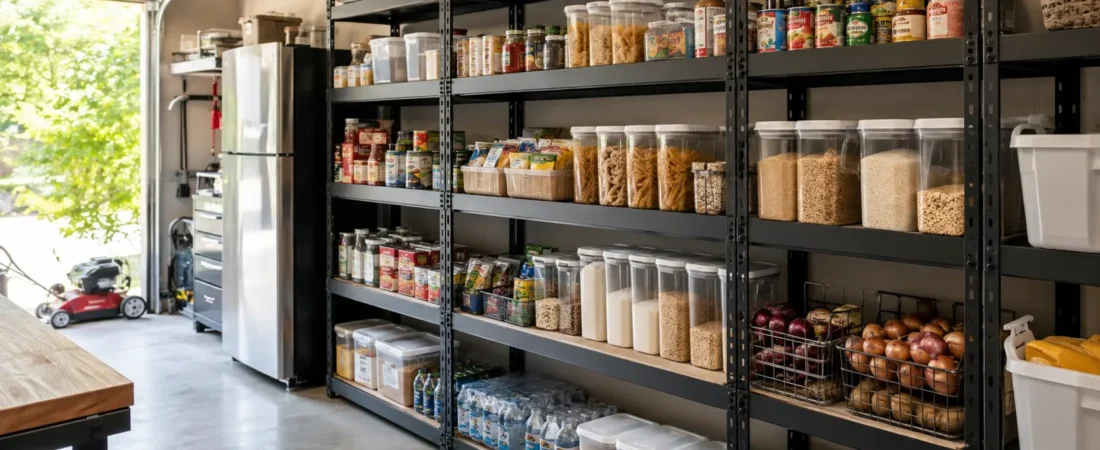
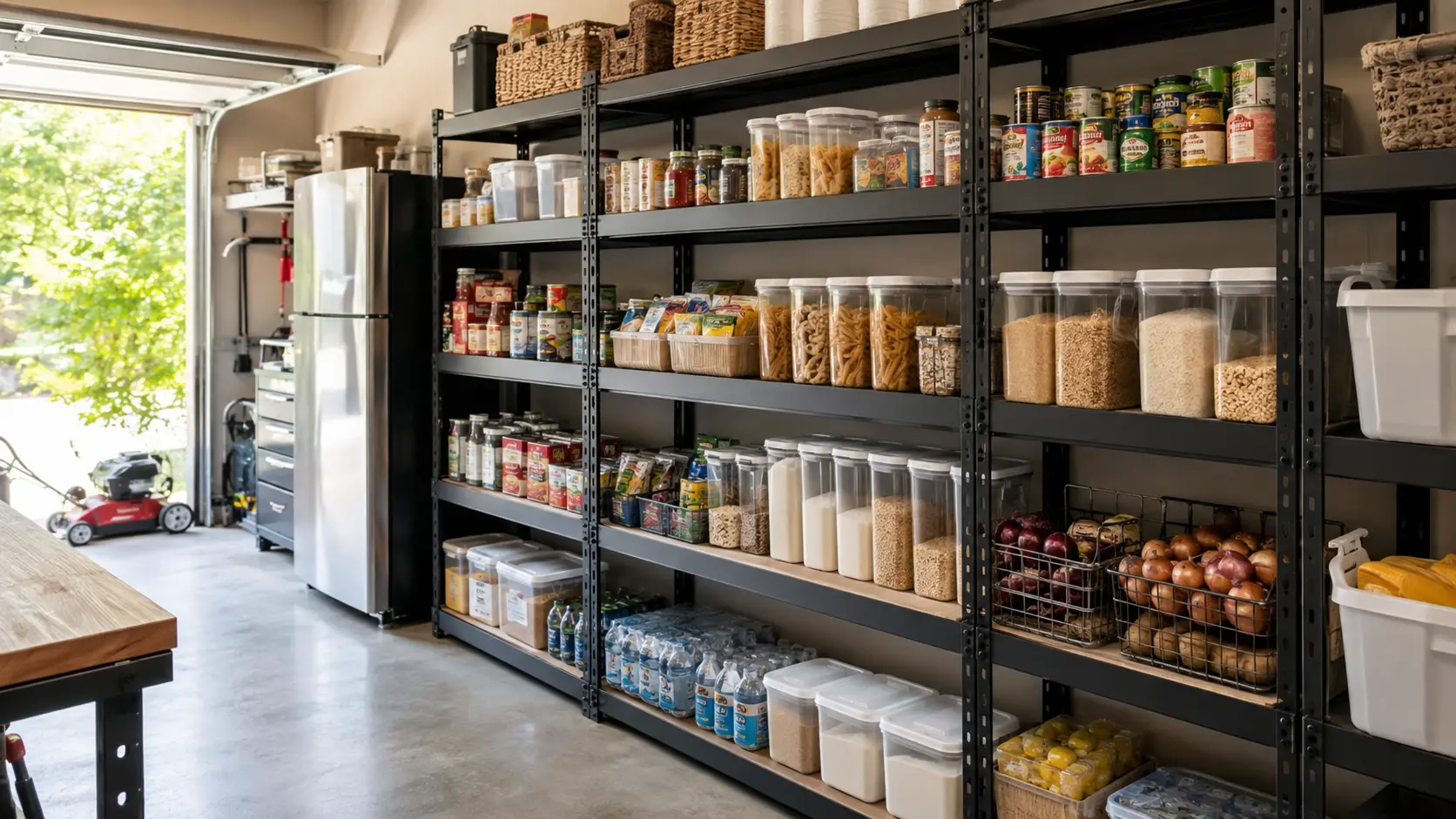
Buying in bulk can save money, reduce shopping trips, and make everyday cooking much easier. The problem starts when all those extra boxes, cans, snacks, and household supplies have nowhere to go. Before long, the garage corner or basement shelf that was supposed to be your backup pantry becomes a dumping ground where items disappear behind larger packages.
The good news is that you do not need a huge renovation or expensive storage system to fix it. With the right zones, sturdy shelving, sealed containers, simple labels, and a basic inventory system, you can turn that forgotten space into a practical extension of your kitchen pantry. These overflow pantry organization ideas will help you store bulk purchases safely, find what you need quickly, and stay ahead of expiration dates without making the space complicated to maintain.
Why Does an Overflow Pantry Need a Different Organization Strategy?
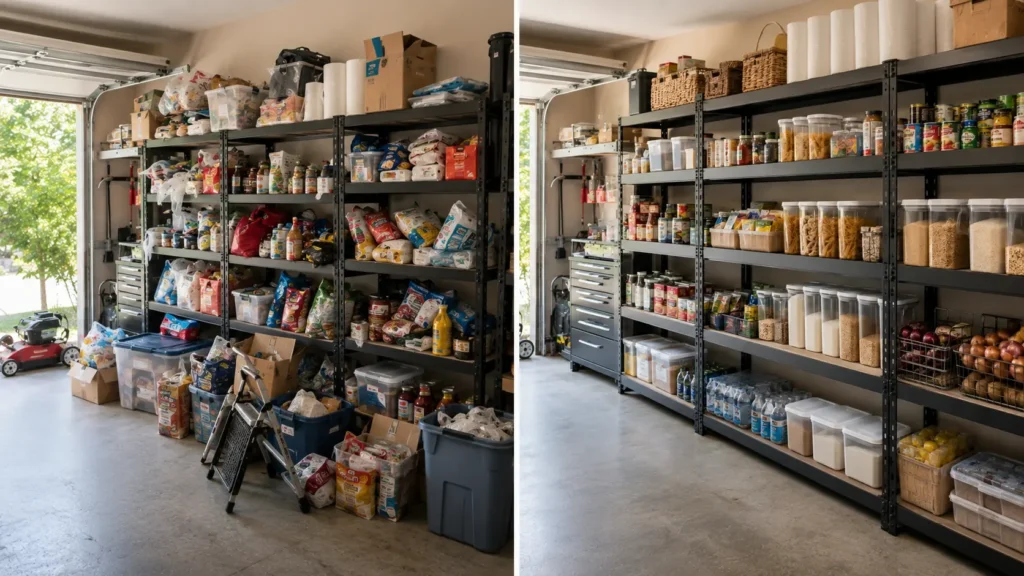
A kitchen pantry is usually designed around convenience. It stays relatively climate-controlled, gets used every day, and holds the foods you reach for most often.
A garage or basement overflow pantry works differently. Depending on your home and climate, these spaces may experience temperature swings, humidity, dust, and a greater risk of pests. That means organization is not just about making shelves look tidy—it is also about protecting what you store.
Before moving food into a garage pantry, check the manufacturer’s storage guidance for the specific item. Some foods are much less tolerant of heat, freezing temperatures, or moisture than others.
For garage pantry organization ideas that actually work long term, think in three layers:
- Safety: Store food where temperature and moisture conditions are appropriate.
- Visibility: Make sure you can see what you have without moving ten boxes.
- Rotation: Put older items where they will be used first.
A well-organized overflow pantry should feel like a small warehouse for your kitchen—not another place where food goes to disappear.
How Do You Organize an Overflow Pantry in the Garage?
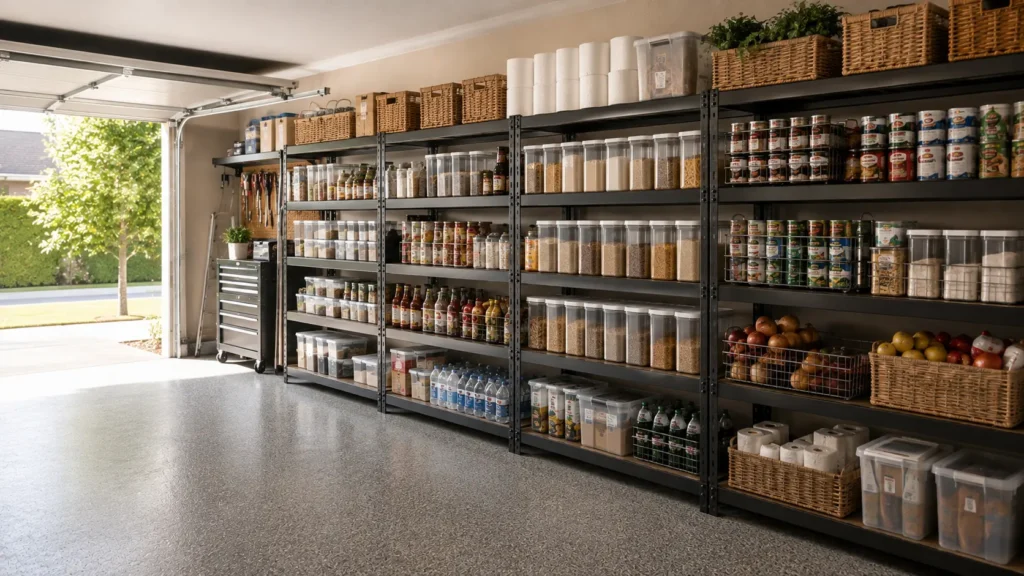
The easiest way to begin is to stop treating the garage pantry as one giant storage area. Divide it into clear zones based on what you buy and how frequently you use it.
Start by removing everything from the shelves or storage area. Check dates, discard damaged packages, wipe down the shelves, and group similar items together before putting anything back.
A simple zoning system could look like this:
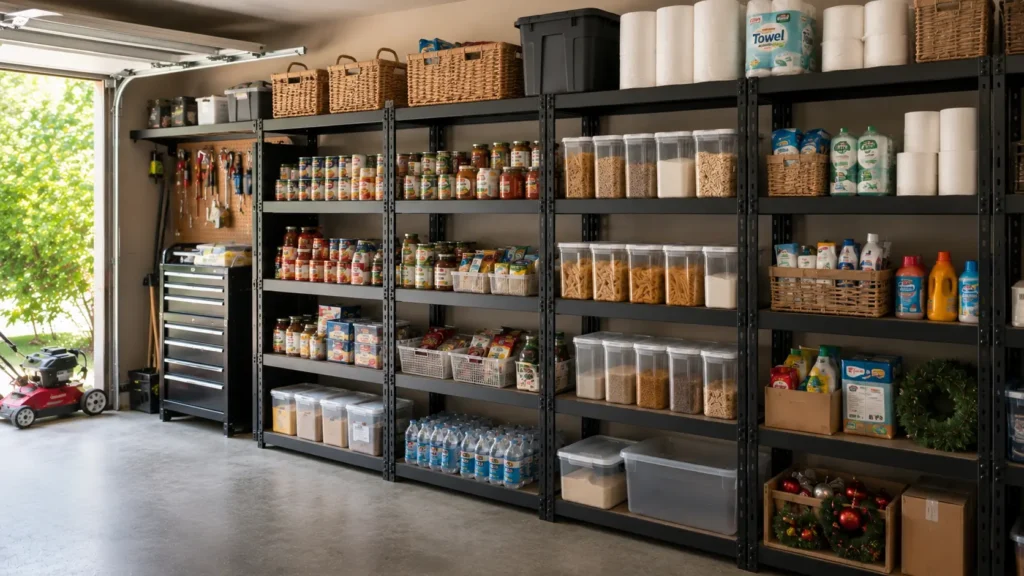
Zone 1: Canned and Jarred Foods
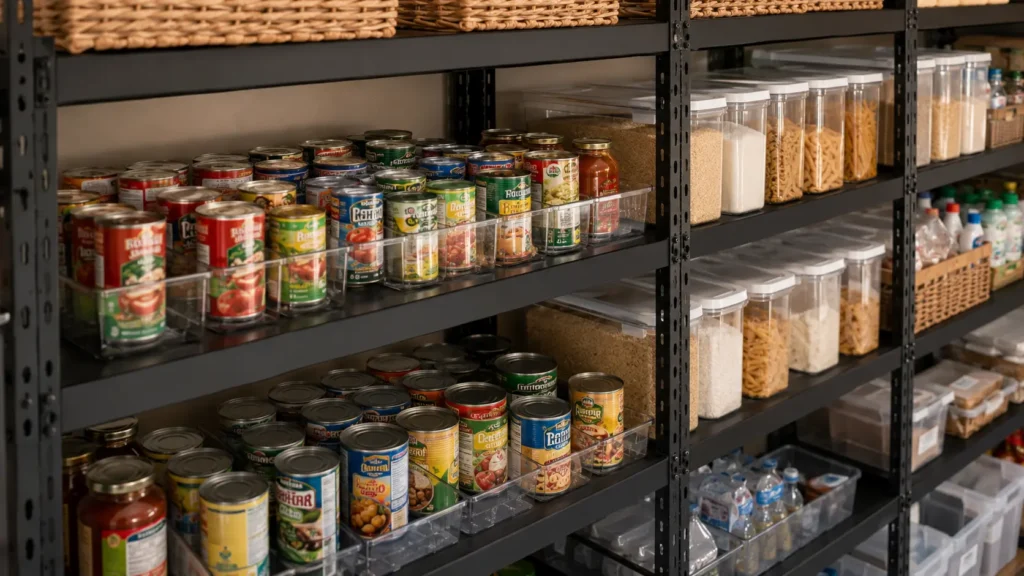
Keep canned vegetables, beans, soups, sauces, and other shelf-stable jars together.
Use the easiest-to-reach shelves for frequently used items. Larger or less frequently used cans can go farther back, but avoid stacking them so high that you cannot see what is underneath.
Zone 2: Bulk Dry Goods
This is where bulk food storage organization becomes especially helpful.
Group items such as:
- Rice
- Pasta
- Flour
- Oats
- Cereal
- Baking ingredients
- Beans
- Crackers
- Shelf-stable snacks
Keep opened packages contained and make sure everything is properly sealed before storing it in an area exposed to garage dust or changing humidity.
Zone 3: Kitchen Backstock
This section should contain extras of items already stored in your kitchen pantry.
For example, you might keep unopened packages of pasta, coffee, sauces, paper towels, cooking oil, or other staples here while keeping one working supply in the kitchen.
This creates a simple two-level system: daily-use pantry in the kitchen, backstock in the overflow pantry.
Zone 4: Paper and Household Supplies
Not everything in an overflow pantry needs to be food.
Paper towels, napkins, disposable food containers, tissues, trash bags, and similar supplies can occupy a separate zone. Keeping these products away from food makes the system easier to manage and reduces unnecessary clutter.
Zone 5: Occasional or Seasonal Supplies
Holiday baking supplies, party disposables, specialty ingredients, and other items you only use occasionally can go on higher shelves or in a clearly marked section.
The goal is to reserve prime shelf space for things you actually reach for.
Choose Shelving Before Choosing Containers
One of the biggest mistakes people make is buying containers first and figuring out shelving later.
Start with the shelves. Measure their width, depth, and vertical clearance. Then decide how much space you want between levels based on the types of items you store.
For a garage pantry, sturdy shelving is particularly important because bulk purchases become surprisingly heavy. A single case of canned goods or a large bag of dry food can weigh much more than it appears to.
Adjustable shelves are useful because you can create taller sections for large packages and shorter sections for cans and smaller containers.
Keep heavier items on lower shelves whenever practical. This makes the system safer and also makes restocking easier.
If you are working with a tight budget, look around your home before buying new organizers. Extra baskets, sturdy bins, unused shelves, or stackable boxes can often be repurposed into functional storage.
What Containers Work Best for Garage Food Storage?
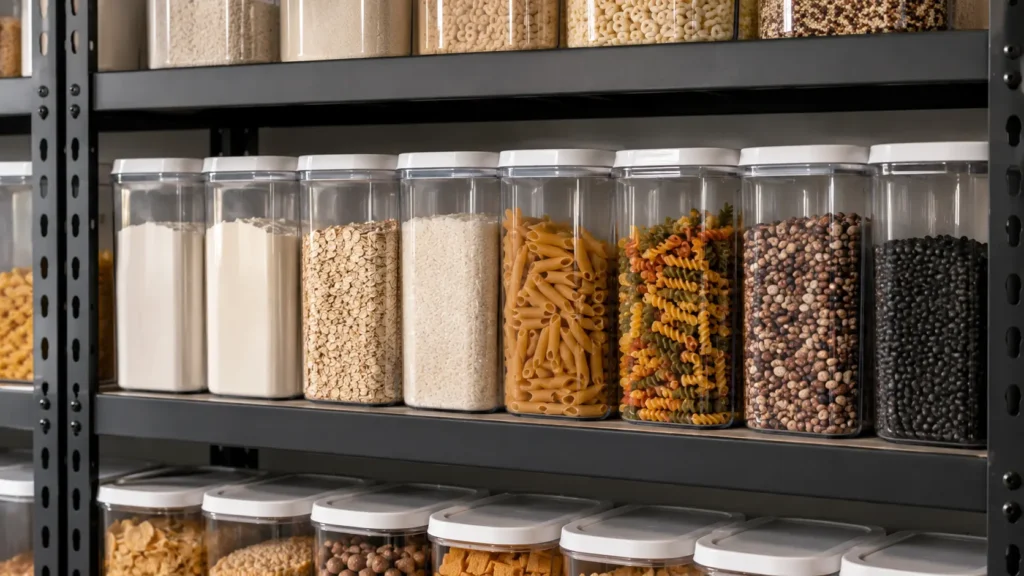
Choosing the right container is one of the most important parts of overflow pantry organization ideas, especially when your storage area is not fully climate controlled.
For dry goods, look for containers that:
- Seal securely
- Protect against dust and pests
- Are easy to clean
- Allow you to see or identify the contents
- Fit comfortably on your shelves
Airtight or tightly sealed containers are particularly useful for opened dry goods such as flour, rice, cereal, pasta, and baking ingredients.
For unopened packaged food, you do not necessarily need to transfer everything into containers. Original packaging is often perfectly suitable when it is intact and the storage environment is appropriate.
The key is to avoid storing food in flimsy cardboard boxes or loosely closed bags where pests and moisture can become a problem.
For garage food storage ideas, think about the environment first. Containers cannot compensate for a garage that is consistently too hot, too humid, or otherwise unsuitable for the food being stored.
How Can You Protect an Overflow Pantry From Pests and Humidity?
Pests are one of the biggest concerns with garage or basement food storage. Even a tiny opening in a package can turn into a much larger problem.
Keep food sealed, clean up spills quickly, and avoid leaving crumbs or food debris on shelves. Inspect packages regularly for damage rather than assuming everything is fine because the shelves look clean.
Humidity can also cause problems for dry goods. Moisture may affect texture, encourage mold growth, or damage packaging.
Try to keep food away from areas where water may leak, condensation develops, or dampness is common. In a basement, pay particular attention to walls and floors that may experience moisture problems.
For additional protection:
- Keep food off the floor.
- Leave some space around containers instead of cramming shelves completely full.
- Clean shelves periodically.
- Check packages when you bring them home.
- Avoid storing food next to chemicals, fuel, paint, or other garage materials.
A dedicated food-storage zone is much easier to maintain than mixing pantry items with general garage clutter.
Manage Temperature Swings Before Storing Bulk Food
A garage may feel comfortable during one part of the year and reach very different temperatures during another.
That matters because not all shelf-stable foods are equally tolerant of heat and cold. Chocolate, oils, certain supplements, canned foods, and other products can be affected by unsuitable storage conditions.
Before making your garage your main overflow pantry, pay attention to the conditions throughout the year. If the temperature regularly becomes extreme, reserve that area for items better suited to those conditions and keep more sensitive foods in a climate-controlled part of the home.
This is one of the most important differences between a kitchen pantry and secondary pantry organization in a garage or basement.
The goal is not simply to find an empty shelf. It is to create a storage environment that makes sense for the things you are actually storing.
Label Everything and Use FIFO Rotation
An organized pantry can still waste food if you cannot tell what should be used first.
That is where FIFO—first in, first out—comes in.
When you purchase new items, place them behind older items whenever possible. The oldest suitable item should be easiest to reach.
Labels make this system even easier. You can label containers with the item name and, when useful, the month or date you opened it.
For bulk purchases, consider labeling larger bins with categories such as:
- Pasta
- Rice
- Baking
- Breakfast
- Snacks
- Canned goods
- Cooking staples
You do not have to create a complicated labeling system. The purpose is simply to answer one question quickly: What is this, and should I use it before something else?
Build a Simple Pantry Inventory
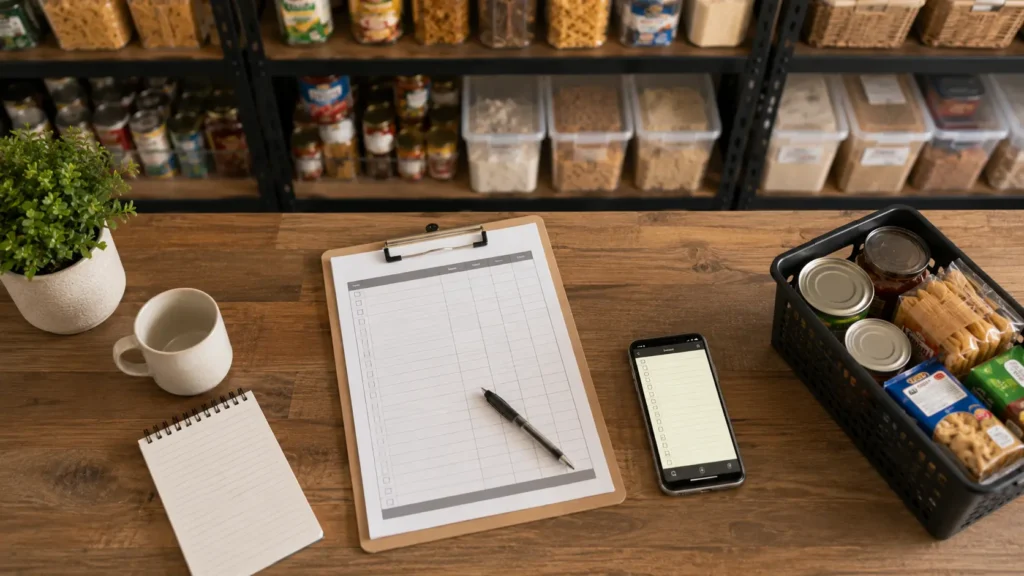
A basic inventory can save you from repeatedly buying things you already have.
You do not need specialized software. A simple spreadsheet, note on your phone, or paper list inside the pantry can work.
Your inventory might include:
| Category | Item | Quantity | Storage Area | Notes |
|---|---|---|---|---|
| Dry Goods | Rice | 2 bags | Lower shelf | Use older bag first |
| Canned Goods | Black beans | 12 cans | Middle shelf | Check monthly |
| Baking | Flour | 1 sealed container | Dry goods shelf | Keep sealed |
| Snacks | Crackers | 3 boxes | Snack zone | Backup stock |
The most important information is quantity and location.
For households that buy in bulk, an inventory can also become a simple shopping filter. Before heading to the store, check the list instead of guessing whether you are out of something.
This is especially useful when you’re figuring out how to organize extra pantry items that do not fit comfortably in the kitchen.
Create a “Use Next” Area
A small “use next” section can make your overflow pantry much more efficient.
Place items there that are nearing their recommended use date, have been opened, or need to be incorporated into meals soon.
This could be a single basket or clearly marked shelf. When planning meals, check this section first.
It turns pantry organization into an ongoing rotation system instead of a once-a-year cleaning project.
Budget-Friendly Overflow Pantry Storage Ideas
You do not need expensive matching containers to create a functional pantry.
Some of the best overflow pantry storage solutions may already be sitting around your house.
Try repurposing:
- Sturdy baskets for small packages
- Open cardboard boxes as temporary category bins
- Existing plastic containers for dry goods
- Magazine holders for narrow boxed foods
- Small bins for seasoning packets and baking extras
- Old shelves for lightweight backstock
- Reusable crates for bulk packages
The trick is to give everything a designated home.
Even inexpensive storage looks intentional when every category has a zone and every item has a place.
For secondary pantry organization, consistency matters much more than matching containers.
Keep Frequently Used Items Easy to Reach
An overflow pantry should reduce work—not create more of it.
Store your most frequently used backstock between about waist and shoulder height whenever possible. Reserve the highest shelves for lightweight, infrequently used items.
Likewise, do not hide small items behind oversized boxes. Use bins or shallow groupings so that one large package does not become a wall blocking everything behind it.
Think about the way you shop and cook when assigning shelf space. If you regularly buy pasta in bulk, pasta deserves more visible space than a specialty ingredient you use twice a year.
Make a Refill System Between the Kitchen and Garage
One of the smartest garage pantry organization ideas is creating a simple refill routine.
Instead of taking items randomly from the garage, establish a rule: when the kitchen pantry gets low, refill it from the overflow area.
For example, you might keep one or two packages of pasta in the kitchen and several unopened packages in the garage. When the kitchen supply drops to one package, move another forward from backstock.
That way, your garage remains a reserve rather than becoming a second messy pantry.
A small weekly or biweekly check can be enough to keep everything moving.
What Should You Avoid Storing in a Garage Pantry?
Not every grocery item belongs in the garage.
Avoid automatically moving temperature-sensitive or moisture-sensitive foods into the space simply because you have room there.
Be especially cautious with foods that have specific storage requirements. Always follow the package instructions, and use a climate-controlled area when necessary.
Also avoid storing food directly on the garage floor. Keeping everything elevated makes cleaning easier and helps protect items from accidental water exposure.
Your overflow pantry should support your household’s storage needs without compromising food quality.
FAQ: Overflow Pantry Organization
Can I use my garage as an overflow pantry?
You can store appropriate shelf-stable foods in a garage when the environment meets their storage requirements. Consider temperature swings, humidity, pests, and exposure to chemicals or other garage hazards before deciding what belongs there.
How do you store bulk food without creating clutter?
Create dedicated zones, keep opened dry goods sealed, label containers, and use FIFO rotation. Store everyday quantities in the kitchen while keeping unopened backstock in the overflow area.
What is the best way to organize extra pantry items?
Group similar items together, give each category a designated shelf or bin, and maintain a simple inventory. This makes how to organize extra pantry items much easier because you always know where new purchases belong.
How often should I check an overflow pantry?
A quick monthly inventory is a good starting point for many households. High-volume bulk shoppers may benefit from checking more frequently, especially for foods that are used quickly or have shorter shelf lives.
Final Thoughts
The best overflow pantry organization ideas are not about creating a picture-perfect storage room. They are about making bulk shopping work better for your everyday life.
Keep suitable foods in a suitable environment, separate your storage into clear zones, use sealed containers when appropriate, rotate older items first, and maintain a simple inventory. With those habits in place, your garage or basement can become a reliable extension of your kitchen instead of a forgotten pile of bulk purchases.
Good organization does not have to be expensive or complicated. Start with the shelves and items you already have, make one section easier to use at a time, and build a system your household can actually maintain. Save or pin this guide so you can come back to these overflow pantry organization ideas the next time your bulk shopping starts taking over the house.
Suggested Internal Links
- The Ultimate Kitchen Deep Cleaning Checklist
- How Often Should You Service Your RO Water Purifier?
- 10 Easy Ways to Organize Your Kitchen Without Buying Anything New
Final End Note
A well-organized garage pantry is not about making everything look perfect—it’s about creating a system that helps your family save money, reduce food waste, and always know what you have on hand. By using these overflow pantry organization ideas, you can turn a cluttered storage space into a practical extension of your kitchen that stays easy to maintain all year long.
Whether you’re stocking up on bulk groceries or managing everyday backstock, these overflow pantry organization ideas make it easier to find items quickly, rotate food before it expires, and keep your secondary pantry neat and functional. If you found this guide helpful, save or pin it for later so you can revisit it whenever your pantry needs a refresh.