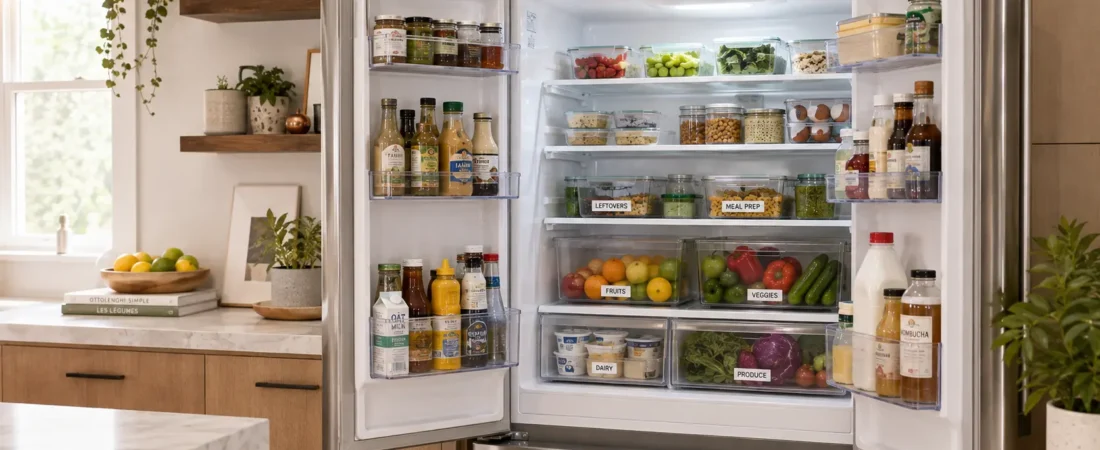
A messy fridge can happen surprisingly fast. One day everything has a place, and a few grocery trips later, leftovers are hiding behind containers, sauces are taking over the door, and you cannot remember what needs to be eaten first.
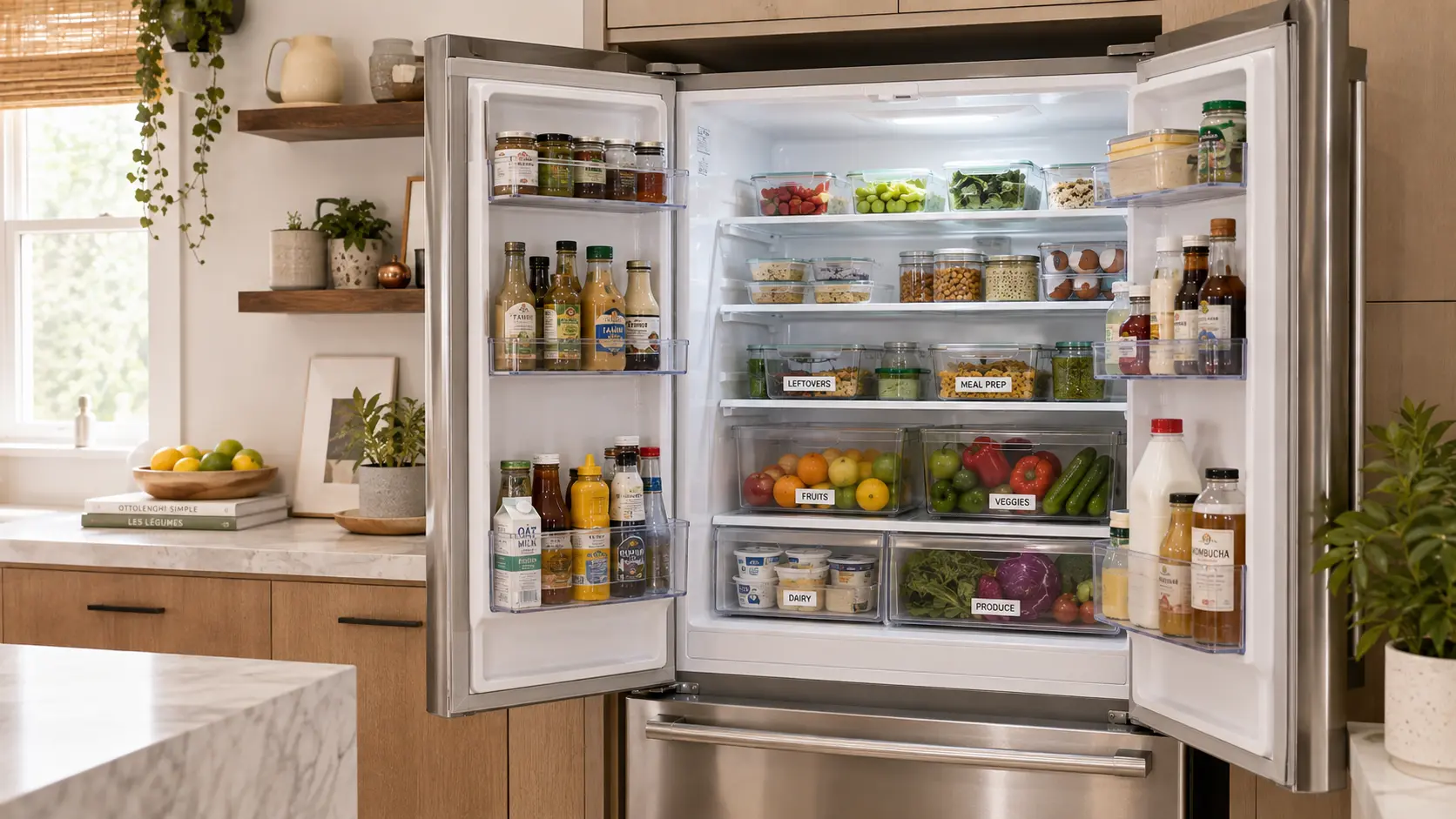
The good news is that you do not need a perfectly styled refrigerator to make it functional. A few simple systems can make a huge difference in how easily you find food, how much space you have, and how often forgotten items go to waste.
In this guide, you will find practical fridge organization ideas that work in real kitchens, including simple ways to create zones, use vertical space, organize a small refrigerator, and keep the system manageable week after week.
Why Fridge Organization Ideas Make Such a Big Difference
Good fridge organization is about more than making the shelves look neat. It helps you create a predictable system, so everyone in the household knows where things belong.
When food is grouped logically, you can spot what you already have before opening another package. That can reduce duplicate purchases, forgotten leftovers, and the frustrating feeling that your fridge is full but somehow has nothing easy to grab.
A well-organized refrigerator can also make everyday kitchen routines easier. You spend less time searching for ingredients, cleaning up spills hidden behind containers, or moving five things just to reach one item.
The key is to organize around how you actually use your fridge, rather than trying to make it look like a showroom.
How to Set Up Fridge Zones (Understanding Your Fridge’s Layout)
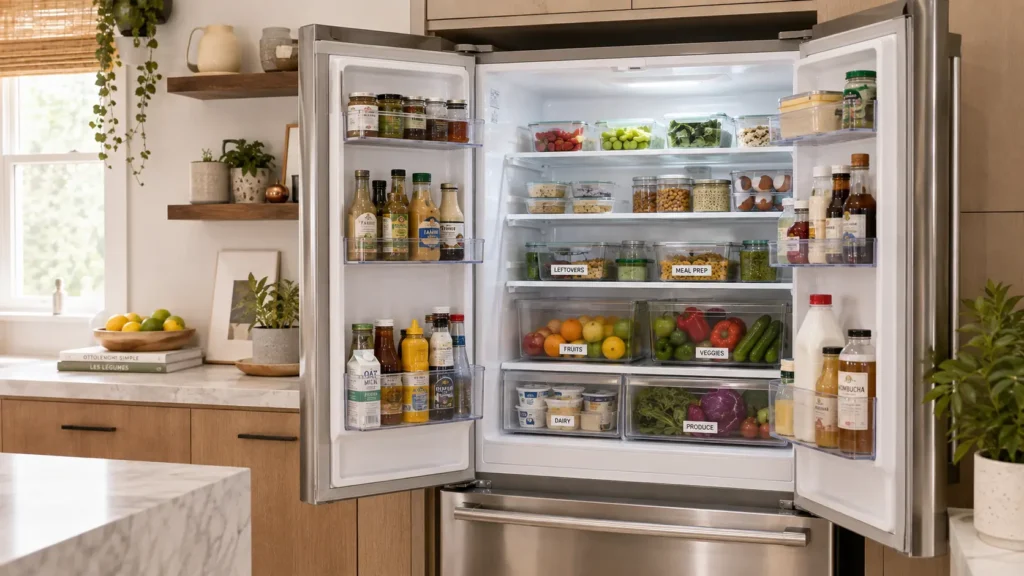
One of the most useful fridge organization ideas is to give each part of your refrigerator a specific job. This is often called a fridge zone system, and it creates a simple visual map for where everything belongs.
Your exact refrigerator design may be different, but these zones are a practical starting point.
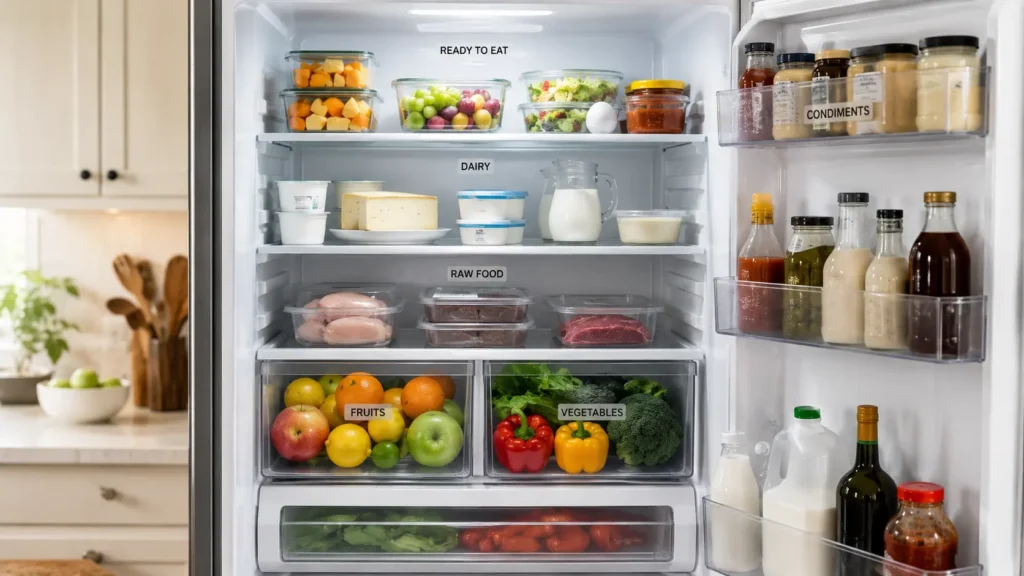
Top Shelf – Ready-to-Eat and Leftovers
Keep foods that are ready to eat on the upper shelf, such as leftovers, cooked foods, drinks you reach for regularly, and prepared snacks.
This area is easy to access, so it is useful for foods you want to notice quickly. Store leftovers in clearly covered containers and place newer items behind foods that should be eaten sooner.
A simple rule helps: older food stays toward the front.
Middle Shelves – Dairy and Everyday Items
Use the middle shelves for everyday foods such as milk, yogurt, cheese, butter, and other frequently used ingredients.
Try grouping similar items together instead of spreading them across multiple shelves. When the same category always has the same home, putting groceries away becomes much faster.
This approach is especially helpful for busy households where several people open the fridge throughout the day.
Bottom Shelf – Raw Meat and Items Needing Cold Air
The bottom shelf is a practical place for raw meat, poultry, seafood, or other foods that need secure storage.
Keep raw foods in sealed containers or leak-proof packaging to help prevent drips from getting onto foods below. Separating these items from ready-to-eat foods is a simple but important food storage habit.
The bottom shelf can also be useful for large containers that are awkward to fit elsewhere.
Drawers – Fruits, Vegetables, and Deli Items
Use crisper drawers for produce and follow the storage recommendations that make sense for the foods you normally buy.
If your refrigerator has separate drawers, you can create simple categories such as produce in one drawer and deli items in another. Avoid stuffing drawers so tightly that you cannot see what is inside.
A drawer that is completely packed often becomes a hiding place for food, so leave enough room to see and access the contents.
Door – Condiments and Items That Don’t Need Deep Cold
The refrigerator door is convenient for bottles, jars, sauces, dressings, and other items you reach for frequently.
Because the door is typically warmer than the main refrigerator compartment, it is better suited to items that are appropriate for door storage rather than foods that need the coldest, most stable conditions.
Use the door shelves by category. Keeping sauces together, spreads together, and drink-related items together makes how to organize your fridge much easier to follow.
Simple Fridge Organization Ideas Anyone Can Try
You do not need a complicated system to see a noticeable improvement. These easy refrigerator organization tips can be started in one afternoon.
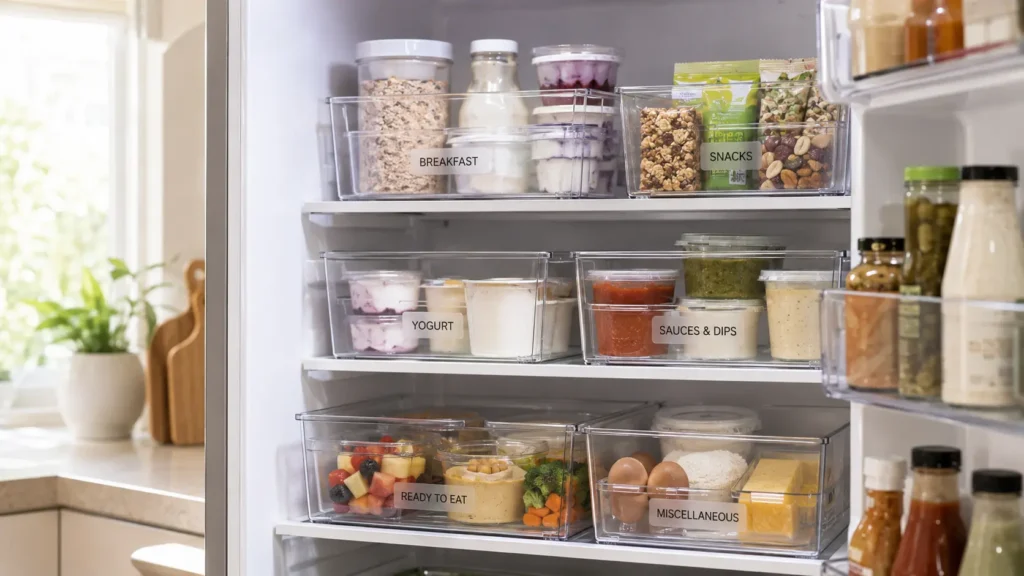
Idea 1 – Use Clear Bins to Group Similar Items
Clear bins are one of the easiest ways to create visible categories without making the fridge feel cluttered.
Try grouping items such as:
- Breakfast foods
- Snacks
- Small dairy items
- Lunch ingredients
- Sauces and open jars
- Ready-to-eat foods
The biggest advantage of clear bin fridge organization is visibility. You can see what is inside without pulling everything out.
Do not overfill the containers. The goal is to make groups easier to access, not create another layer of clutter.
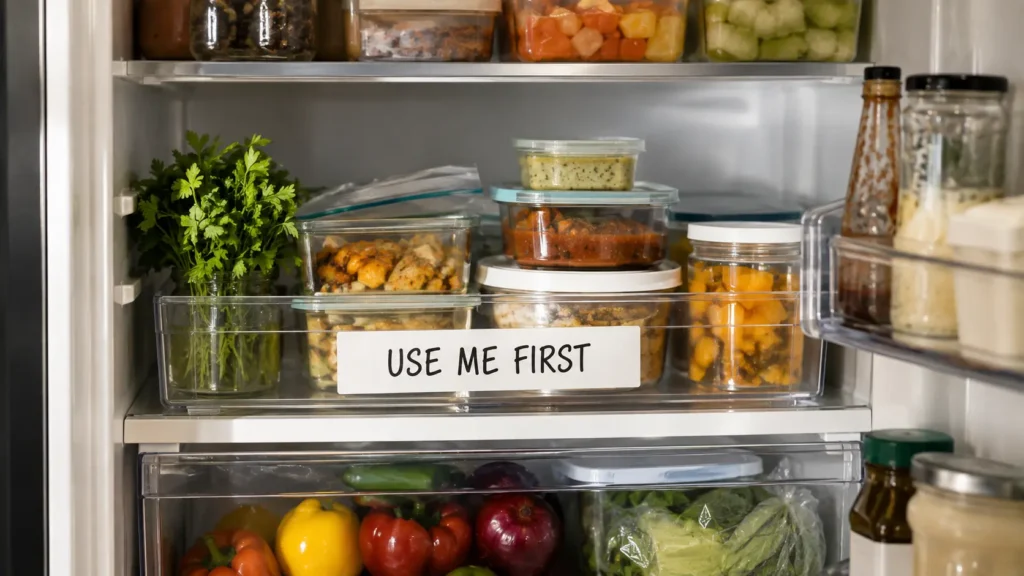
Idea 2 – Create a “Use Me First” Zone
A small “use me first” area can save food that might otherwise be forgotten.
Place leftovers, opened packages, produce that should be eaten soon, or anything approaching its best quality in one clearly visible spot.
This is one of the most practical fridge decluttering tips because it turns food waste prevention into part of your everyday routine.
Instead of wondering what needs attention, you have one obvious place to check before preparing your next meal.
Idea 3 – Label Shelves and Bins
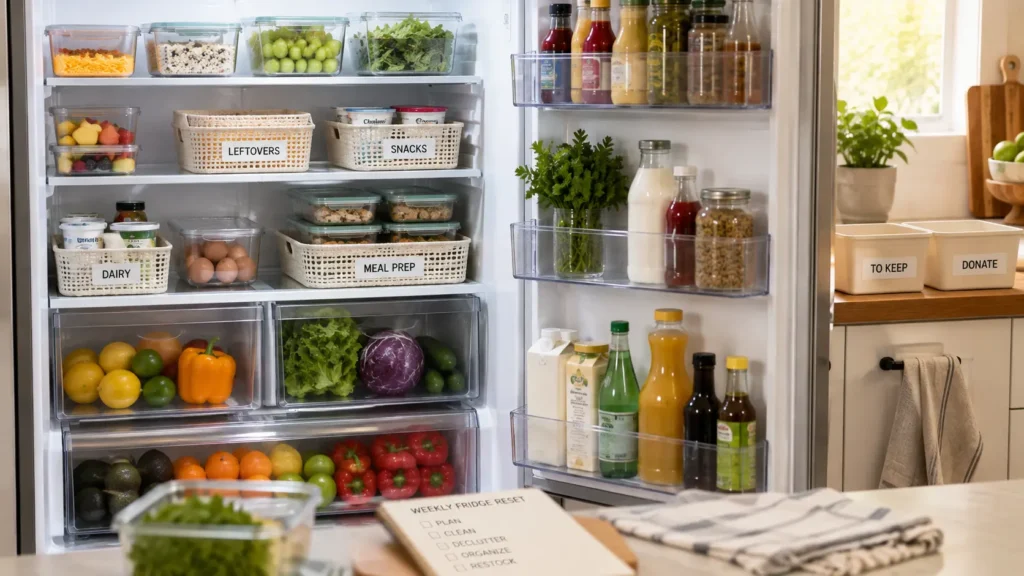
Labels can be surprisingly helpful, especially if multiple people use the same refrigerator.
Simple labels such as “Breakfast,” “Snacks,” “Leftovers,” or “Produce” create visual reminders of where things belong.
You do not need to label every inch of the fridge. Focus on the areas where items tend to get mixed up or where food frequently gets put away in random places.
Idea 4 – Store Items in the Order You Use Them
Think about your daily habits when deciding where food belongs.
For example, if you make breakfast every morning, keep the ingredients you use together and at a comfortable eye level. If you pack lunches frequently, create a dedicated area for lunch ingredients.
This makes your fridge work around your routine instead of forcing your routine to work around the refrigerator.
One of the best food storage organization tips is to organize by function, not just by food type.
Idea 5 – Keep a Lazy Susan for Small Jars and Condiments
Small jars can quickly create a frustrating mess, especially when several containers are crowded together.
A rotating tray can make frequently used jars easier to reach because you can turn the tray instead of moving everything in front of it.
Use this idea for small condiments, jars, spreads, or similar items that tend to disappear toward the back.
Fridge Organization Ideas for Small Fridges
Small refrigerators require a little more intentional planning, but they can still be highly functional.
The trick is to maximize usable space without creating overcrowded shelves. This is where smart fridge organization for small fridges can make a major difference.
Start by removing anything expired, spoiled, or unlikely to be used. Decluttering creates space before you even begin reorganizing.
Then look for categories that can share a zone. Instead of dedicating an entire shelf to one small category, combine compatible items in clearly defined groups.
Vertical space is also important. Stack compatible containers carefully, use shelf space efficiently, and avoid creating piles so tall that you cannot see what is behind them.
For a small fridge, try these simple rules:
- Keep the most-used foods at eye level.
- Store leftovers together rather than scattering them across shelves.
- Use containers with practical shapes that fit your available space.
- Leave small gaps so cold air can circulate.
- Keep one visible area for foods that should be eaten soon.
- Avoid keeping items simply because you might use them someday.
The goal is not to fit more food into the refrigerator. The goal is to make the food you already have easier to see and use.
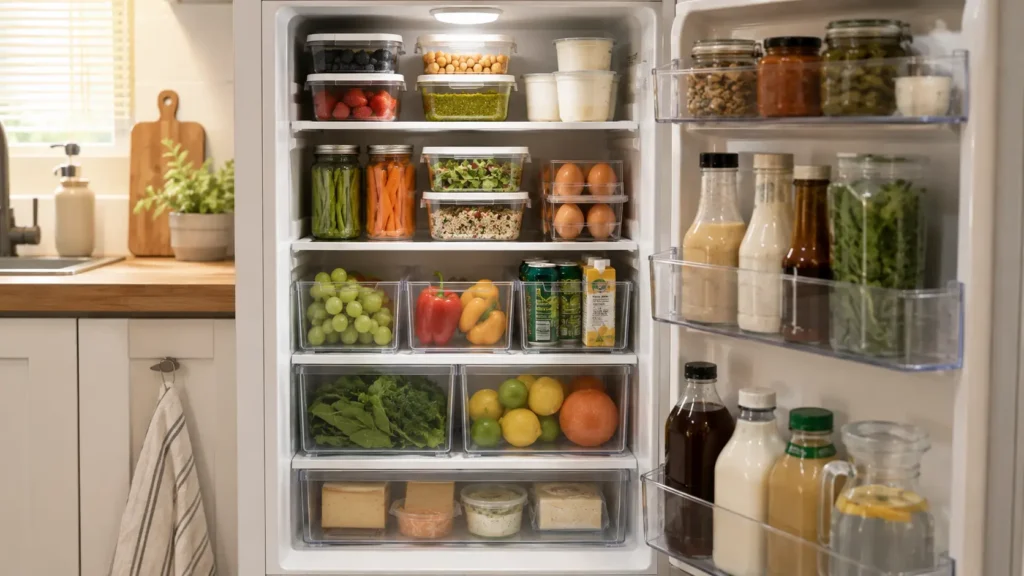
How to Maintain an Organized Fridge Week After Week
The hardest part of organization is often maintenance. A system only works when it is easy enough to repeat.
Spend a few minutes once or twice a week checking your fridge. You do not need a full cleaning session every time.
During your quick reset, look for leftovers that need attention, produce that should be used soon, and items that have been pushed to the back.
Return misplaced items to their zones and wipe up small spills before they become sticky messes.
Another useful habit is to reset the fridge before a grocery trip. When shelves have a little space, you can see what you actually need and avoid buying duplicates.
Here is a simple weekly reset:
- Remove food that is no longer usable.
- Move older foods toward the front.
- Check your “use me first” zone.
- Group similar items back together.
- Wipe any visible spills.
- Make a quick note of foods you need to use soon.
You do not need to spend an hour reorganizing every week. A consistent five-to-ten-minute reset can be enough to keep the system working.
Common Fridge Organization Mistakes to Avoid
Even a good system can become frustrating when the basics are overlooked. Watch out for these common problems:
- Overfilling every shelf: A packed fridge makes it difficult to see and reach food.
- Ignoring the back of the fridge: Food disappears when everything gets pushed behind taller containers.
- Creating too many categories: If every food has its own tiny zone, the system becomes harder to maintain.
- Mixing old and new food randomly: Keep older items visible so they are easier to use first.
- Using containers that hide their contents: Organization should improve visibility, not reduce it.
- Treating the door like a catch-all: Give door shelves clear categories instead of placing random items wherever they fit.
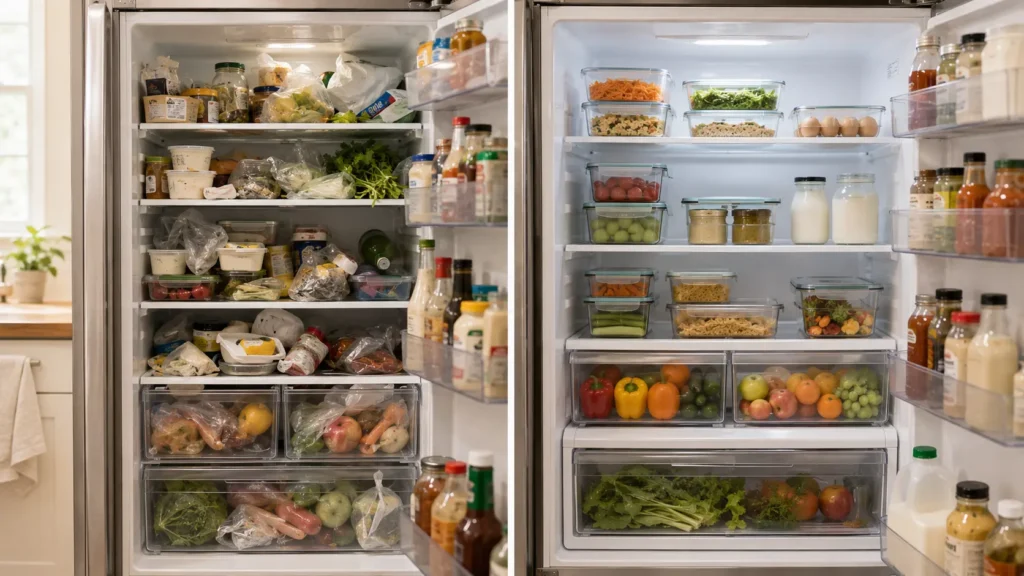
- Organizing without decluttering: Rearranging expired or unwanted food does not solve the underlying problem.
The best refrigerator organization is usually simple enough that you can maintain it even during a busy week.
Final Thoughts
The most effective fridge organization ideas are not about creating a picture-perfect refrigerator. They are about making your kitchen easier to use every day.
Start with a simple fridge zone system, give frequently used foods a predictable home, create a “use me first” area, and remove items that no longer belong. Once your fridge has a clear structure, staying organized becomes much less work.
You do not have to reorganize everything in one go. Pick one shelf, one drawer, or one category and start there. A few small changes can completely change how your refrigerator feels and functions.
For more practical home organization inspiration, check out our guides on how to organize kitchen cabinets, the zone-based kitchen organization method, and how to declutter your kitchen without the overwhelm.
Suggested Internal Links
- The Ultimate Kitchen Deep Cleaning Checklist
- How Often Should You Service Your RO Water Purifier?
- 10 Easy Ways to Organize Your Kitchen Without Buying Anything New
Love simple home maintenance tips like these? Join the Dailyrecshub community on Pinterest, for daily home & kitchen inspiration, appliance care guides, cleaning hacks, and practical DIY tips. Save your favorite ideas, share them with family, and never miss a helpful update!