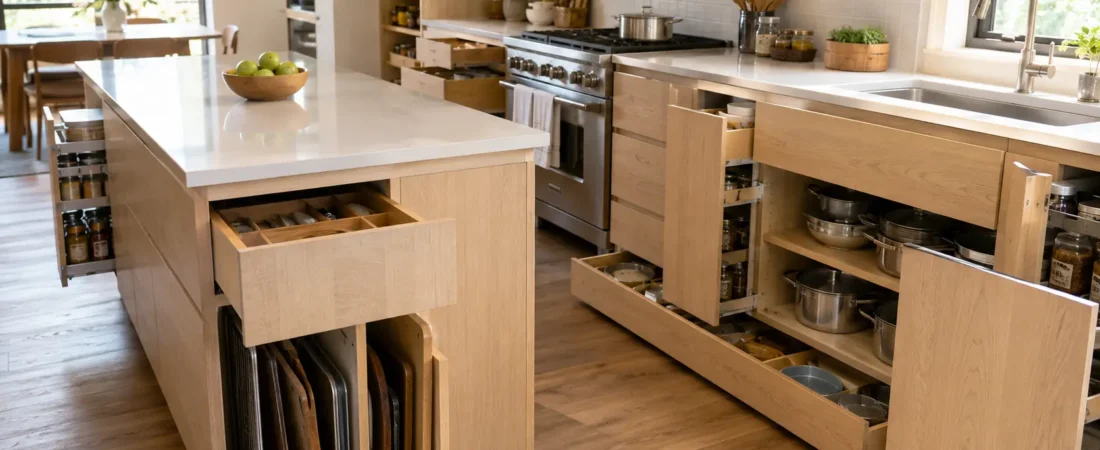
A hidden storage kitchen ideas kitchen can have plenty of cabinets and still feel short on storage. The problem is often not the amount of space you have, but how much usable space gets overlooked. The area beneath cabinets, the backs of doors, awkward corners, and even the few inches between cabinets and the ceiling can all become valuable storage.
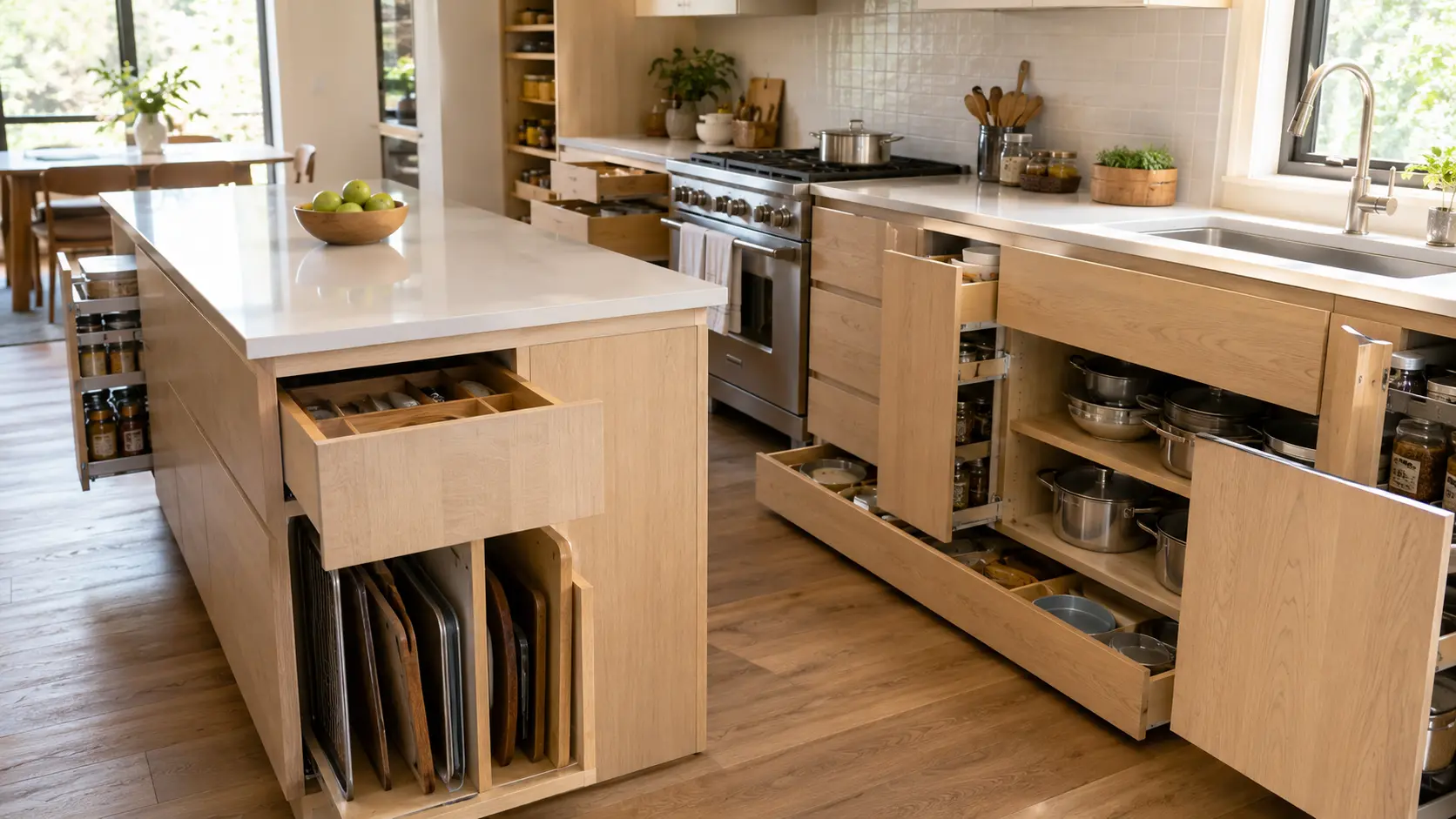
These hidden storage kitchen ideas are designed to help you make better use of those forgotten spaces without making your kitchen look cluttered. From toe-kick drawers and disguised pantries to simple under-cabinet solutions, these ideas can help you maximize kitchen storage space while keeping everyday items easy to find.
Why Hidden Storage Matters in a Kitchen
Traditional kitchen storage usually focuses on obvious spaces: drawers, cupboards, shelves, and pantry cabinets. But once those areas become crowded, people often start stacking items wherever they can find room.
That creates two problems. First, useful space gets wasted. Second, frequently used items become difficult to access.
Hidden storage takes a different approach. Instead of adding more visible containers and shelves, it makes use of spaces that already exist but are rarely used efficiently.
A few smart adjustments can create room for baking supplies, cutting boards, cleaning essentials, cookware, pantry items, and other kitchen necessities without making countertops look busier.
The goal is not to hide everything. It is to place the right things in the right spaces so your kitchen feels organized, functional, and easier to maintain.
Best Hidden Storage Kitchen Ideas
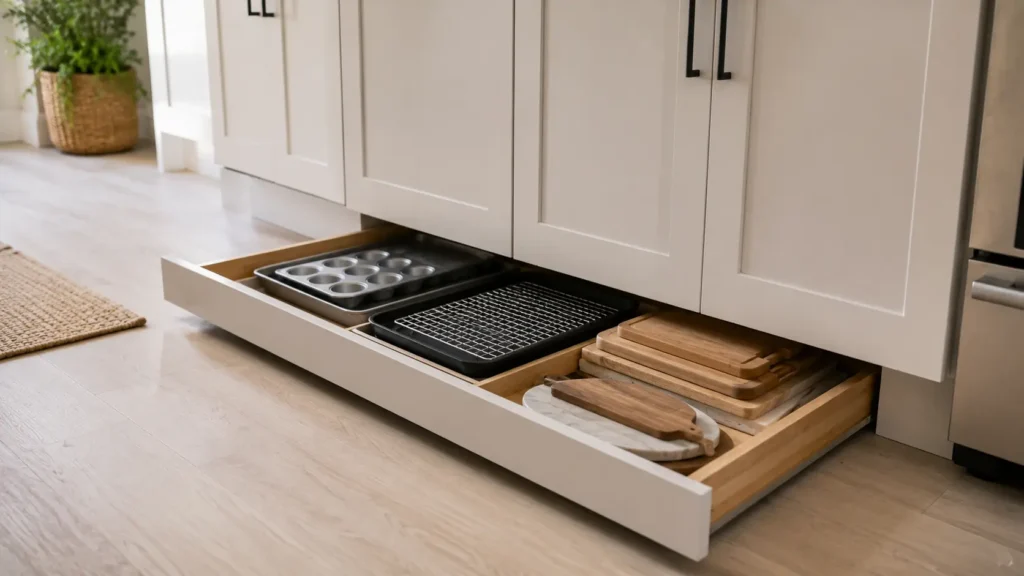
Idea 1 – Toe-Kick Drawers: The Space Under Your Lower Cabinets
The narrow space underneath lower kitchen cabinets is one of the most overlooked storage areas. Known as the toe-kick area, it is usually left empty because it sits close to the floor.
A shallow drawer built into this space can turn those unused inches into surprisingly useful storage. Toe kick drawer storage works especially well for flat or occasional-use items.
Use this hidden area for things such as:
- Baking trays and cooling racks
- Serving platters
- Table linens
- Large cutting boards
- Seasonal kitchen accessories
- Extra kitchen towels
Because the space is low and narrow, avoid storing everyday items that require frequent bending. Instead, reserve toe-kick drawers for things you need occasionally but still want easy access to.
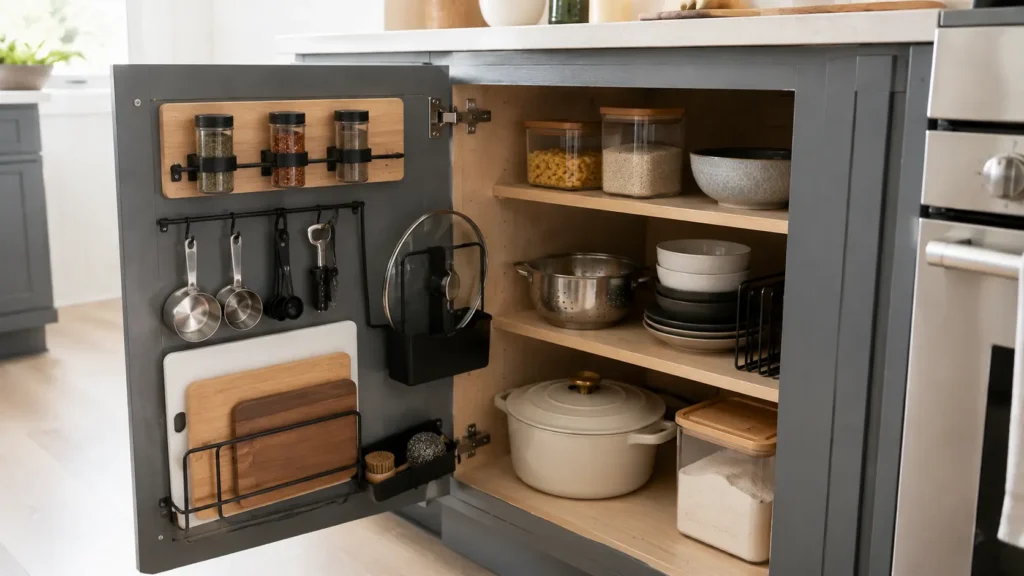
Idea 2 – Inside Cabinet Doors
The inside of a cabinet door offers a hidden surface that often goes completely unused. Adding slim storage here can give you extra organization without taking up much shelf space.
This is one of the simplest hidden kitchen storage solutions, especially when cabinet interiors are already full.
Depending on the cabinet, the door can hold:
- Spice containers
- Pot lids
- Measuring spoons
- Cutting boards
- Food storage bag supplies
- Cleaning cloths
- Small kitchen tools
The key is to choose lightweight items and make sure the added storage does not interfere with shelves or cabinet hinges.
For narrow cabinets, a compact rack inside the door can turn an otherwise empty surface into practical storage.
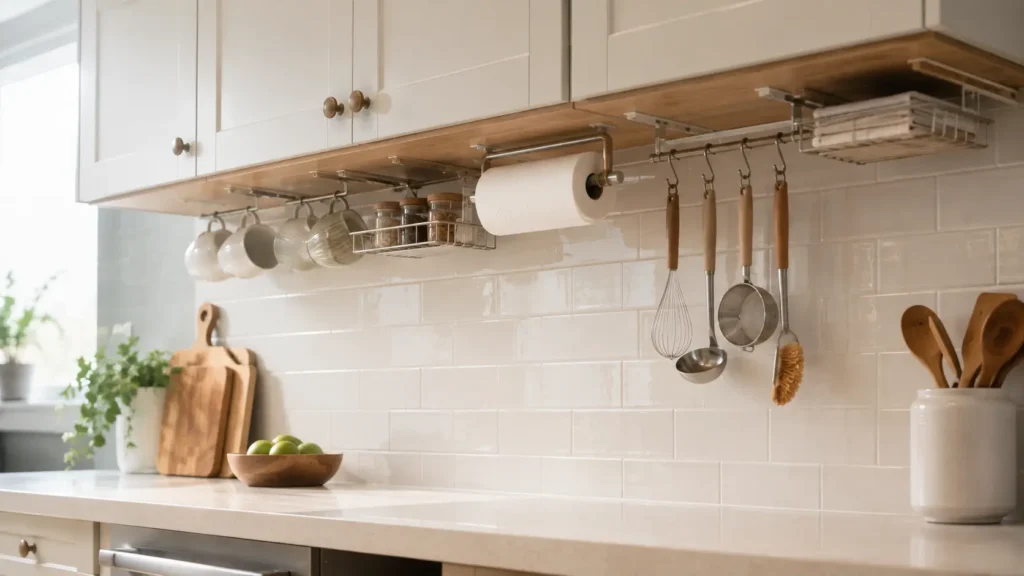
Idea 3 – Under-Cabinet Storage
The space beneath upper cabinets can be useful without making the kitchen feel visually crowded. This makes under cabinet storage ideas particularly helpful in smaller kitchens where every surface matters.
Look at the underside of your cabinets and consider what could fit there without getting in the way of food preparation.
Depending on your kitchen layout, this area can work for:
- Mugs and small cups
- Paper towels
- Kitchen towels
- Lightweight utensils
- Small bins
- Frequently used pantry tools
Keep this area reserved for items you use often. Hidden storage works best when it reduces clutter while still keeping everyday essentials within reach.
A useful rule is to keep heavier items in more secure storage and use overhead or underneath spaces for lighter objects.
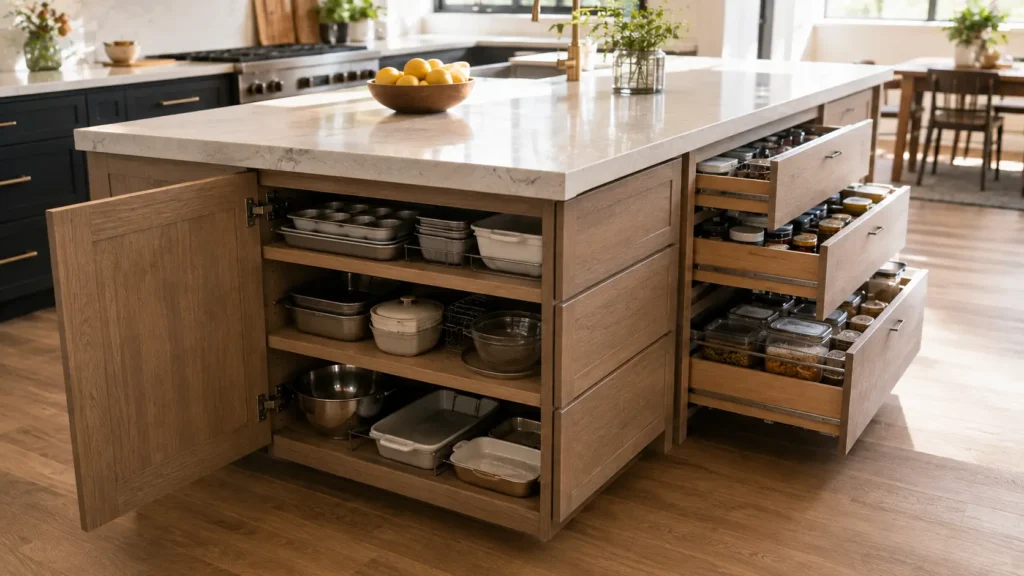
Idea 4 – Kitchen Island Storage
A kitchen island is more than a workspace. The interior sides can often provide valuable storage that stays almost completely out of sight.
Kitchen island hidden storage can include narrow pull-outs, deep drawers, concealed compartments, or even storage built into the less visible side of the island.
Consider assigning these spaces to:
- Baking equipment
- Extra cookware
- Serving dishes
- Small appliances
- Pantry backups
- Table-setting supplies
If the island is large, divide storage by function instead of putting everything into one deep compartment.
For example, one section can hold baking supplies while another stores entertaining essentials. This makes the hidden storage easier to maintain and prevents deep spaces from becoming dumping grounds.
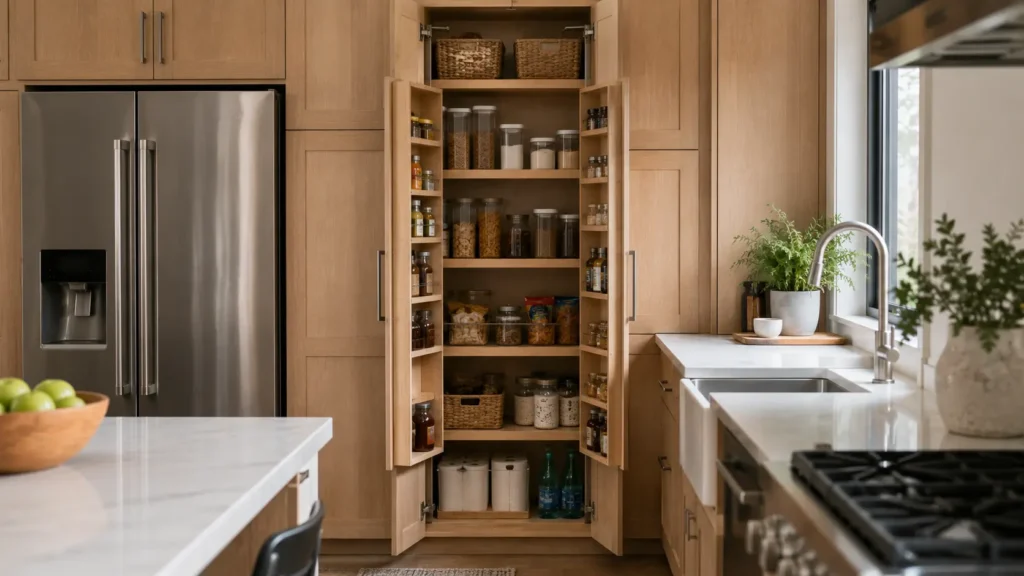
Idea 5 – Disguised Pantry
A pantry does not always need to look like a pantry. One of the smartest hidden pantry ideas is to create storage behind a door or cabinet panel that blends into the rest of the kitchen.
This approach works particularly well in awkward spaces beside refrigerators, at the end of cabinet runs, or in unused wall recesses.
A disguised pantry can hold:
- Dry food staples
- Backup ingredients
- Breakfast supplies
- Snacks
- Small kitchen appliances
- Bulk food storage
For a seamless appearance, the pantry door can match surrounding cabinets or wall finishes. From the outside, it looks like part of the kitchen design; inside, it provides valuable organized storage.
This is a great example of disguised kitchen storage because it improves capacity without adding visual clutter.
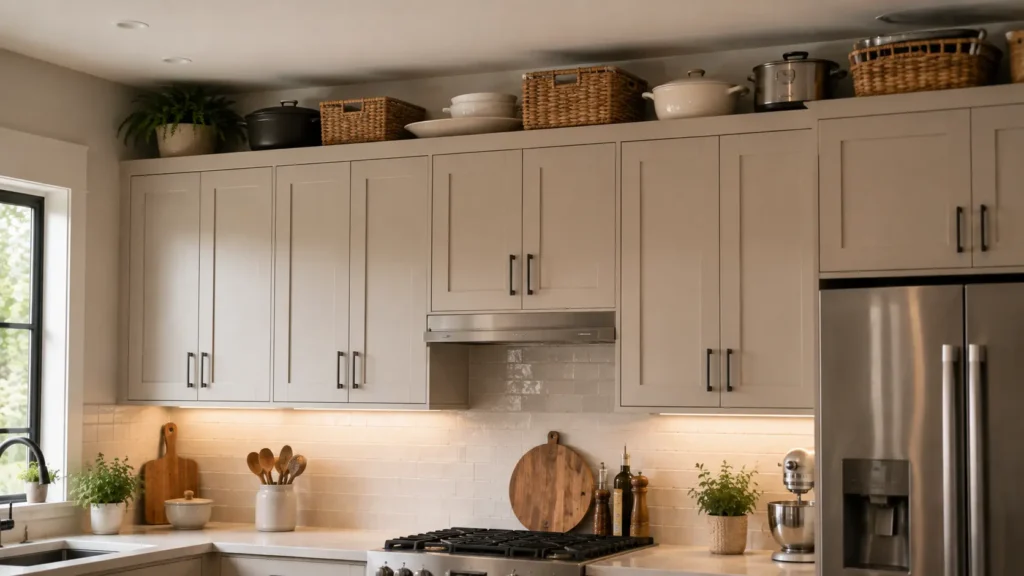
Idea 6 – Vertical Wall Space Between Cabinets and Ceiling
Many kitchens have a gap between the top of the cabinets and the ceiling. Instead of treating this area as dead space, use it strategically for items you do not need every day.
This is especially useful in kitchens with limited lower storage.
Depending on your layout, you can use the upper area for:
- Seasonal serving pieces
- Large decorative kitchenware
- Extra dishes
- Special-occasion cookware
- Backup supplies
Keep less frequently used items in sealed containers or baskets if the area tends to collect dust.
The important thing is not to turn this high space into a random storage zone. Give it a clear purpose and keep similar items together.
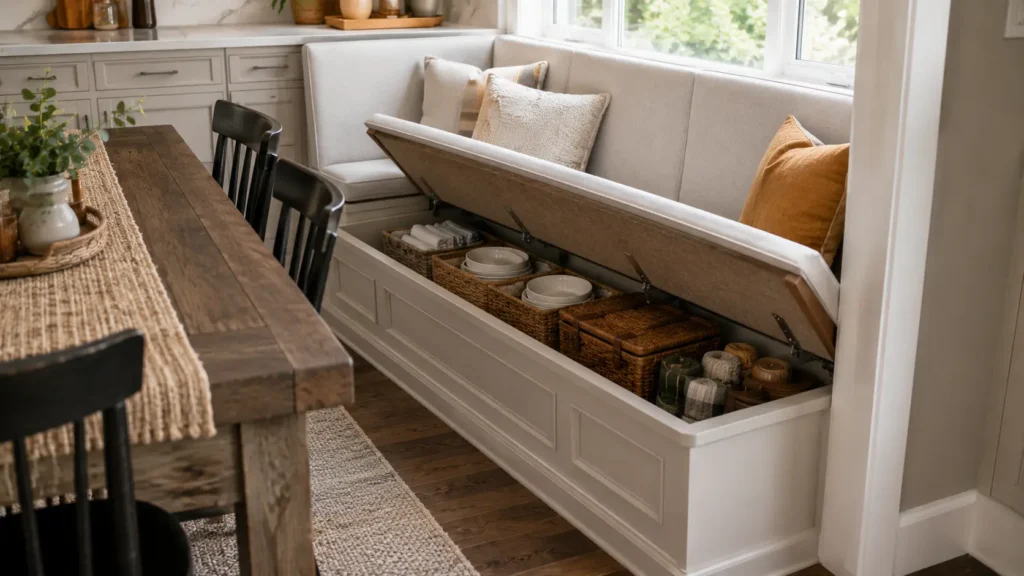
Idea 7 – Bench or Banquette Seating Storage
A dining nook can provide storage as well as seating. If you have a bench or banquette, the space underneath can become a hidden compartment for items that do not need to sit in your main kitchen cabinets.
Possible uses include:
- Extra table linens
- Seasonal dishes
- Serving pieces
- Picnic supplies
- Backup kitchen accessories
Lift-up seating gives you access to deeper storage, while drawers can make frequently used items easier to reach.
This idea is particularly valuable when kitchen cabinets are limited and the dining area is directly connected to the kitchen.
Hidden Storage Ideas for Small Kitchens
Small kitchens benefit the most from hidden storage because visible clutter can make a limited room feel even tighter.
The good news is that many kitchen storage ideas for small spaces do not require a renovation. Start by identifying areas that are currently doing nothing.
Look at:
- The backs of cabinet doors
- The sides of cabinets
- Empty wall space
- The top of tall cabinets
- The underside of upper cabinets
- Narrow gaps beside appliances
- The space under seating
- Deep shelves where items disappear behind one another
You can also improve existing storage by changing how items are arranged.
Instead of stacking everything in one large pile, group similar items and place the things you use most often toward the front. Reserve harder-to-reach areas for backup supplies or occasional-use items.
A few simple creative kitchen storage hacks can make a noticeable difference without changing the entire kitchen.
For example, a narrow unused wall can become vertical storage, while the back of a cabinet door can handle small accessories that would otherwise take up valuable shelf space.
How to Decide What Goes in Hidden Storage
Not every kitchen item belongs in hidden storage. The best results come from matching each item to the storage space that makes the most sense.
Start by thinking about frequency of use.
Items you reach for every day should remain easy to access. Items used once a week or once a month can move into less visible locations.
A simple system is:
Everyday items: Keep them in the easiest-to-reach drawers and cabinets.
Weekly-use items: Store them in secondary drawers, deeper cabinets, or concealed compartments.
Occasional items: Use high shelves, toe-kick drawers, banquette storage, or other hidden areas.
Backup supplies: Keep extras together so you know exactly where to look when something runs out.
Also consider the shape of the item. Long, flat objects work well in shallow drawers or vertical storage. Small accessories are often better suited to cabinet-door organizers, while bulky items may need deeper compartments.
The right hidden storage should make your kitchen easier to use, not harder.
Mistakes to Avoid With Hidden Kitchen Storage
Hidden storage can be extremely useful, but it can also become clutter that simply happens to be out of sight.
Avoid these common mistakes:
- Hiding items without organizing them: A concealed cabinet is not automatically an organized cabinet.
- Using deep spaces as dumping zones: Items pushed to the back can easily be forgotten.
- Storing heavy objects in awkward locations: Keep heavy cookware in stable, accessible storage.
- Overloading cabinet doors: Too much weight can make doors difficult to open and close properly.
- Ignoring frequency of use: Do not put everyday essentials in difficult-to-reach hidden compartments.
- Creating too many storage categories: Keep your system simple enough that everyone in the kitchen can follow it.
- Forgetting maintenance: Hidden spaces still need regular cleaning and occasional decluttering.
The biggest mistake is creating storage just for the sake of having more storage. Every hidden space should have a clear job.
Final Takeaway
The smartest hidden storage kitchen ideas are not about squeezing more things into every corner. They are about noticing the spaces your kitchen already has and giving those overlooked areas a useful purpose.
Toe-kick drawers, cabinet-door storage, under-cabinet solutions, concealed pantries, island compartments, vertical spaces, and seating storage can all help you maximize kitchen storage space without filling your kitchen with visible organizers.
Start with one forgotten area, give it a specific purpose, and build from there. Small improvements often make the biggest difference in how organized a kitchen feels.
For more practical ideas, explore our related guides on how to organize kitchen cabinets, corner cabinet organization ideas, and the zone-based kitchen organization method here at Dailyrecs Hub.
Short Note :
The best hidden storage kitchen ideas are the ones that make your kitchen feel more spacious without adding visual clutter. By using overlooked areas like cabinet doors, toe-kick spaces, kitchen islands, and awkward corners, you can create practical storage while keeping everyday essentials organized and easy to access. Whether you have a compact kitchen or plenty of cabinet space, these hidden storage kitchen ideas can help you make better use of every available inch and maintain a cleaner, more functional cooking area.
Suggested Internal Links
- The Ultimate Kitchen Deep Cleaning Checklist
- How Often Should You Service Your RO Water Purifier?
- 10 Easy Ways to Organize Your Kitchen Without Buying Anything New
Love simple home maintenance tips like these? Join the Dailyrecshub community on Pinterest, for daily home & kitchen inspiration, appliance care guides, cleaning hacks, and practical DIY tips. Save your favorite ideas, share them with family, and never miss a helpful update!