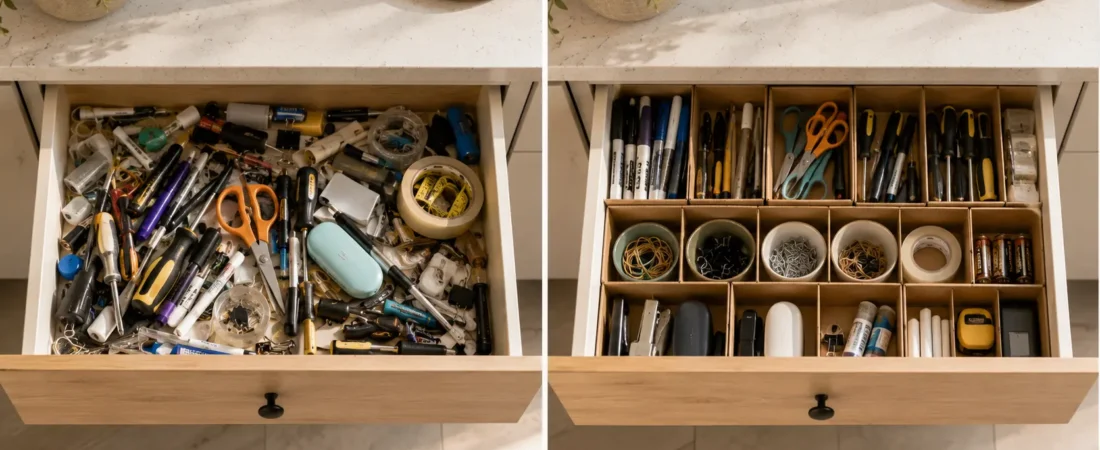
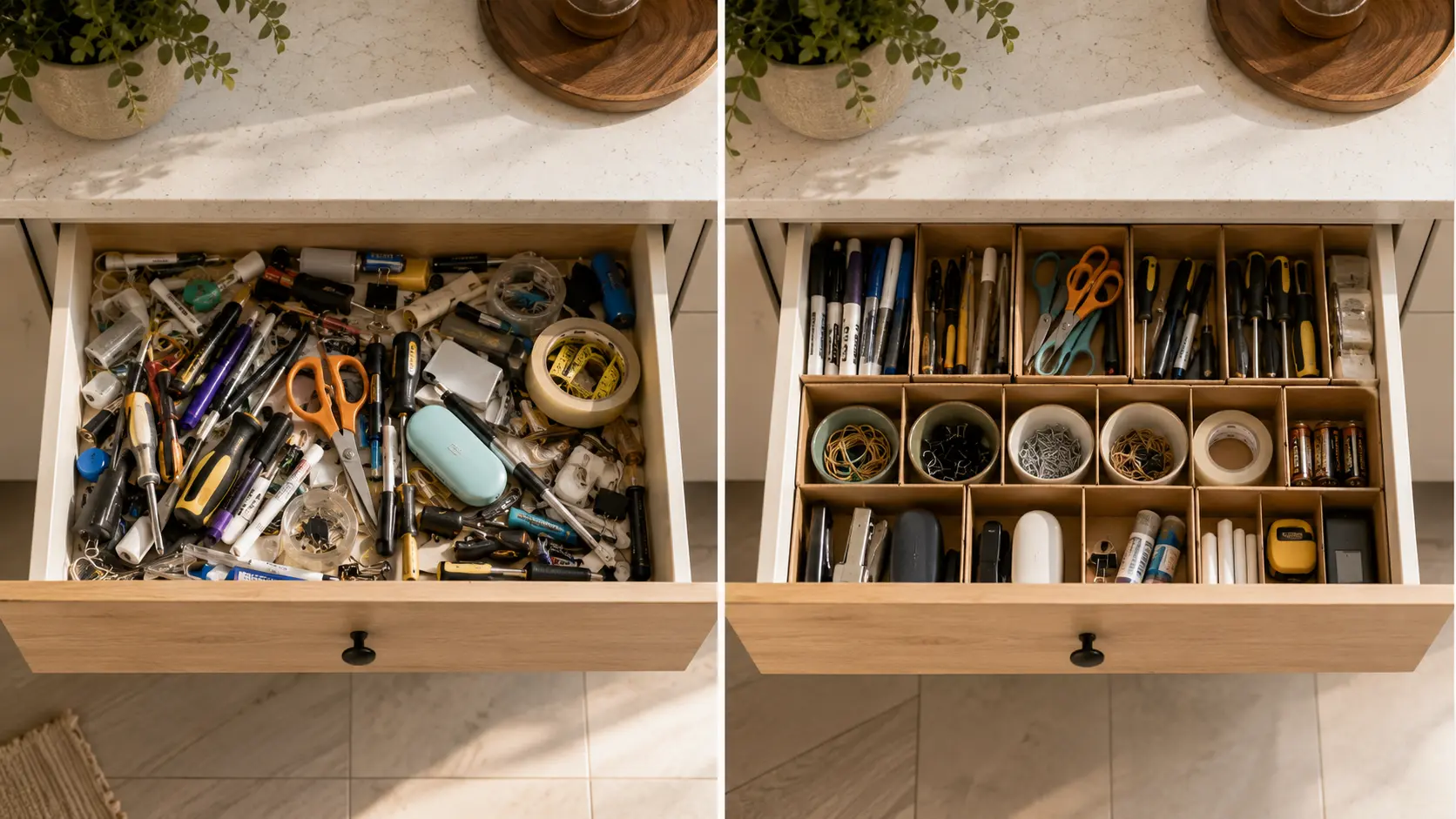
A kitchen junk drawer has a funny way of becoming the place where everything ends up when nobody knows where else to put it. Spare batteries, takeout menus, rubber bands, pens, tape, screws, scissors, and random little gadgets can quickly turn into one tangled pile. Then, when you actually need something, you have to dig through the entire drawer to find it.
The good news is that how to organize a kitchen junk drawer doesn’t have to involve expensive storage products or an entire afternoon of work. With a simple sorting system, a few containers you already have at home, and a quick maintenance habit, you can turn that chaotic catch-all space into a drawer that is genuinely useful.
Here’s a practical step-by-step approach you can finish without making the project complicated.
Why Does a Kitchen Junk Drawer Get So Messy?
Before tackling the mess, it helps to understand why junk drawers become cluttered so easily.
The biggest reason is convenience. A junk drawer becomes the easiest place to put something when you’re in a hurry. Instead of deciding where an item belongs, you toss it in the drawer with the thought that you’ll deal with it later.
The problem is that “later” rarely comes.
Over time, unrelated items pile up together, making the drawer harder to use. Once the drawer becomes visually chaotic, it’s also easier to add one more random item because there is no clear system to follow.
The solution isn’t simply getting rid of clutter. You need to create obvious categories and designated spaces so putting things away becomes almost automatic.
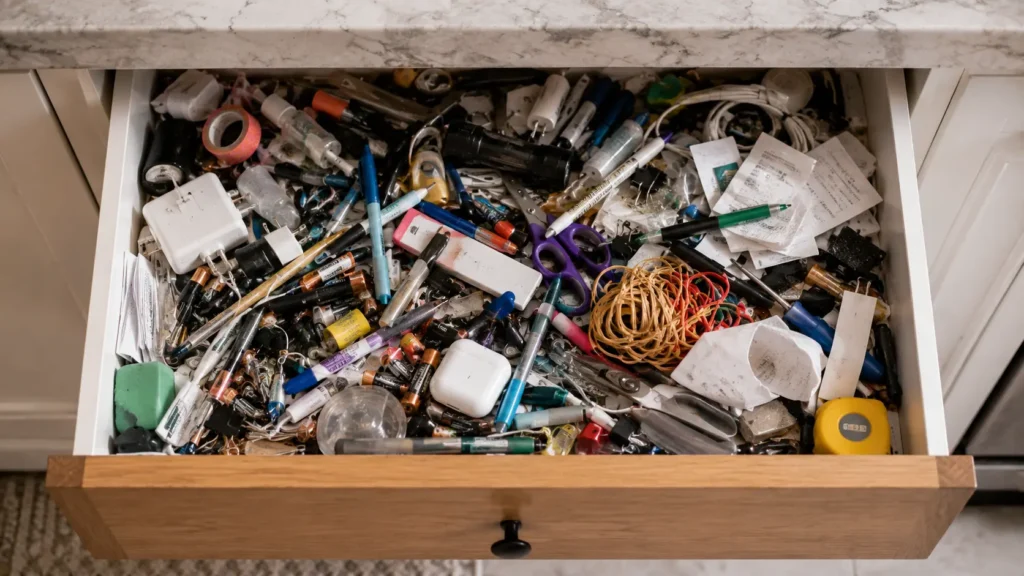
How to Organize a Kitchen Junk Drawer Step by Step
You don’t need fancy containers to get started. The most important part is creating a system that makes sense for the way you actually use your kitchen.
1. Empty the Entire Drawer
Start by taking everything out of the drawer and placing it on a clear counter or table.
Don’t try to organize while items are still inside. You won’t be able to see how much you’ve accumulated, and you’ll probably end up shifting clutter around instead of actually reducing it.
Once the drawer is empty, wipe it clean. Remove crumbs, dust, receipts, and anything else hiding in the corners.
This gives you a completely blank space to work with.
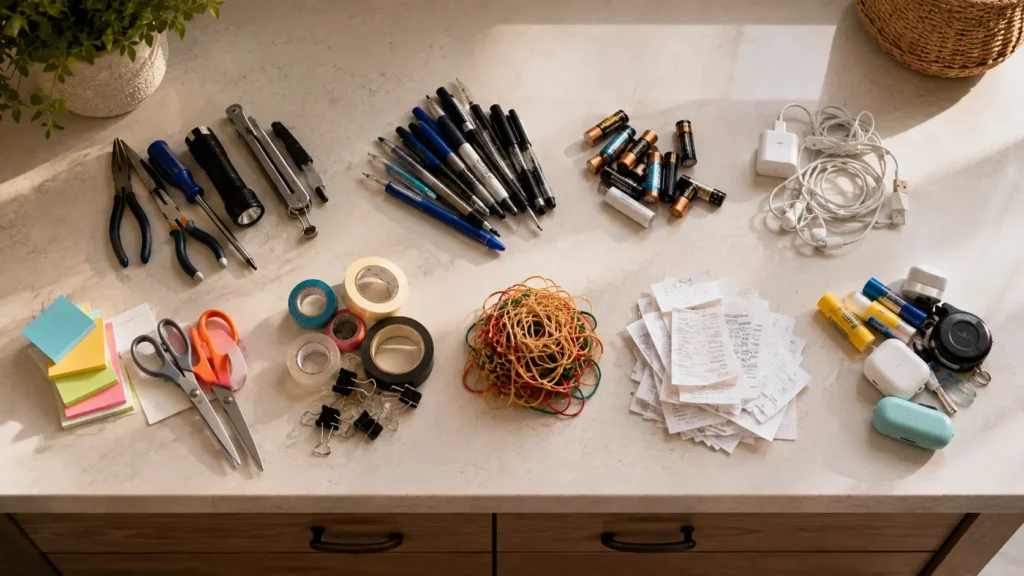
2. Sort Everything Into Simple Categories
Now start grouping similar items together. Don’t create too many categories or the system will become harder to maintain.
Some useful categories include:
- Small tools: screwdrivers, measuring tape, utility scissors, mini tools
- Stationery: pens, pencils, markers, sticky notes
- Household odds and ends: rubber bands, twist ties, clips, tape
- Batteries and small electronic accessories: spare batteries, adapters, small cables
- Kitchen extras: bag clips, wine stoppers, small gadgets, corks
- Miscellaneous: items that don’t fit anywhere else
This step is one of the most useful kitchen junk drawer organization ideas because it changes the drawer from one giant pile into several manageable groups.
3. Decide What Actually Belongs
Once everything is sorted, take a closer look at each pile.
Ask yourself whether the item is useful, whether you actually use it, and whether the junk drawer is truly the best place for it.
A useful junk drawer should contain small items you reach for occasionally but don’t necessarily need to store elsewhere.
What should you keep in a junk drawer?
Good candidates include:
- Pens and pencils
- Scissors
- Tape
- Small screwdrivers
- Measuring tape
- Rubber bands
- Bag clips
- Twist ties
- Spare keys you use regularly
- Small batteries
- Note paper
- Utility items that don’t have a better home
The goal isn’t to fill the drawer with useful things simply because they are small. The goal is to keep items that are genuinely convenient to have together.
4. Remove Items That Don’t Belong
One of the easiest ways to learn how to declutter a junk drawer is to separate the “useful but misplaced” items from genuine trash.
Throw away broken objects, dried-out pens, expired coupons, useless packaging, duplicate items you don’t need, and anything you haven’t had a reason to keep.
Then create a separate pile for items that belong somewhere else.
For example, a screwdriver might belong in a toolbox, extra charging cables might belong with electronics, and important documents should obviously be filed somewhere safer.
A junk drawer shouldn’t become a dumping ground for every small object in your home.
What Doesn’t Belong in a Kitchen Junk Drawer?
Knowing what to remove is just as important as knowing what to keep.
Avoid using the drawer for things that are too large, potentially hazardous, valuable, or needed frequently enough to deserve a dedicated home.
Consider moving out:
- Important documents
- Medication
- Sharp objects that need safer storage
- Large tools
- Excess cleaning supplies
- Food items
- Cords and electronics you use regularly
- Large collections of duplicate items
- Anything that belongs in a specific room or storage area
Keeping the contents limited makes the drawer much easier to maintain.
Create Sections With Things You Already Own
This is where you can make a big difference without spending much money.
You don’t necessarily need a purpose-built drawer organizer. Small boxes, containers, and trays already sitting around the house can work surprisingly well.
Try repurposing:
- Small cardboard boxes
- Takeout containers
- Clean food-storage containers
- Jar lids
- Small gift boxes
- Ice cube trays
- Shallow bowls
- Reusable plastic containers
- Bottom sections of sturdy packaging
The key is choosing containers that fit inside the drawer without wasting too much vertical or horizontal space.
Try Simple Junk Drawer Dividers Ideas
You can also create sections without buying anything new.
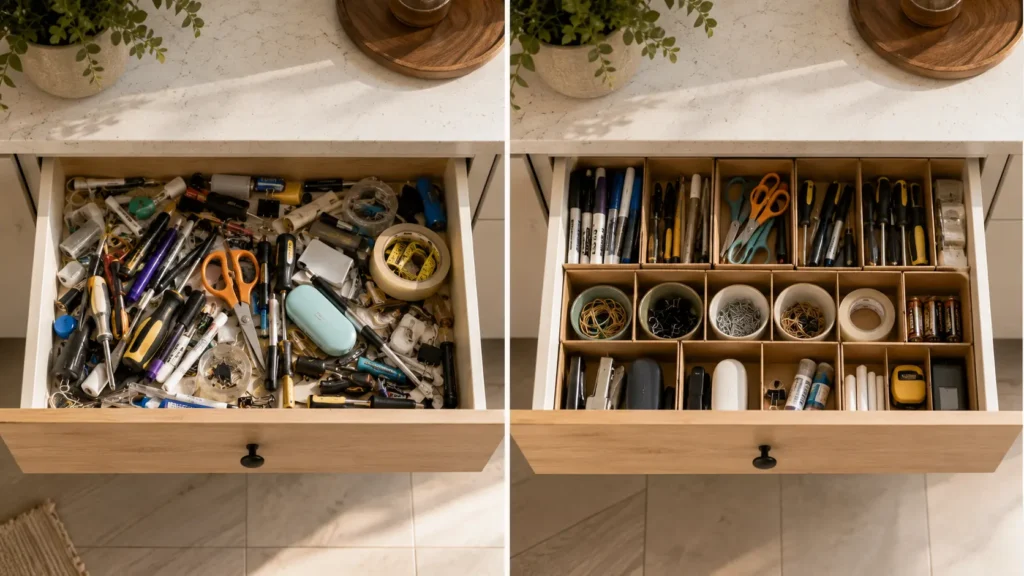
For example, place small boxes side by side to make compartments for stationery, tools, and odds and ends. Pieces of sturdy cardboard can also be used as simple separators.
Another practical approach is to use one larger shallow container for frequently used items and several smaller containers inside it for tiny objects.
When considering junk drawer dividers ideas, focus less on making the drawer look perfectly symmetrical and more on giving every category an obvious home.
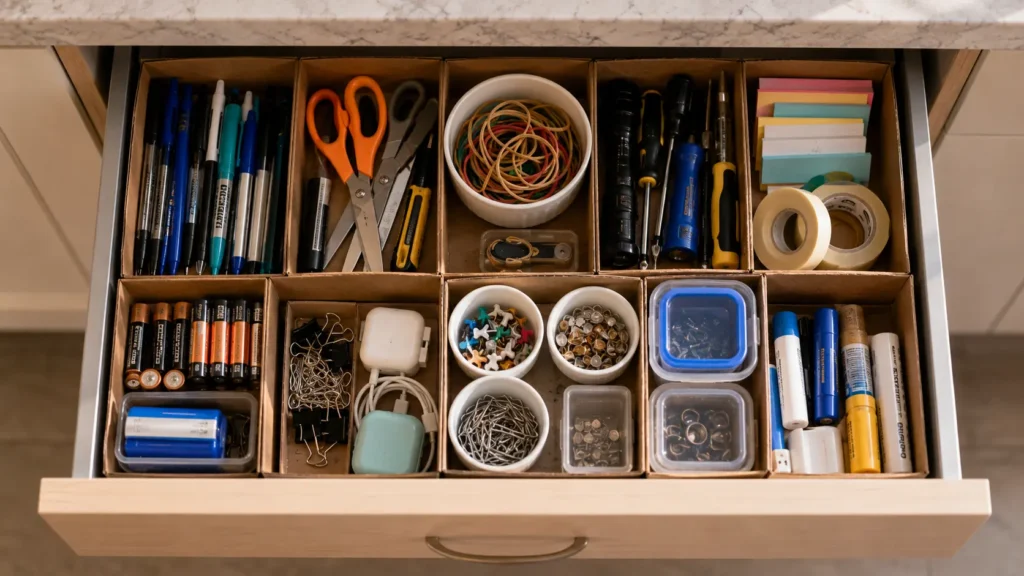
Group Items by How You Use Them
Categories are helpful, but usage matters too.
You don’t have to organize everything according to strict object types. Think about what you naturally reach for together.
For example, a small section might contain scissors, tape, rubber bands, and clips because those items are often used during quick household tasks.
Another section might hold pens, sticky notes, and a small notepad.
This approach makes it easier to organize miscellaneous kitchen items without creating unnecessary complexity.
A good organization system should reduce decisions. When you open the drawer, you should immediately know where to look.
Add Labels to Keep the System Simple
Labels may seem unnecessary for a junk drawer, but they can be especially helpful when more than one person uses the kitchen.
You don’t need a label maker. Handwritten labels on masking tape or small pieces of paper work perfectly well.
Use simple descriptions such as:
- Tools
- Writing
- Batteries
- Clips & Ties
- Tape
- Odds & Ends
The purpose of labels isn’t decoration. They’re reminders that help everyone put things back where they belong.
Clear labels are also one of the easiest junk drawer organizer tips because they reduce the chances of your new system slowly disappearing.
Use a Front-to-Back Layout
Think about what you use most often.
Frequently used items should be placed toward the front of the drawer so they’re easy to grab. Less frequently used items can go toward the back.
You can also place taller containers toward the back and flatter ones near the front, as long as everything remains easy to see.
Avoid stacking items deeply whenever possible. If you have to move five things to reach one item, the organization isn’t really helping.
Budget-Friendly Junk Drawer Storage Solutions
The best junk drawer storage solutions aren’t necessarily the most expensive ones. In fact, many useful options can be found around your home.
Small boxes from previous purchases can create instant compartments. A clean food container can hold batteries or small hardware, while a shallow tray can keep pens and scissors contained.
You can even combine different containers to make a custom layout that fits your drawer exactly.
Before buying anything, look around your home and ask, “What small containers do I already have that could create sections here?”
This approach saves money and lets you change the layout easily if your needs change.
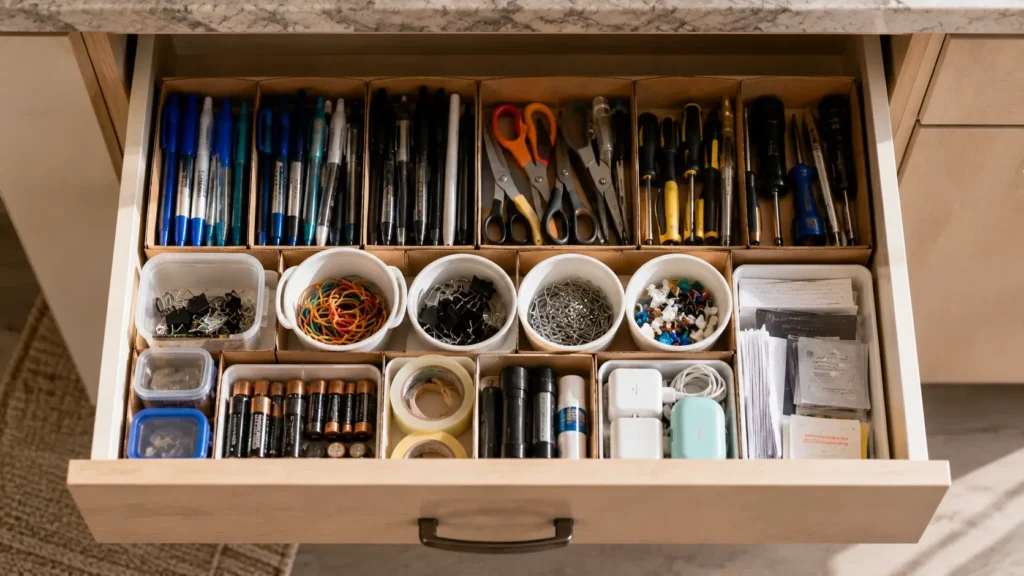
How to Keep Your Junk Drawer Organized
Getting the drawer organized is only half the job. The real trick is stopping it from becoming chaotic again.
Fortunately, maintenance doesn’t need to take long.
Do a Five-Minute Weekly Reset
Once a week, open the drawer and quickly scan the contents.
Put misplaced objects back where they belong, remove obvious trash, and straighten any containers that have shifted.
This tiny reset prevents small problems from becoming another major decluttering project.
Do a Quick Monthly Declutter
Once a month, take a closer look at the drawer and ask whether the categories still make sense.
You may notice that one section has become overcrowded while another barely gets used. Rearrange the containers instead of forcing your original layout to stay the same forever.
This is also a good time to revisit how to declutter a junk drawer if you notice duplicate items or things that have slowly crept back in.
Follow the One-In, One-Out Rule
A simple rule can make a surprisingly big difference: when something new comes into the drawer, something unnecessary goes out.
You don’t have to remove an item every single time, but using this principle keeps the drawer from gradually expanding beyond its limits.
A Simple System for Long-Term Junk Drawer Organization
A well-organized junk drawer doesn’t need to look perfect.
It simply needs to make sense.
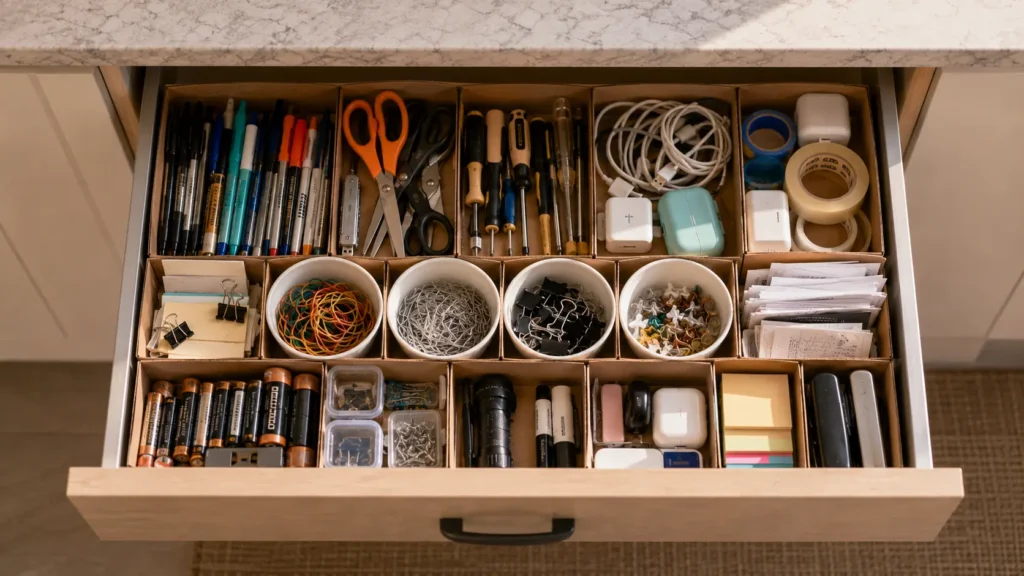
A practical setup might look like this:
Front section: frequently used pens, scissors, tape, and clips
Middle section: small tools and household accessories
Back section: batteries, less frequently used items, and miscellaneous supplies
Small container: tiny objects that would otherwise disappear into the bottom of the drawer
The exact arrangement will depend on your household. The best junk drawer organizer tips are the ones that match your habits rather than copying someone else’s setup exactly.
Remember that the purpose of organizing is to make everyday life easier, not to create another system you have to work hard to maintain.
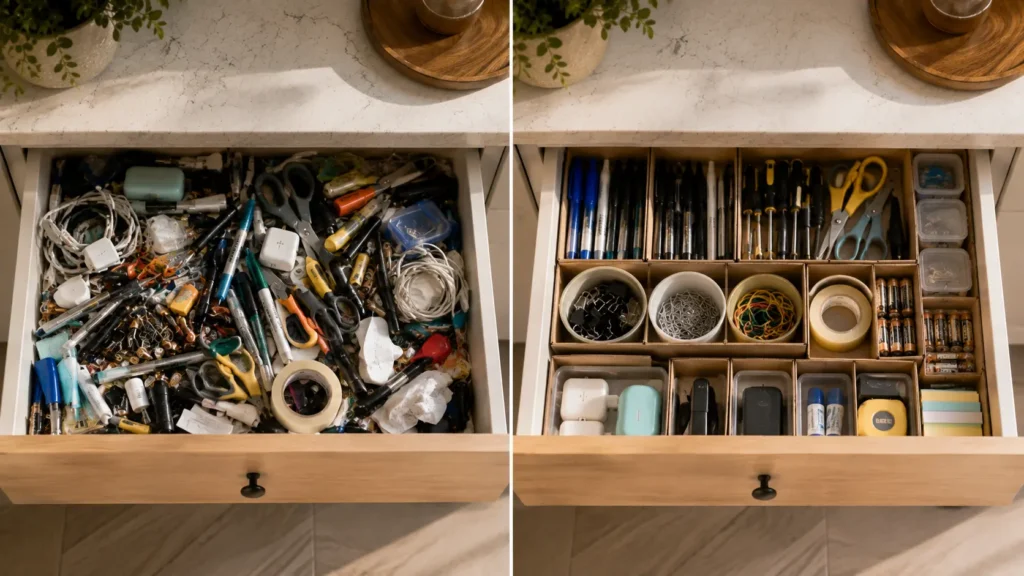
FAQ About Organizing a Kitchen Junk Drawer
How often should you clean out a junk drawer?
A quick five-minute reset once a week can keep things under control, while a more thorough declutter once a month is usually enough for most households.
What is the best way to separate items in a junk drawer?
Use simple sections based on categories or how you use items. Small boxes, trays, repurposed containers, and cardboard dividers can all work well without requiring expensive organizers.
How do you organize a junk drawer without buying anything?
Start by reusing containers you already have, such as small boxes, food containers, jar lids, shallow bowls, or packaging. The goal is to create clear sections, not to buy matching storage products.
How many categories should a junk drawer have?
There isn’t a perfect number, but fewer categories are usually easier to maintain. Start with broad groups such as tools, stationery, batteries, clips and ties, and miscellaneous items, then adjust the system based on what you actually use.
Final Thoughts
Learning how to organize a kitchen junk drawer is less about creating a picture-perfect drawer and more about giving everyday items a clear place to go. Empty the drawer completely, remove anything broken or misplaced, group similar items, and create simple sections using containers you already have at home.
The biggest improvement usually comes from making the system easy enough that everyone in the household can follow it. A five-minute weekly reset can then keep the drawer from sliding back into chaos.
Once you find a setup that works, save or pin this guide so you can come back to it the next time your junk drawer starts getting crowded. A simple reset can make one of the most frustrating little spaces in your kitchen much easier to use.
Suggested Internal Links
- The Ultimate Kitchen Deep Cleaning Checklist
- How Often Should You Service Your RO Water Purifier?
- 10 Easy Ways to Organize Your Kitchen Without Buying Anything New
Final End Note
A messy drawer doesn’t need a complicated solution—just a little time, a simple system, and a place for everything. Once you know how to organize a kitchen junk drawer, it becomes much easier to keep everyday odds and ends from piling up again.
The key is to create categories that make sense for your home and use containers you already have whenever possible. By following these simple steps and giving your drawer a quick reset regularly, how to organize a kitchen junk drawer can become one of those small home projects that makes everyday life noticeably easier.