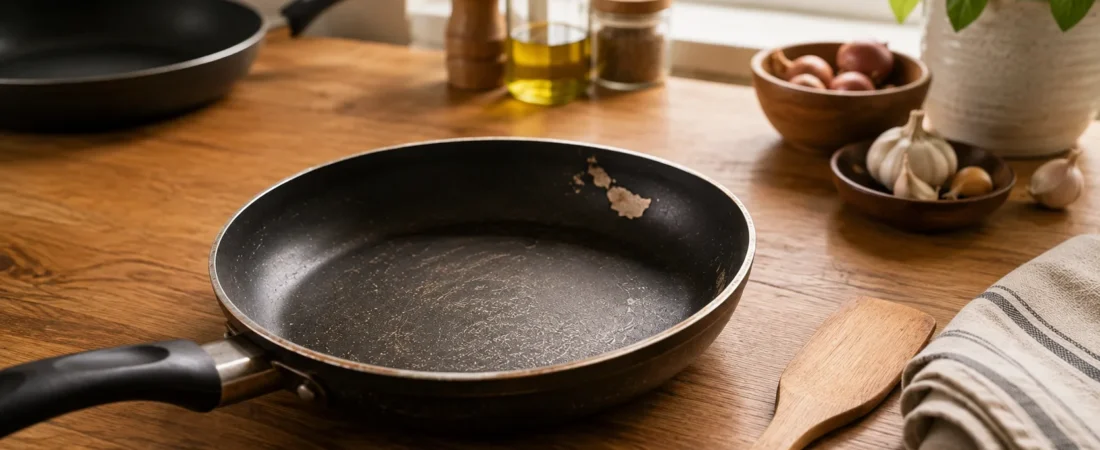
Most people keep using a non-stick pan long after it has started showing obvious signs of wear. A few scratches, more sticking than usual, or a slightly warped base can seem like minor problems when the pan still looks usable at first glance.
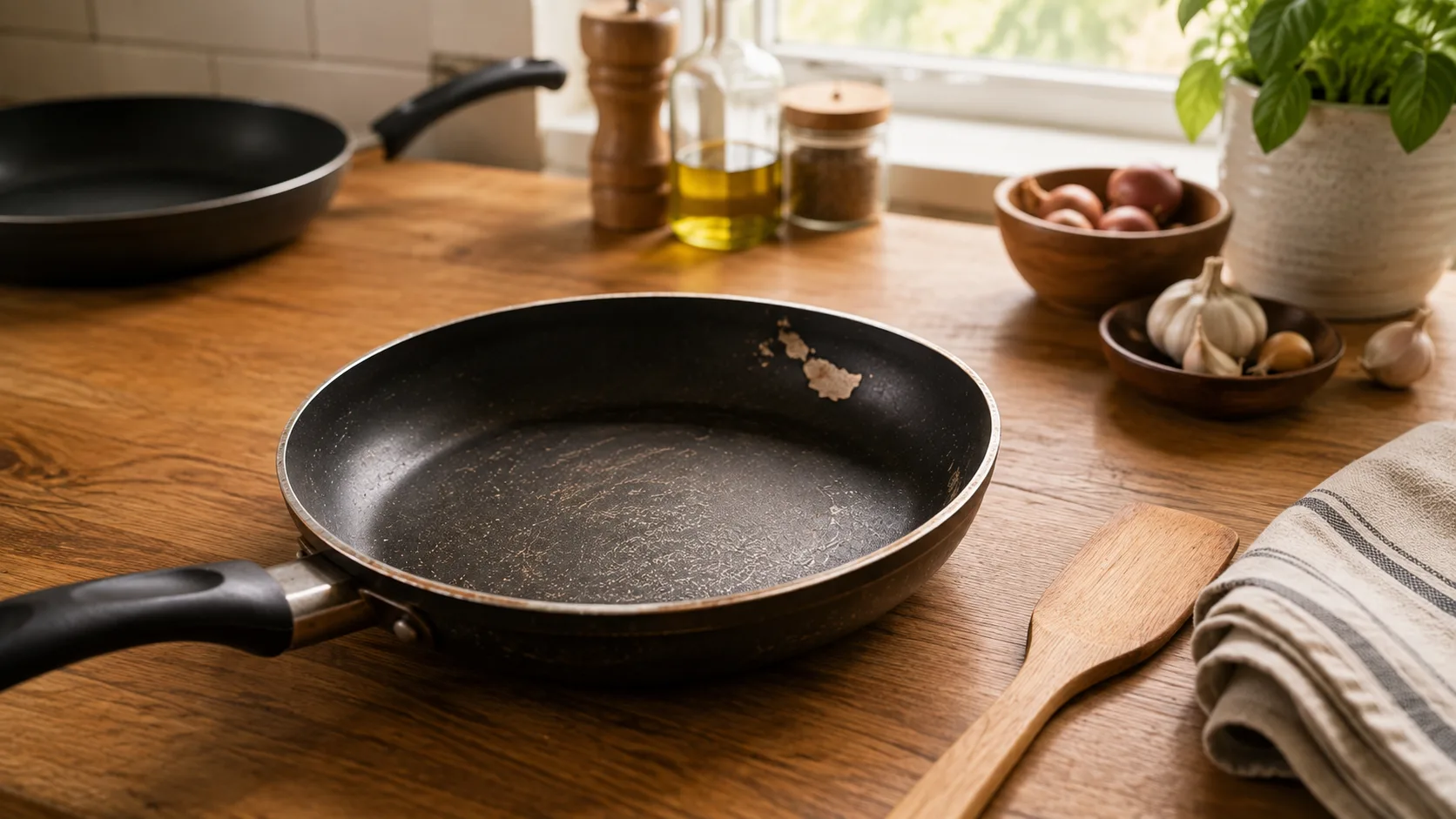
But cookware has a practical lifespan, and knowing the signs your non-stick cookware needs to be replaced can help you decide when it is time to retire a pan. In this guide, we will look at the most common warning signs, how to think about non-stick cookware safety, and simple habits that can help your next pan last longer.
Why Non-Stick Cookware Doesn’t Last Forever
Non-stick cookware is designed to make cooking easier by providing a low-stick cooking surface. However, that surface is not permanent. Repeated heating, cooking, washing, utensils, and everyday handling gradually contribute to non-stick pan wear and tear.
The lifespan of a pan depends on its construction, how often you use it, the temperature you cook at, and how carefully you clean and store it. A pan used occasionally may stay in good condition for much longer than one used several times a day.
So, how long does non-stick cookware last? There is no single number that applies to every pan. Instead of relying only on age, pay attention to changes in the cooking surface and the physical condition of the pan.
Signs Your Non-Stick Cookware Needs to Be Replaced
Understanding the signs your non-stick cookware needs to be replaced is easier when you know what normal wear looks like. Some minor cosmetic marks may not mean the pan is immediately unusable, while deeper coating damage, peeling, or structural problems are clearer reasons to replace it.
Sign 1 – Visible Scratches or Scrapes on the Coating
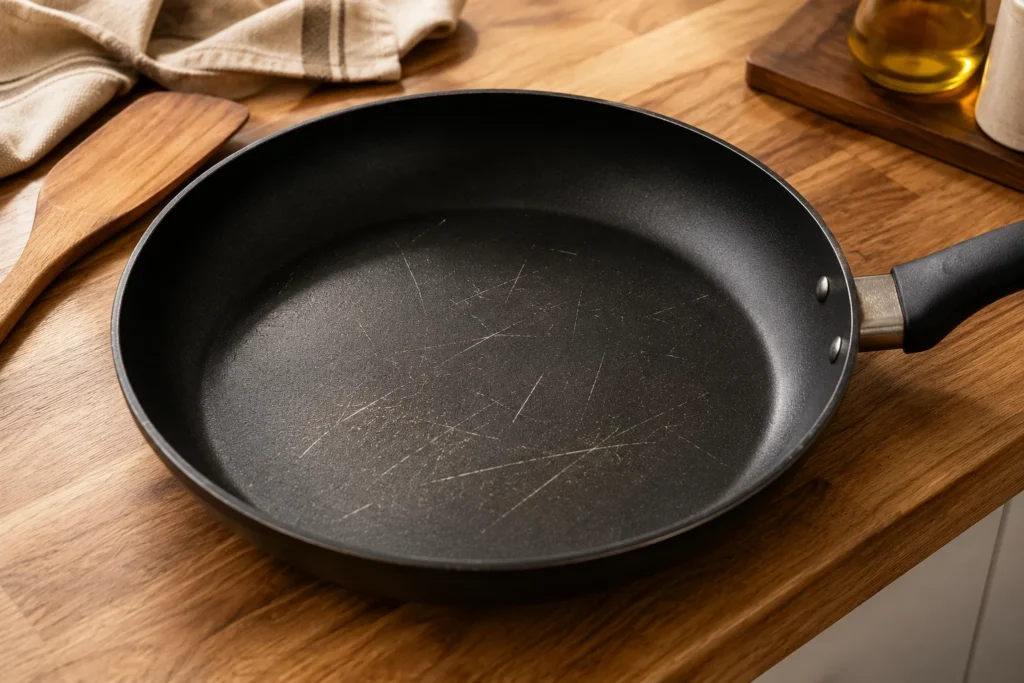
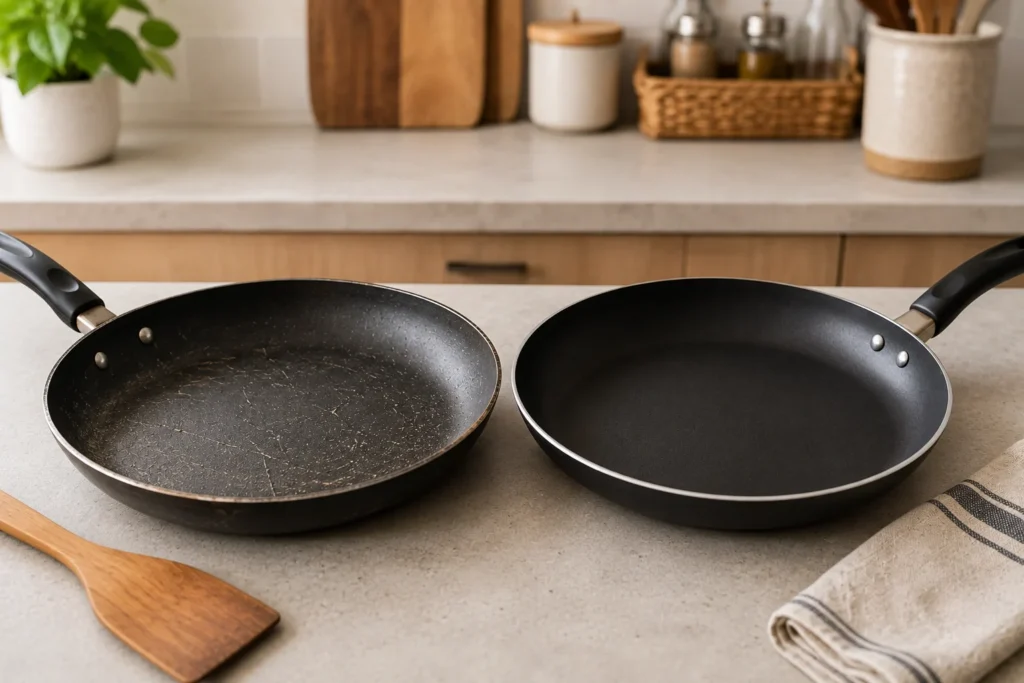
Small surface marks can happen over time, especially if metal utensils, abrasive scrubbers, or rough cleaning methods have been used. A few light marks are different from deep scratches that noticeably break up the cooking surface.
If you can see areas where the coating has been cut, heavily scratched, or worn through, it is worth considering replacement. The concern with scratched non-stick pan dangers is less about one tiny mark and more about continued deterioration of the coated surface.
A good rule is simple: if scratches are becoming widespread or the cooking surface no longer looks smooth and intact, the pan has probably reached the end of its useful life.
Sign 2 – Food Starts Sticking More Than It Used To
One of the clearest signs your non-stick cookware needs to be replaced is a noticeable decline in non-stick performance.
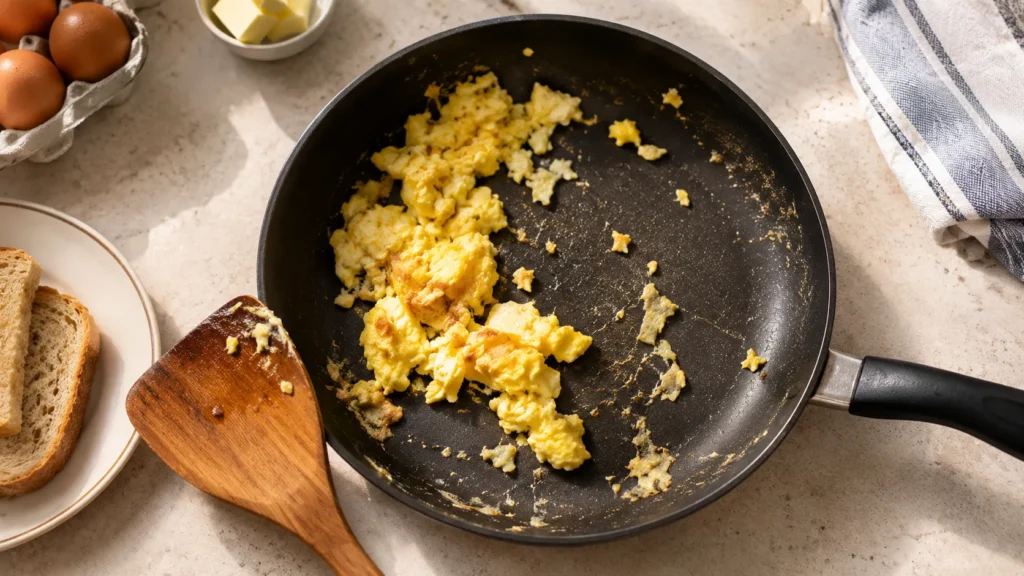
Eggs that once slid easily may begin sticking. Pancakes may tear when you flip them. Sauces or delicate foods may leave more residue behind even when you are using the same cooking method.
This does not always mean the coating is completely damaged, but it is a useful sign of wear. When a pan requires more oil and more scraping just to cook ordinary foods, it may be time to think about when to replace non-stick pan rather than continuing to fight with it.
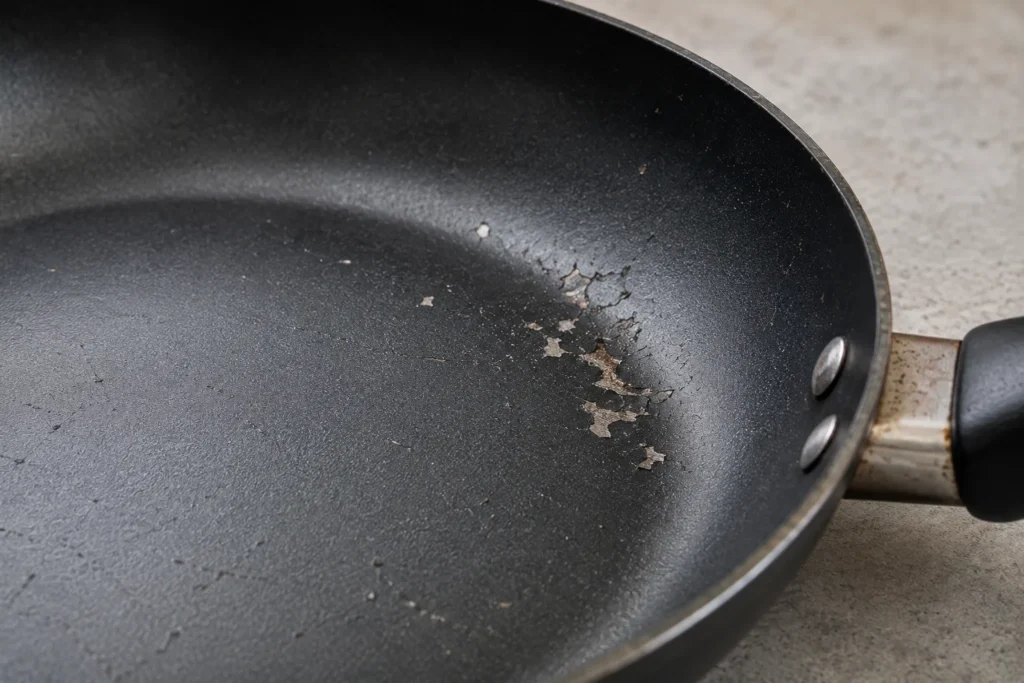
Sign 3 – The Coating Is Peeling, Flaking, or Chipping
Peeling or flaking is one of the easiest signs to recognize. The cooking surface should look reasonably consistent, not like layers are lifting away from the pan.
If you notice non-stick coating peeling, chips, or visible patches where the surface has separated, replacement is the sensible choice. A damaged coating can continue deteriorating with further use, especially if the pan is exposed to high heat or aggressive cleaning.
Among all the signs of damaged cookware, peeling, flaking, and chipping deserve particular attention because they indicate that the surface is no longer in its original condition.
Sign 4 – Discoloration or Warping of the Pan
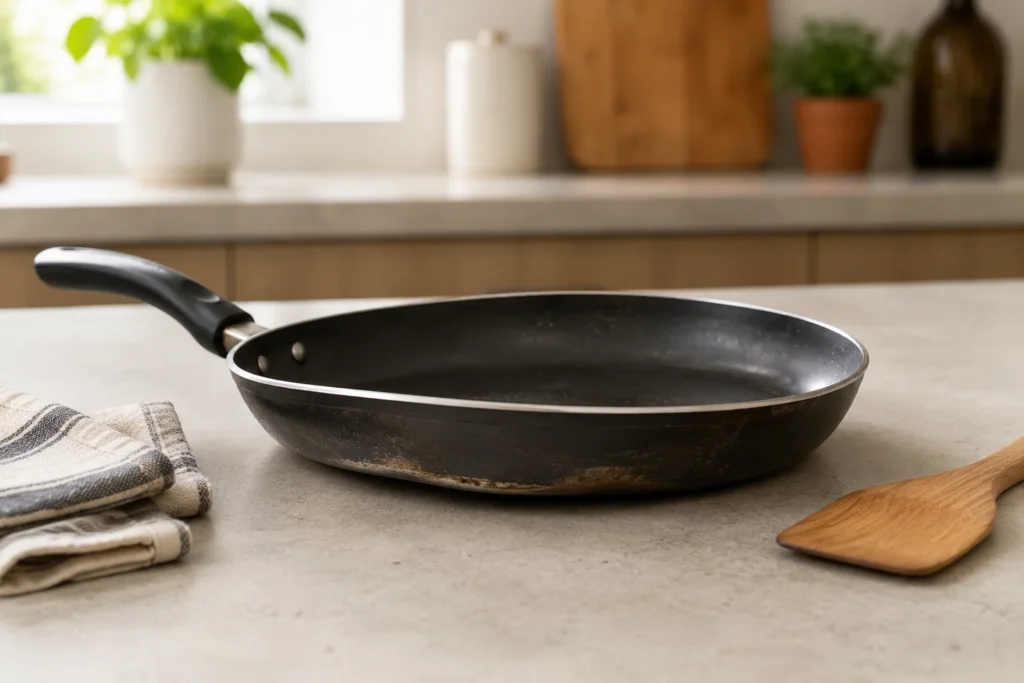
Some discoloration can occur naturally with regular cooking, particularly after years of use. However, major changes in appearance may indicate that the cookware has been exposed to excessive heat or has suffered significant wear.
Warping is another issue to watch. Place the pan on a flat cooking surface and see whether the base sits evenly. A noticeably warped pan may heat unevenly, rock on the stovetop, or develop hot spots.
A pan that no longer sits flat is not something to ignore. Even when the non-stick surface looks acceptable, physical damage can make cooking less predictable.
Sign 5 – Visible Bubbling or Blistering on the Surface
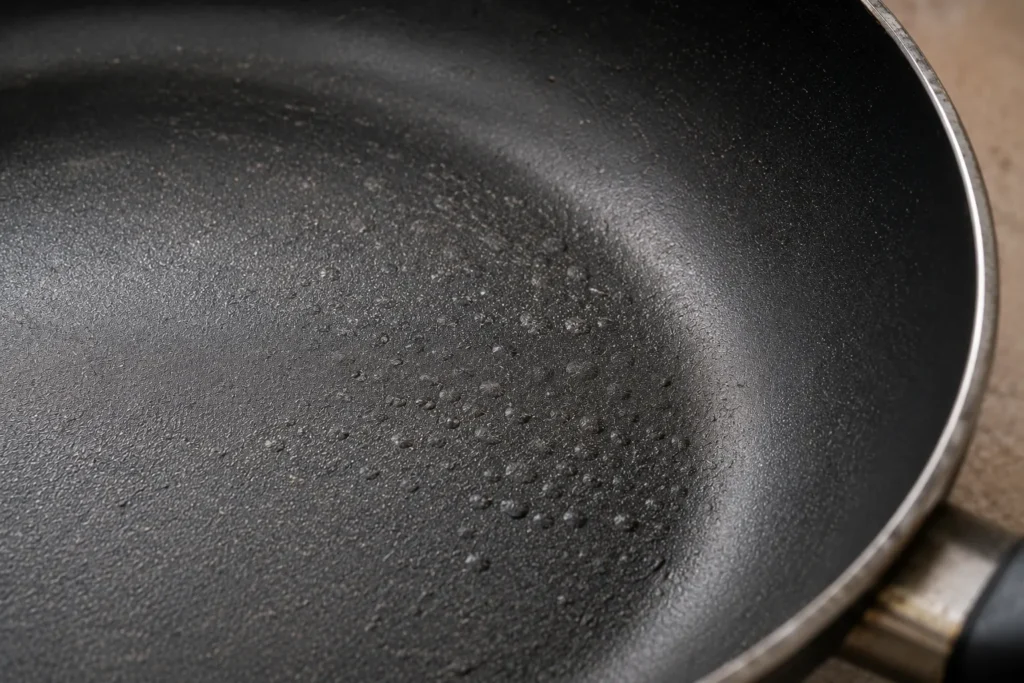
The cooking surface should generally be smooth and even. If you notice raised bubbles, blisters, or unusual bumps underneath the coating, take them seriously as a sign that the surface has deteriorated.
This type of damage can change the way the pan heats and can make future coating damage more likely. It is another practical answer to when to throw away non-stick pans: when the cooking surface is visibly blistered or structurally compromised, replacing it is the better option.
Sign 6 – It’s Older Than a Few Years With Heavy Daily Use
Age alone does not automatically make cookware unsafe or unusable. Still, heavy daily use naturally adds up.
A pan that has been used frequently for years may have experienced thousands of heating and cooling cycles, repeated washing, and constant contact with utensils. Even if there is no single dramatic problem, gradual wear can affect the surface and performance.
This is why how long does non-stick cookware last is better answered by looking at both age and condition. A heavily used pan that is several years old and showing multiple signs of wear deserves closer attention.
Is It Safe to Keep Using a Slightly Scratched Pan?
This is one of the most common questions around non-stick cookware: is scratched non-stick pan safe to use?
The answer depends on the severity of the damage and the overall condition of the pan. A very small superficial mark is different from deep, widespread scratches, peeling coating, bubbling, or exposed areas.
When considering non-stick cookware safety, focus on the condition of the entire cooking surface. If the coating is substantially damaged or deteriorating, replacing the cookware is the more sensible choice.
You can also ask yourself a few simple questions:
- Is the coating mostly smooth and intact?
- Are there deep scratches or areas where the surface is missing?
- Is the pan still sitting flat?
- Is food suddenly sticking much more than before?
- Do you see peeling, flaking, bubbling, or chipping?
These checks provide a practical way to think about how to check if cookware is safe without relying on age alone.
How to Make Non-Stick Cookware Last Longer
Once you replace a worn-out pan, a few simple habits can help reduce future non-stick pan wear and tear.
Use suitable utensils instead of sharp or abrasive tools that can damage the cooking surface. Silicone, wood, or other cookware-friendly utensils are often a better everyday choice.
Avoid unnecessarily high heat. Non-stick cookware generally works well at moderate cooking temperatures, and there is rarely a need to keep an empty pan heating for a long time.
For cleaning, use a soft sponge or gentle cloth rather than harsh abrasive scrubbers. Let the pan cool before washing it instead of exposing a very hot pan to sudden temperature changes.
It also helps to avoid stacking pans directly on top of one another when possible. Repeated contact can create scratches over time, especially when cookware is moved around frequently.
A simple care routine includes:
- Use cookware-friendly utensils.
- Cook at moderate temperatures.
- Avoid heating the pan empty for extended periods.
- Wash with a soft sponge.
- Let cookware cool before cleaning.
- Store pans carefully to reduce surface-to-surface contact.
- Check the coating regularly for new damage.
These habits will not make a non-stick coating last forever, but they can slow down everyday wear.
What to Look for When Replacing Your Non-Stick Cookware
When it is time to replace a worn pan, focus on the condition and construction rather than choosing something simply because it looks attractive.
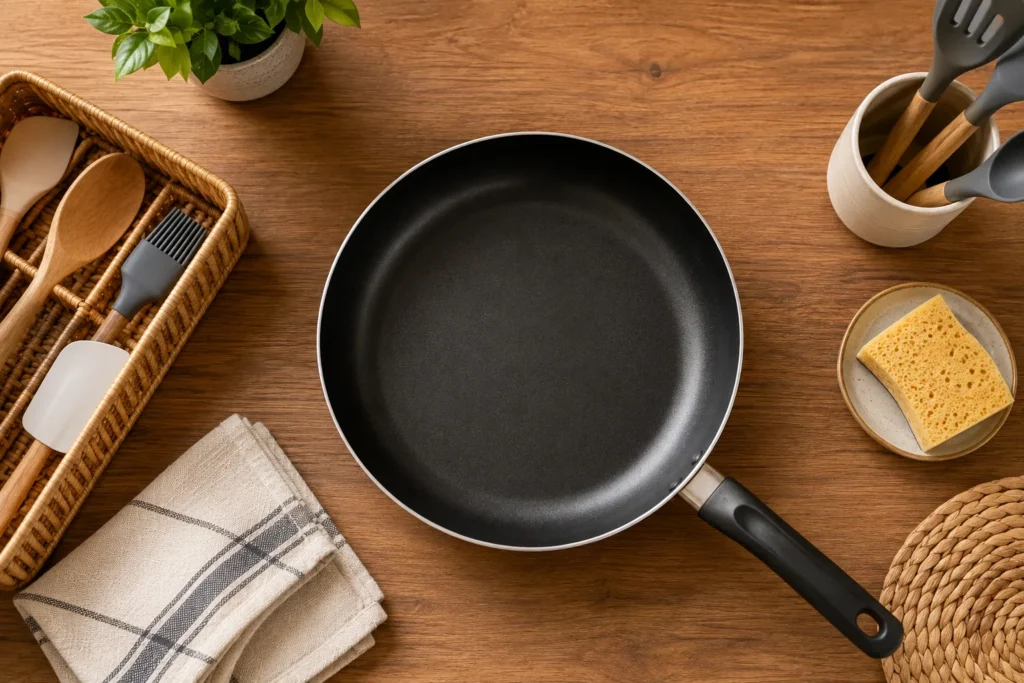
Look for cookware with a smooth, even cooking surface and a base that sits flat. Check that the handle feels secure and that there are no visible cracks, chips, bubbles, or other manufacturing defects.
It is also helpful to think about how you actually cook. If one pan is used every day for breakfast, for example, it may experience much more wear than cookware used only occasionally.
Most importantly, do not wait for the pan to become extremely damaged before replacing it. Recognizing the signs your non-stick cookware needs to be replaced early makes the transition easier and helps you avoid relying on cookware that is no longer performing well.
A Quick Replacement Checklist
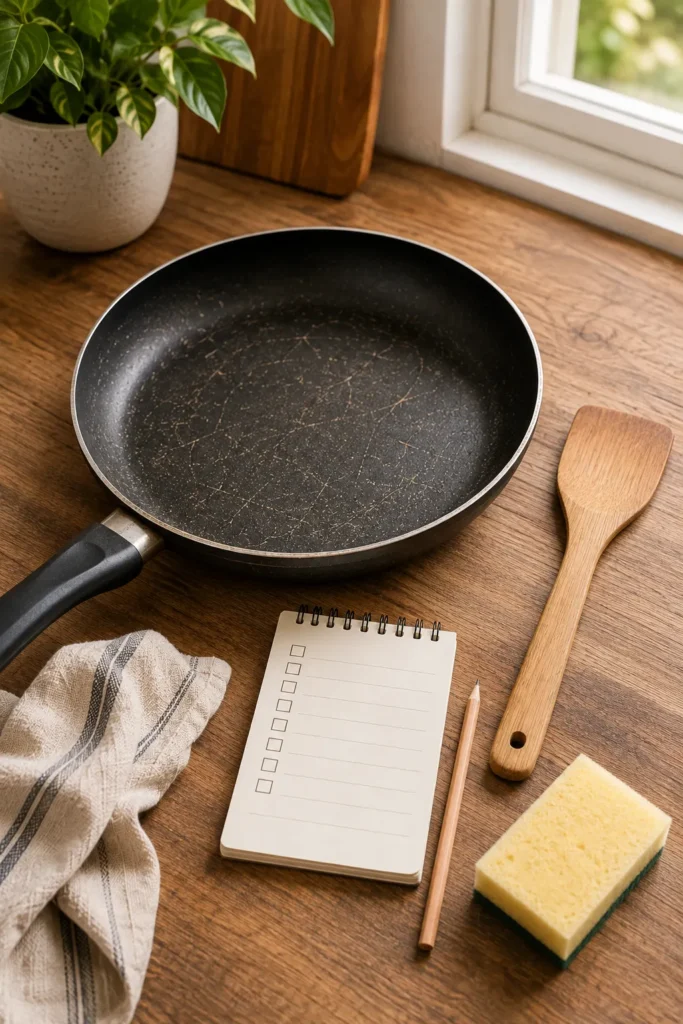
Before deciding whether to keep using an older non-stick pan, look for these common signs:
- Deep or widespread scratches
- Food sticking much more than before
- Peeling, flaking, or chipping coating
- Severe discoloration
- A warped or unstable base
- Bubbling or blistering on the cooking surface
- Several years of heavy daily use combined with visible wear
The more of these signs you notice, the stronger the case for replacement.
Final Thoughts
Knowing the signs your non-stick cookware needs to be replaced can save you from endlessly trying to revive a pan that has simply reached the end of its useful life. Scratches, sticking, peeling, bubbling, warping, and heavy long-term use are all practical clues to watch.
There is no need to panic over every small mark. Instead, pay attention to the overall condition of the cookware and how well it performs. When several signs appear together, it is usually a good time to retire the pan and move on to fresh cookware.
For more practical ideas to keep your kitchen functional and organized, explore our posts on how to season and care for cast iron cookware, how to organize kitchen cabinets, and other helpful kitchen maintenance tips on dailyrecs hub.
Suggested Internal Links
- The Ultimate Kitchen Deep Cleaning Checklist
- How Often Should You Service Your RO Water Purifier?
- 10 Easy Ways to Organize Your Kitchen Without Buying Anything New
Love simple home maintenance tips like these? Join the Dailyrecshub community on Pinterest, for daily home & kitchen inspiration, appliance care guides, cleaning hacks, and practical DIY tips. Save your favorite ideas, share them with family, and never miss a helpful update!