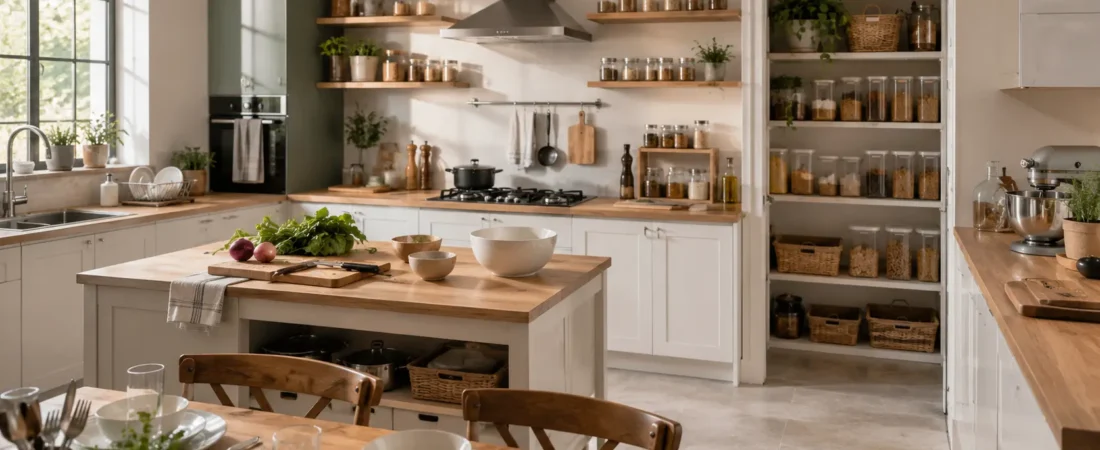
Walking into a kitchen where everything is technically stored but nothing is easy to find can be surprisingly frustrating. You open three cabinets to find a pan, walk across the room for cooking oil, and discover that your cutting board is nowhere near the counter where you actually prep food.
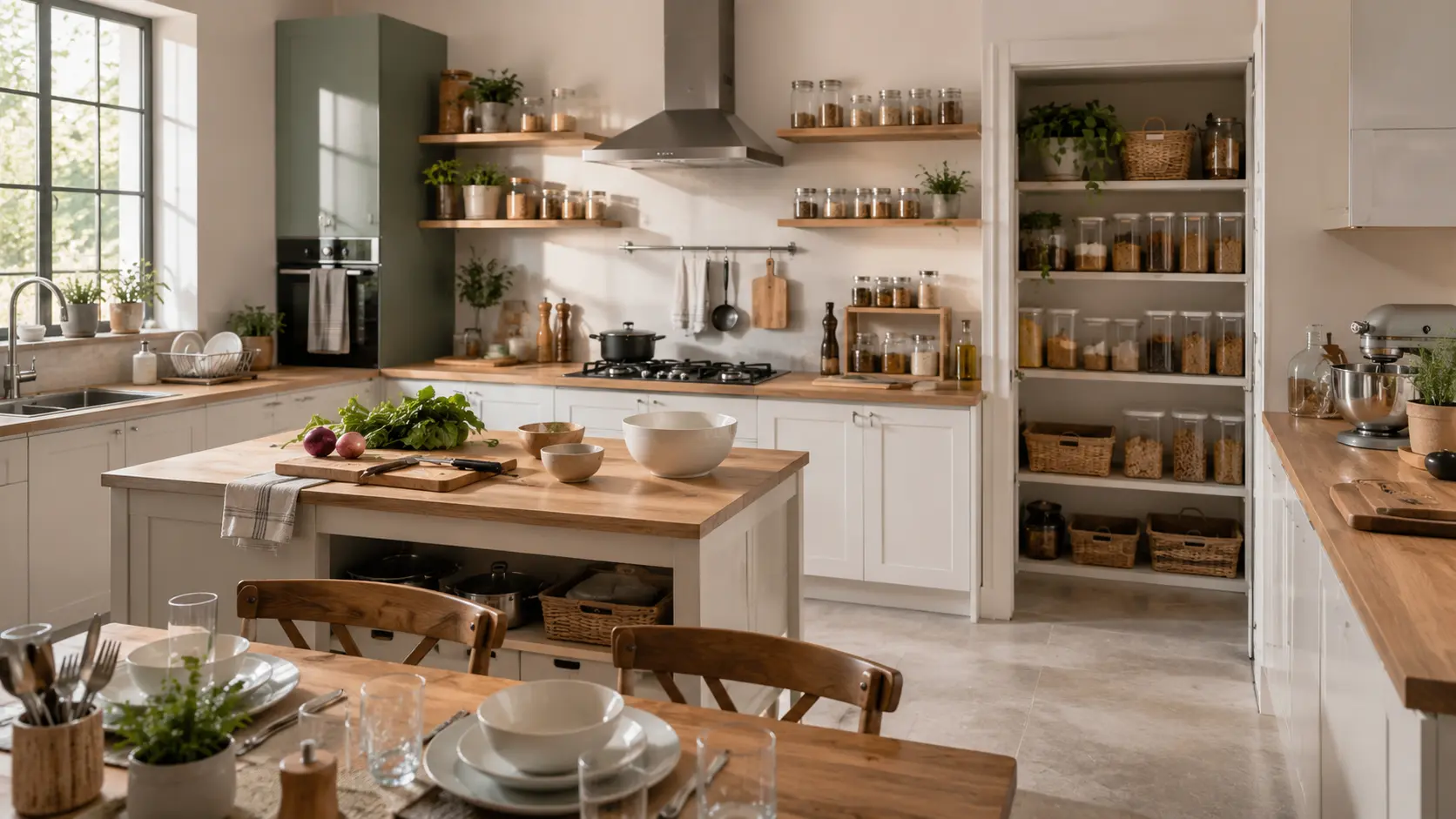
That is exactly why the zone-based kitchen organization method works so well. Instead of organizing your kitchen based only on cabinet size or empty shelf space, you organize it according to how you actually use the room.
In this guide, you’ll learn how to divide your kitchen into practical zones, decide what belongs in each one, adapt the system to small kitchens, and keep it working long after the initial organizing session.
What Is the Zone-Based Kitchen Organization Method?
The zone-based kitchen organization method means grouping kitchen items according to the tasks you perform in the kitchen.
Rather than putting similar-looking items wherever there happens to be room, you create dedicated areas for cooking, food preparation, storage, cleaning, and serving. The goal is simple: keep frequently used items close to the place where they are needed.
Think about making dinner. You might take vegetables from storage, wash them at the sink, move them to a prep surface, cook them at the stove, and finally serve the meal. A well-zoned kitchen supports that sequence instead of making you constantly walk back and forth.
This approach creates a more functional kitchen organization system because the kitchen is organized around real-life movement rather than arbitrary categories.
You do not need a huge kitchen, expensive changes, or perfectly matching cabinets. You simply need to understand where your kitchen’s natural work areas are and assign items accordingly.
Why Zoning Your Kitchen Works Better Than Random Storage
Random storage often develops slowly. One item gets placed wherever there is space, then another follows, and eventually every cabinet has a mixture of unrelated things.
The problem is not necessarily that you own too many kitchen items. Often, the bigger issue is that the right items are in the wrong places.
Kitchen zone organization solves this by reducing unnecessary movement and making frequently used items easier to reach.
For example, storing your most-used pans near the stove means you do not have to search through a lower cabinet every time you cook. Keeping knives and cutting boards close to your main prep surface makes chopping and meal preparation smoother.
Zoning can also make your kitchen easier to tidy because every item has a logical “home.”
A simple rule to remember is:
Store things where the task happens, not just where there is empty space.
Once you start thinking this way, many everyday storage decisions become much easier.
The Main Kitchen Zones You Need
Most kitchens can be organized around five main zones. You can combine or adjust them based on your layout, but these categories provide a useful starting point for almost any home.
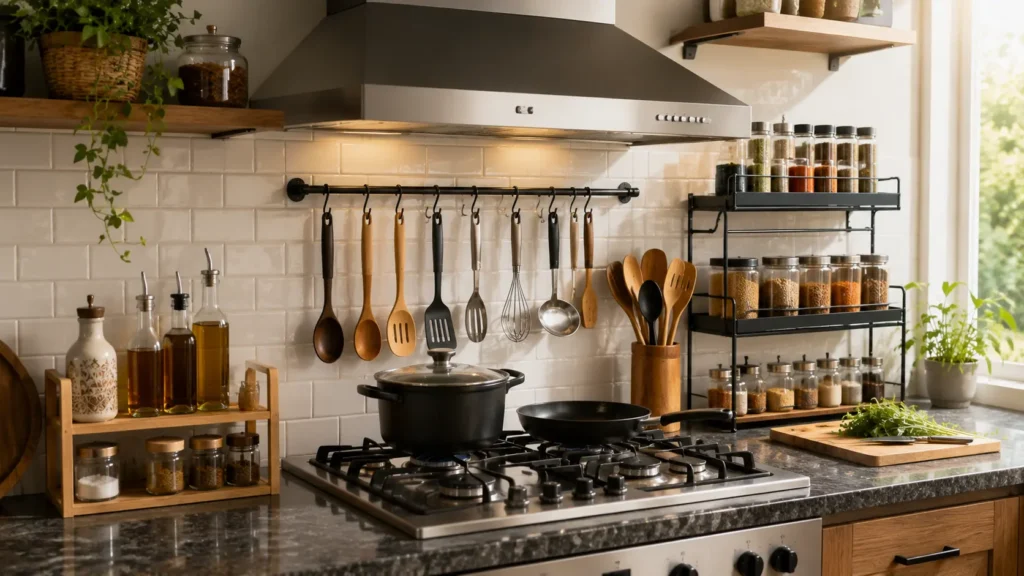
Cooking Zone
Your cooking zone kitchen layout should be centered around the stove, cooktop, or oven.
This is where you want the tools and ingredients you reach for while cooking. Think about what you naturally grab during a typical meal rather than trying to move every cooking-related item into one cabinet.
Useful items for this area can include:
- Pots and frequently used pans
- Cooking utensils
- Oils and commonly used spices
- Oven mitts and trivets
- Everyday cooking ingredients
- Frequently used cookware
Keep your most-used items within easy reach and less frequently used cookware farther away. There is no rule saying every cooking item must be directly beside the stove.
The objective is convenience without creating a crowded work area.
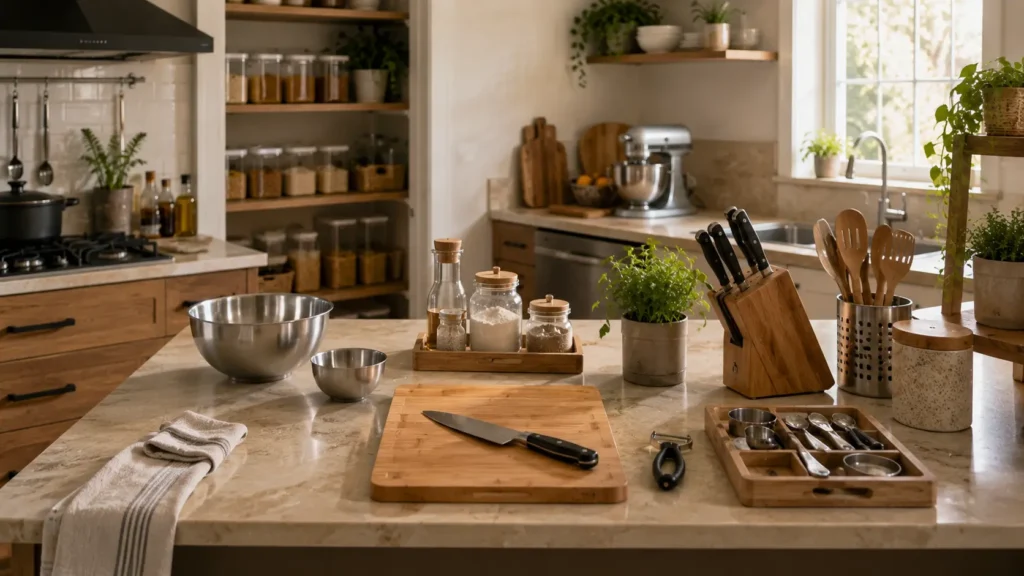
Prep Zone
The prep zone kitchen organization area should sit around your main food preparation counter.
This is where chopping, mixing, peeling, measuring, and assembling meals happen. Ideally, your prep zone is positioned between storage areas and the cooking area so food can move naturally from one stage to the next.
Keep items such as:
- Cutting boards
- Knives
- Mixing bowls
- Measuring tools
- Peelers and graters
- Food preparation utensils
close to your primary counter space.
When these items are stored together, meal preparation becomes faster and you spend less time opening unrelated drawers.
Storage Zone
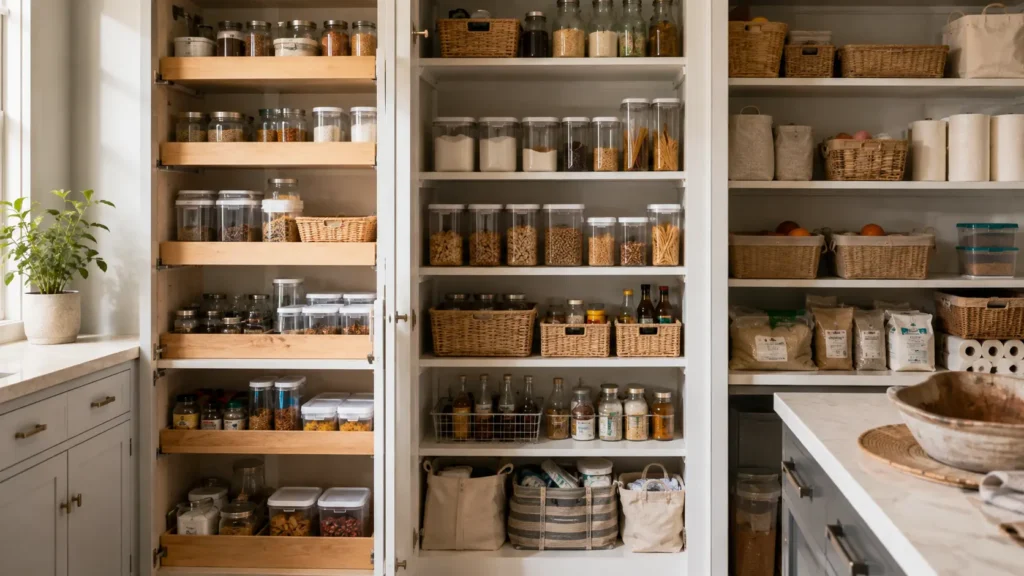
The storage zone kitchen is where pantry staples, bulk ingredients, food containers, and other reserve supplies belong.
Depending on your kitchen, this may include a pantry, tall cabinet, upper cabinets, or a combination of several storage areas.
Common storage-zone items include:
- Dry pantry staples
- Baking ingredients
- Extra packaged foods
- Food storage containers
- Reusable bags
- Bulk supplies
One important tip is to separate everyday-use supplies from backup supplies. The items you use every day should be easier to reach than large quantities of items you only replenish occasionally.
This prevents your most accessible shelves from becoming overloaded.
Cleaning Zone
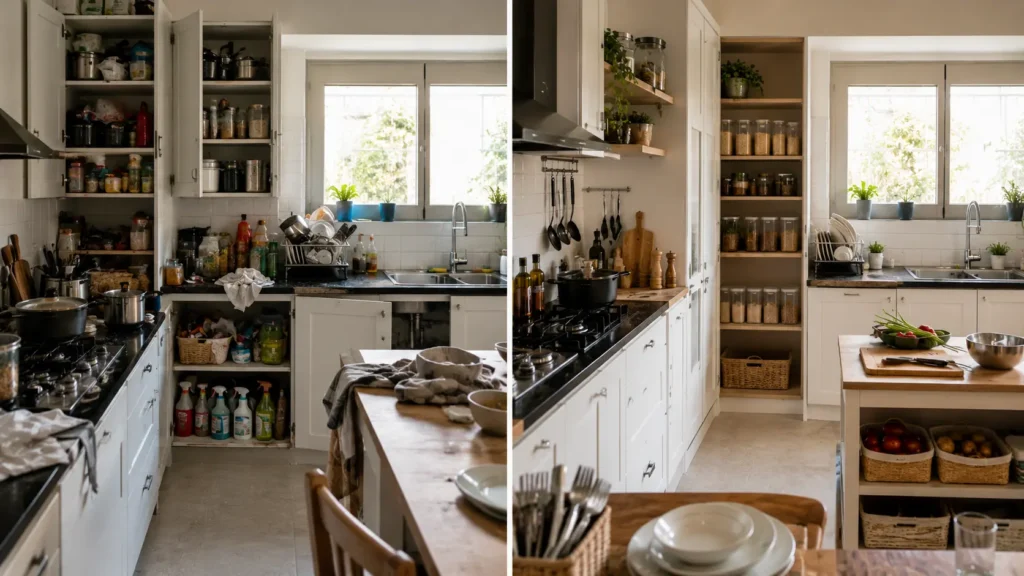
Your cleaning zone naturally revolves around the sink.
This is where you can group everyday dishwashing and cleaning supplies so they are available exactly when needed.
Consider keeping together:
- Dish soap
- Sponges and scrubbers
- Dish brushes
- Cleaning cloths
- Dishwasher supplies
- Trash and recycling tools
The cleaning zone does not have to fit into one cabinet. The important thing is that related items are placed near the sink or the area where cleaning actually happens.
Be especially careful not to overcrowd the space beneath the sink. A clear, organized area makes cleanup much less irritating.
Serving/Eating Zone
The serving and eating zone should be located as close as practical to your dining or serving area.
This is where everyday plates, bowls, cups, glasses, cutlery, serving utensils, and frequently used table items can live.
Keeping these items near the place where food is served reduces unnecessary trips across the kitchen.
In open-plan kitchens, this zone may naturally transition from the kitchen into the dining area. That is perfectly fine. Kitchen zoning is about function, not strict cabinet boundaries.
How to Set Up Kitchen Zones Step by Step
Step 1 – Map Out Your Kitchen’s Natural Work Areas
Before moving anything, spend a few minutes observing how you use your kitchen.
Where do you usually prepare vegetables? Which counter has the most open space? Which area is closest to the stove? Where do dirty dishes collect?
Write down these natural work areas before organizing.
You may discover that the “best” zone location is completely different from what you originally expected. Work with your kitchen instead of fighting against its layout.
Step 2 – Sort Items by Which Zone They Belong To
Take one category at a time and group your belongings according to function.
For example, all frequently used cooking tools can form your cooking group, while cutting boards, knives, and mixing bowls can form your prep group.
This is also the perfect stage for deciding how to declutter kitchen using zones.
As you sort, ask:
- Do I use this regularly?
- Where do I normally use it?
- Does it belong to another zone?
- Is it taking up valuable everyday-access space?
- Do I have duplicates I rarely use?
You do not need to declutter your entire kitchen in one giant session. Working zone by zone makes the process much more manageable.
Step 3 – Place Zones Near Where They’re Used Most
Once everything is grouped, start assigning storage locations.
Keep the highest-use items in the easiest-to-reach positions. Medium-use items can go slightly farther away, while seasonal, specialty, or backup items can occupy harder-to-access areas.
This creates a practical hierarchy:
Daily use → easy access
Weekly use → moderate access
Occasional use → secondary storage
That simple system can make a surprisingly big difference.
Step 4 – Adjust for Small or Awkward Kitchen Layouts
Not every kitchen has enough cabinets to create five perfectly separate zones.
That is okay.
Small kitchens often need overlapping zones. For example, your prep area and cooking area may share the same counter, while your storage zone may be spread across several cabinets.
Awkward corners can become useful secondary storage areas for less frequently used cookware or pantry supplies. Drawers can also serve multiple functions as long as the contents remain logically grouped.
The goal is not to create perfect zones. It is to create a kitchen that feels predictable and easy to use.
Zone-Based Organization Tips for Small Kitchens
Small kitchens benefit from zoning because every inch needs to work harder.
Start by prioritizing the items you use most often. Those items deserve the easiest-to-access spaces.
Try these practical kitchen zoning ideas:
- Keep daily-use tools at comfortable reaching height.
- Use vertical space for flat or narrow items.
- Group related items instead of spreading them across several cabinets.
- Keep counters focused on active tasks rather than long-term storage.
- Store occasional-use items in less convenient locations.
- Avoid mixing cleaning supplies with food-storage areas.
- Give every major category a defined home.
- Use corners for items that do not need daily access.
Another useful strategy is to create micro-zones within larger zones. A cooking zone, for example, might have a small spice area and a separate cookware section.
This gives you more structure without requiring more space.
How to Maintain Your Kitchen Zones Long-Term
The best way to organize kitchen efficiently is to create a system that is easy to maintain.
Even a beautifully organized kitchen will become messy if items do not have obvious homes.
Make it a habit to return things to their assigned zone after use. When something repeatedly ends up in another area, treat that as useful information.
Perhaps the item is actually being used more often in that second location. In that case, your system should change.
Kitchen organization is not a one-time project. Your routines change, your household changes, and your storage needs change.
A quick reset once or twice a week can help prevent small piles of misplaced items from turning into another major organizing project.
Every few months, review the zones and ask whether they still match how you actually work in the kitchen.
Common Mistakes to Avoid When Zoning Your Kitchen
A good zoning system can still fail when the setup looks organized but does not match daily habits.
Avoid these common mistakes:
- Organizing by item type only: Keeping every bowl together may seem logical, but frequently used bowls should be convenient for the tasks that require them.
- Ignoring workflow: A beautiful cabinet arrangement is not useful if you have to cross the kitchen repeatedly during meal preparation.
- Putting everything within reach: Not every item needs premium storage space. Reserve easy-access locations for everyday essentials.
- Creating too many zones: Overcomplicating the kitchen can make it harder to remember where things belong.
- Filling every shelf: Empty space is useful. It gives you room to move items and prevents cabinets from becoming difficult to manage.
- Forgetting about frequency: Occasional-use appliances and specialty tools do not need to occupy prime real estate.
- Refusing to adjust the system: Your kitchen should adapt to your habits. Do not keep an inconvenient arrangement simply because it looked good on organizing day.
A successful zone system should make everyday tasks feel easier, not more complicated.
Final Thoughts
The zone-based kitchen organization method works because it organizes your kitchen around real routines instead of random storage decisions. By creating practical cooking, prep, storage, cleaning, and serving zones, you can make even a busy kitchen feel more predictable and functional.
Start with one area rather than trying to reorganize everything at once. Observe how you move through the kitchen, group items by where they are used, and give the most frequently used things the easiest access.
Once the system starts working, maintaining it becomes much simpler.
Suggested Internal Links
- The Ultimate Kitchen Deep Cleaning Checklist
- How Often Should You Service Your RO Water Purifier?
- 10 Easy Ways to Organize Your Kitchen Without Buying Anything New
Love simple home maintenance tips like these? Join the Dailyrecshub community on Pinterest, for daily home & kitchen inspiration, appliance care guides, cleaning hacks, and practical DIY tips. Save your favorite ideas, share them with family, and never miss a helpful update!